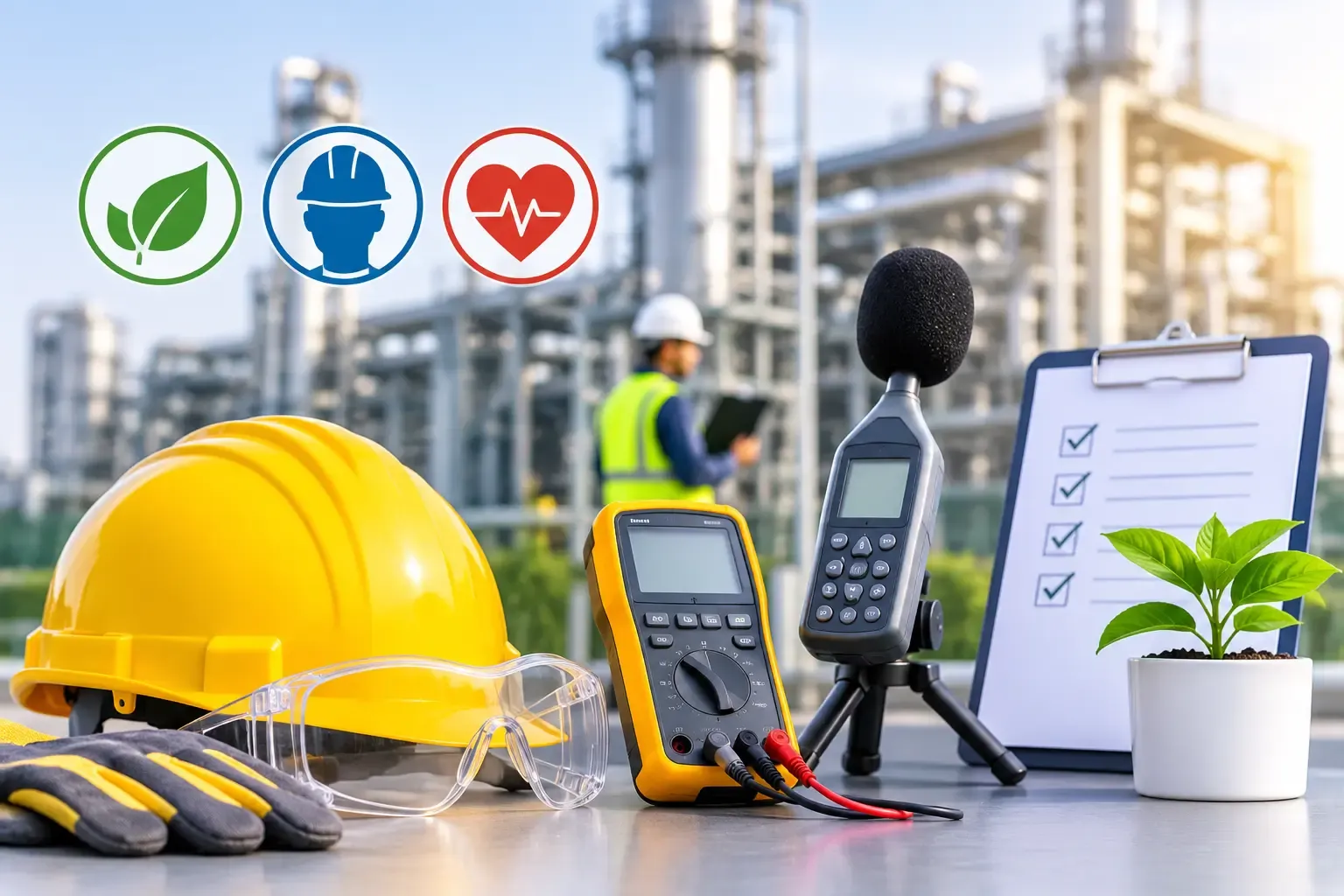
Environmental, health and safety programs run on measurements. How loud is the workplace? Is the air in the tank safe to breathe? Is the lighting adequate? Is the earth connection effective? Are conditions within safe limits for people working in the heat? Each of these questions is answered by an instrument, and each answer can trigger a decision: allow entry, stop work, issue protection, take corrective action.
That makes calibration a core part of EHS compliance in Dubai. If the instrument behind an exposure record is wrong, the record can't be defended, the decision based on it may have been wrong, and in an incident investigation the question "was the instrument calibrated?" is one of the first to be asked. This guide explains which EHS instruments matter most, why calibration is central to compliance, and how to build a program that stands up to audits and investigations.
How Calibration Fits Into EHS Compliance
Occupational and environmental health and safety rules, whether set by authorities such as Dubai Municipality, by client requirements or by management system standards such as ISO 45001 and ISO 14001, generally expect organizations to monitor hazards and keep records. Many require or assume that the measuring equipment is accurate and in calibration. Exact legal requirements and exposure limits vary by activity and authority, so check the current rules that apply to your operations. The principle is consistent: a measurement used to protect people or prove compliance has to be traceable and trustworthy.
Calibration supports EHS in four ways:
- Protecting people. Detectors and monitors have to warn at the right level
- Proving compliance. Records of noise, gas, lighting and other exposure readings carry weight only if instruments were calibrated
- Supporting decisions. Stop-work, permit-to-work and corrective actions rely on accurate readings
- Defending incidents. After an incident, calibration records show whether monitoring was reliable
The EHS Instruments That Matter Most
Gas Detectors
Confined space entry, hot work, tanks, trenches, plant rooms and chemical areas all rely on gas detection for oxygen, flammable and toxic gases. These instruments need routine bump tests before use and full calibration with certified gas at scheduled intervals. A passed bump test is not a calibration, and treating it as one is a common and serious gap. See our guide to gas detector calibration.
Sound Level Meters and Noise Dosimeters
Noise exposure assessments for workers and environmental noise monitoring around construction and industrial sites rely on sound level meters and dosimeters. Their calibration is typically verified with an acoustic calibrator before and after each measurement session, with periodic laboratory calibration. See our guide to sound level meter calibration.
Light Meters
Lighting assessments in workplaces, plants and inspection areas rely on light meters, and inspection processes such as fluorescent testing rely on light and UV meters. Light meters are among the instruments covered in NDT and related calibration. See our guide to NDT calibration.
Temperature and Humidity Instruments
Workplace heat stress assessment, cold storage safety, ventilation and indoor environment monitoring all rely on temperature and humidity measurement. If you use heat stress monitoring equipment, check with your calibration provider whether your specific instruments fall within their accredited scope. See our guides to temperature calibration and humidity calibration.
Electrical Safety Test Equipment
Earth resistance testers, insulation testers, multimeters and clamp meters verify that installations and equipment are electrically safe. See our guide to clamp meter calibration. For electrical hazard detection, our guide to thermal imaging services shows how surveys complement calibrated test equipment.
Pressure and Safety Equipment
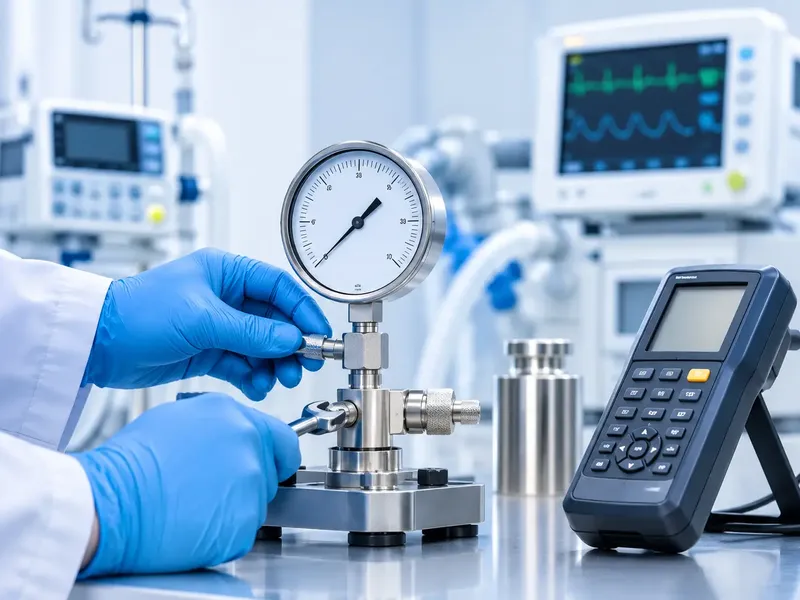
Pressure systems, boilers and compressed air depend on pressure gauges and relief valves. See our guides to pressure gauge calibration and PRV testing.
Other Monitoring Instruments
Air quality, dust, vibration and similar monitors may also be part of your program. Confirm with your calibration provider which types and parameters fall within their scope, and how they are verified.
Bump Tests, Field Checks and Formal Calibration
EHS instruments often use two layers of control, and understanding the difference prevents errors:
- Field checks. Quick functional checks before use, such as a bump test on a gas detector or an acoustic calibrator check on a sound meter. They confirm the instrument responds, but they do not replace formal calibration
- Formal calibration. Periodic calibration against traceable references, with a certificate showing results, uncertainty and traceability
A good program uses both: field checks every day or session, and formal calibration at set intervals. Our guide to calibration frequency in the UAE explains how to set intervals.
Records an Auditor or Investigator Will Ask For
In an audit or incident investigation, reviewers commonly want to see:
- A register of EHS monitoring instruments with unique IDs
- Current calibration certificates from an accredited laboratory, with accreditation numbers visible
- Bump test and field check logs
- Evidence the instrument was in calibration on the date of the measurement
- Records of action taken when an instrument failed
- Training records for the people using the instruments
If you cannot show that an instrument was in calibration when the reading was taken, the reading is harder to rely on. Our guide to how to get a calibration certificate in the UAE explains what a reliable certificate contains.
Sites and Projects in Dubai
Dubai's construction, industrial, hospitality and logistics sites all have EHS obligations, often passed down through contractors and main contractors. Contractors are often asked for calibration certificates for their monitoring equipment as part of site induction or permit approval. See our guide to calibration for construction and civil engineering for site-specific advice.
Practical Tips for EHS Teams
- Give every instrument a unique ID and a visible calibration label
- Log bump tests and field checks, and keep the logs
- Remove any instrument that fails a check from use immediately
- Keep calibrated spares for critical detectors, so work isn't stopped during calibration
- Calibrate before major shutdowns, projects and audits
- Train users on what the instrument does and does not tell them
Calibration Support
Our laboratory is accredited to ISO/IEC 17025 by EIAC (LB-CAL-004) and ENAS (NAL 240) across gas detection, sound, temperature, humidity, pressure, electrical and other disciplines, with on-site service across the UAE including Dubai. Explore the full range of calibration disciplines, and our guide to on-site versus in-lab calibration.
Frequently Asked Questions
Do EHS instruments need calibration? Yes. Gas detectors, sound level meters and other monitoring instruments protect people and support compliance, so they need regular calibration and routine field checks.
Is a bump test the same as calibration? No. A bump test checks that a detector responds, while calibration adjusts and verifies accuracy against a certified reference.
What do auditors ask for after an incident? Typically the instrument's calibration certificate, bump test logs, evidence it was in date at the time, and records of any failures.
How often should EHS instruments be calibrated? Intervals depend on the instrument and manufacturer guidance. Gas detectors commonly need full calibration every few months, with bump tests before each use, while sound meters usually need annual laboratory calibration with field checks each session.
Can calibration be done on site in Dubai? Yes. On-site calibration is available for fixed or hard-to-move equipment, and portable instruments can be calibrated in the laboratory.
Closing Thoughts
EHS compliance in Dubai relies on instruments people trust with their safety. Pairing daily field checks with formal calibration, keeping clear records, using calibrated spares and working with an accredited provider means exposure readings and safety decisions can be defended whenever they are questioned.
To discuss calibration for your EHS instruments, reach out through the General Tech Services contact page or call +971 6 5436933.