-1.webp?prefix=media)
Your equipment passed the job requirement checklist. Your team is qualified. But when the audit comes — or when a client asks for documented proof — the absence of a valid calibration certificate in UAE can stop everything dead.
For industries operating across Sharjah, Dubai, and Abu Dhabi, calibration certificates are not optional paperwork. They are legally required proof that your measuring instruments meet national accuracy standards. Without them, you risk failed audits, disqualified tenders, and non-compliance penalties.
This guide explains exactly what a calibration certificate is, why UAE regulations require one, and the precise steps to get yours — from choosing the right accredited lab to receiving your final document.
What Is a Calibration Certificate in UAE?
A calibration certificate is an official document issued by an accredited laboratory that confirms your measuring instrument has been tested, verified, and adjusted against a recognised reference standard.
It proves two things: that your instrument is accurate within an acceptable tolerance, and that its readings are traceable to national or international measurement standards.
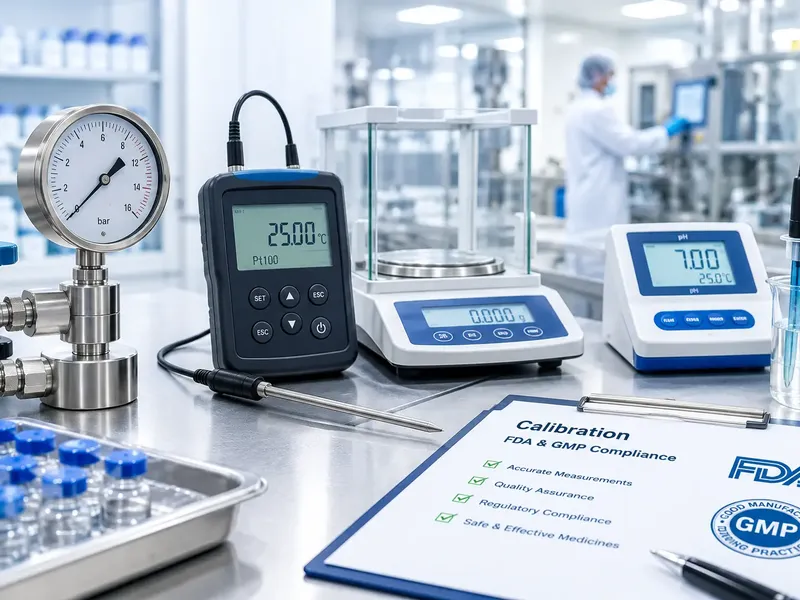
Under UAE law, a calibration certificate is only legally valid when it is issued by a laboratory accredited under ISO/IEC 17025:2017 — the international standard for calibration and testing laboratory competence. A certificate from an unaccredited lab has no standing in audits, regulatory inspections, or quality management system assessments.
To understand the full scope of what ISO/IEC 17025 requires and how it differs from ISO 9001, General Tech's technical blog covers this in detail.
Why Is a Calibration Certificate Mandatory in the UAE?
All measuring instruments drift over time. Pressure gauges lose accuracy. Thermometers shift. Torque wrenches apply the wrong force without any visible sign of failure. This drift silently compromises product quality, operational safety, and regulatory compliance.
The UAE Ministry of Industry and Advanced Technology (MoIAT) enforces documented proof that measuring devices meet accuracy standards — particularly in industries like oil and gas, healthcare, manufacturing, aviation, and construction.
A valid calibration certificate serves multiple critical functions:
● Satisfies ISO 9001 quality management system requirements
● Fulfils conditions of government tenders and ADNOC contracts
● Demonstrates compliance during third-party and regulatory audits
● Provides legal protection in case of measurement-related disputes
● Supports international trade by proving traceability to global standards
If you want a deeper understanding of why calibration of your instruments matters before going further, that resource covers the fundamentals clearly.
EIAC and ENAS: The Two Bodies That Make a Calibration Certificate Valid in UAE
Not every calibration lab in the UAE is authorised to issue legally recognised certificates. The lab must be formally accredited by one or both of the UAE's national accreditation bodies.
EIAC — Emirates International Accreditation Centre
EIAC is the largest accreditation body in the Middle East and the primary body for calibration laboratory accreditation in Dubai and the wider UAE. An EIAC-accredited lab has been formally assessed and confirmed to meet the full requirements of ISO/IEC 17025:2017. When a laboratory holds an EIAC accreditation number, its calibration certificates are legally recognised by UAE regulatory authorities, international auditors, and quality management assessors.
EIAC accredits calibration across all major parameters including dimensional, pressure, temperature, electrical, torque, force, humidity, mass, flow, gas detection, volumetric, and more.
ENAS — Emirates National Accreditation System
ENAS operates under MoIAT and is the official accreditation body covering Abu Dhabi and the northern emirates. ENAS accreditation is also internationally recognised through ILAC — the International Laboratory Accreditation Cooperation — meaning certificates from ENAS-accredited labs are accepted globally, not just within the UAE.
For full UAE-wide and international coverage, choose a calibration laboratory that holds both EIAC and ENAS accreditation. General Tech Services holds EIAC accreditation (LB-CAL-004) and ENAS accreditation (NAL 240), making their calibration certificates valid across every emirate and internationally recognised.
Who Needs a Calibration Certificate in UAE?
If your business uses any measuring, testing, or monitoring instrument that affects quality, safety, or compliance, you need a calibration certificate. This applies across virtually every industry in the UAE:
● Manufacturing — dimensional tools, pressure gauges, force testers, and weighing scales used in production
● Oil and gas — pressure transmitters, temperature sensors, flow meters, and gas detectors on pipelines and rigs
● Healthcare and bio-medical — medical devices, blood pressure monitors, and clinical measurement equipment
● Construction and engineering — torque wrenches, load cells, and measurement equipment on site
● Aviation and aerospace — precision instruments used in MRO and aircraft maintenance
● Laboratories and testing facilities — all reference and working standards used for testing and inspection
● Food processing — thermometers, weighing scales, and humidity loggers in production and storage
If your business operates in Sharjah's industrial zones, Dubai's manufacturing sector, or Abu Dhabi's energy industry, the same EIAC and ENAS standards apply regardless of emirate.
Step-by-Step: How to Get a Calibration Certificate in UAE
Step 1 — Identify All Instruments Requiring Calibration
Begin with a complete equipment audit. List every measuring and testing instrument your business uses that influences product quality, process safety, or regulatory compliance.
Cross-reference this list against your ISO 9001 quality management system, your HSE requirements, your client contract specifications, and any applicable UAE regulatory standards. These will define which instruments need calibration and how frequently — annually for most, more often for safety-critical or high-use equipment.
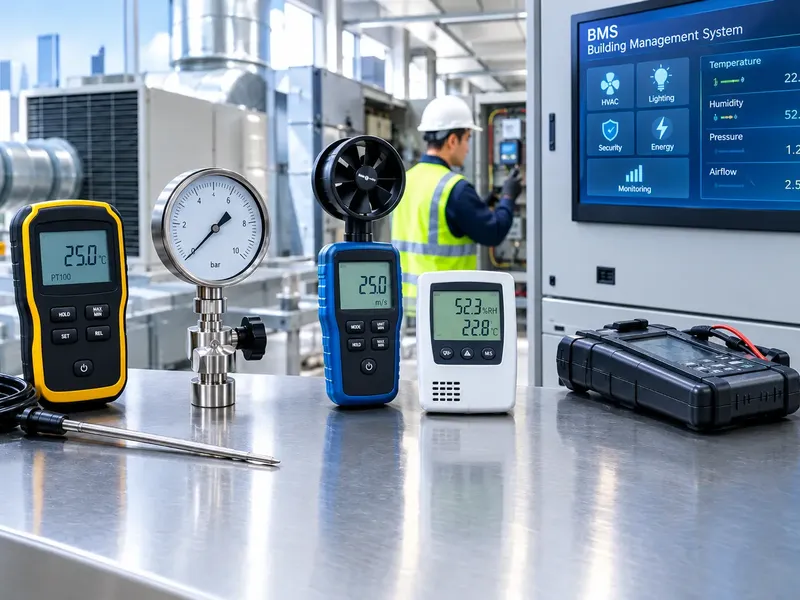
Common instruments requiring calibration certificates in UAE include:
● Pressure gauges and transmitters
● Temperature sensors, RTDs, and thermocouples
● Electrical multimeters, clamp meters, and oscilloscopes
● Torque wrenches and transducers
● Dimensional tools: micrometers, vernier calipers, height gauges, CMMs
● Weighing scales and mass sets
● Humidity loggers and hygrometers
● Flow meters for liquid and gas
● Gas analysers and detectors
● Load cells and force gauges
Step 2 — Choose an EIAC or ENAS Accredited Calibration Laboratory in UAE
This step is the most critical. The laboratory you select must hold current ISO/IEC 17025:2017 accreditation from EIAC, ENAS, or both. A certificate from an unaccredited provider is worthless in audits and has no legal standing.
When evaluating labs, check three things:
Accredited scope — Accreditation is parameter-specific. A lab accredited for dimensional calibration cannot issue a valid certificate for pressure calibration unless pressure is also within their accredited scope. Always confirm the lab's scope matches your instruments.
Traceability — The lab's reference standards must be traceable to national or international measurement standards. This traceability must appear on your certificate.
Service type — Determine whether you need in-lab calibration (you deliver equipment to the lab) or on-site calibration (a lab technician visits your facility). Large, fixed, or production-critical equipment is best calibrated on-site to avoid downtime.
General Tech Services in Sharjah holds the widest EIAC-accredited calibration scope in the UAE — all 15 calibration parameters covered under one roof — making them the most practical single-source option for businesses with diverse instrument inventories.
To understand why accreditation matters when choosing a calibration lab and the risks of using an unaccredited provider, this resource is essential reading.
Step 3 — Submit Your Equipment and Brief the Lab
Once you've selected your accredited calibration lab, contact them to arrange the service. Provide:
● Instrument make, model, and serial number
● Calibration history or last calibration date (if available)
● Operating range and any specific tolerance requirements
● Whether you need in-lab or on-site calibration
For in-lab calibration, you can drop off equipment directly at the lab's facility or ship it following their handling instructions. General Tech Services, headquartered in Sharjah and accessible to businesses across Dubai, Abu Dhabi, Ajman, and the northern emirates, accepts both walk-in drop-offs and shipped instruments.
For on-site requirements, General Tech's on-site calibration services are available across the UAE with minimal disruption to your operations.
Step 4 — The Calibration Process
Inside an ISO 17025 accredited laboratory, the calibration process follows a rigorous, documented procedure:
- The instrument is received, logged, and assigned a unique job reference
- A trained metrologist compares the instrument's readings against certified reference standards traceable to national measurement standards
- Pre-adjustment readings are recorded across the instrument's measurement range
- Any necessary adjustments are made to bring the instrument within acceptable tolerance
- Post-adjustment readings are recorded and verified
- Measurement uncertainty is calculated and documented
- All findings are compiled into the calibration certificate
The entire process is conducted under controlled environmental conditions where required — particularly important for dimensional, humidity, and temperature calibrations.
For specialised equipment like coordinate measuring machines, General Tech's CMM calibration service follows the same traceable process with dedicated precision equipment.
Step 5 — Receive and Verify Your Calibration Certificate
Once calibration is complete, you receive your official certificate. A valid ISO 17025 calibration certificate issued in the UAE must contain all of the following:
● Laboratory name, EIAC/ENAS accreditation number, and contact details
● Unique certificate number and date of issue
● Equipment details: make, model, serial number, and asset tag
● Calibration method reference and environmental conditions during calibration
● Reference standards used and their traceability information
● Measurement results — before and after adjustment — with stated uncertainties
● Statement of traceability to national or international measurement standards
● Technician signature and authorised signatory approval
● Recommended next calibration date
Check every field before filing the certificate. Missing elements — particularly the accreditation number or traceability statement — can invalidate the certificate for audit purposes.
Step 6 — File the Certificate and Schedule Recalibration
Store your calibration certificates in an accessible, organised system. During ISO 9001 audits, client inspections, or regulatory checks, you must be able to produce the current certificate for any instrument on demand.
Set a recalibration reminder at least four to six weeks before the certificate's expiry date. Missing the recalibration interval means your instrument is technically out of compliance — even if it was perfectly calibrated the day before.
Many businesses across Sharjah and Dubai partner with General Tech Services on a managed calibration programme, where the lab maintains your instrument database and sends proactive reminders before instruments fall out of date.
What Does a Calibration Certificate Cover? Common Instrument Types
General Tech Services provides ISO 17025 calibration services in UAE across all major instrument categories:
Dimensional Calibration
Micrometers, vernier calipers, height gauges, slip gauges, bore gauges, dial indicators, and CMMs. View dimensional calibration services.
Pressure Calibration
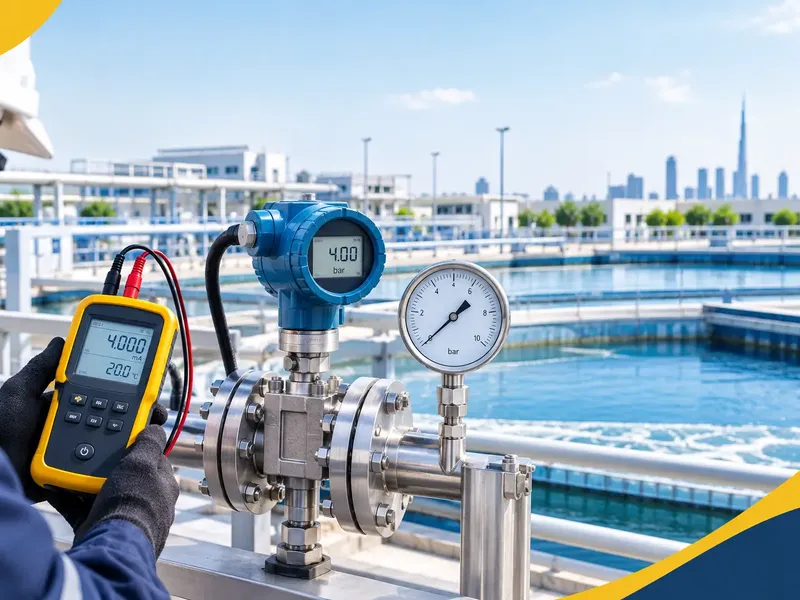
Pressure gauges, pressure transmitters, manometers, and dead weight testers. View pressure calibration services.
Temperature Calibration
RTDs, thermocouples, temperature indicators, data loggers, and dry block calibrators. View temperature calibration services.
Electrical Calibration
Multimeters, clamp meters, oscilloscopes, power meters, and resistance standards. View electrical calibration services.
Torque Calibration
Torque wrenches, torque transducers, and screwdrivers. View torque calibration services.
Additional Parameters
Force, humidity, mass, flow, volumetric, sound, bio-medical, NDT, gas analyser, and pH calibration — all covered under a single EIAC/ENAS accredited scope.
How Long Is a Calibration Certificate Valid in UAE?
Most calibration certificates in the UAE carry a recommended recalibration interval of 12 months. However, this is not a fixed legal rule — the appropriate interval depends on:
● Instrument type and usage frequency — High-use instruments drift faster and may need six-monthly calibration
● Industry requirements — Oil and gas, aviation, and healthcare sectors often specify shorter intervals in their quality management systems
● Instrument stability history — If previous calibrations show consistent drift, shorten the interval
● Manufacturer recommendation — Some instruments have manufacturer-specified calibration intervals
The calibration certificate itself will state the recommended next calibration date. That recommendation, combined with your quality management system requirements and industry regulations, should determine your actual recalibration schedule.
Frequently Asked Questions About Calibration Certificates in UAE
Is a calibration certificate legally required in UAE?
Yes. The Ministry of Industry and Advanced Technology (MoIAT) requires documented proof that measuring equipment meets national accuracy standards in regulated industries. For ISO 9001 certified businesses, calibration is a mandatory requirement of the quality management system. Government tenders and ADNOC contracts also commonly require valid calibration certificates from EIAC or ENAS accredited laboratories.
Can I get a calibration certificate on-site, or do I have to send equipment to a lab?
Both options are valid, provided the calibration lab holds ISO/IEC 17025 accreditation for the parameters being calibrated. On-site calibration is ideal for large, fixed, or production-critical equipment. General Tech Services offers on-site calibration across the UAE from their Sharjah base.
What is the difference between EIAC and ENAS accreditation?
EIAC is the primary accreditation body covering Dubai and widely recognised across the UAE. ENAS operates under MoIAT and is the accreditation body for Abu Dhabi and the northern emirates. Both are internationally recognised through ILAC. The strongest calibration providers — like General Tech Services — hold both accreditations, meaning their certificates are valid across every emirate and internationally.
How quickly can I get a calibration certificate in UAE?
Turnaround time varies by instrument type and lab capacity. Routine calibrations at General Tech Services are typically completed within one to three business days. Fast-track options are available for urgent requirements.
What happens if I use an unaccredited calibration lab?
Certificates from unaccredited labs are not recognised by UAE regulatory authorities, ISO auditors, or international clients. Your quality management system non-conformance could result in failed audits, disqualified tenders, and the need to recalibrate all instruments at an accredited lab — at additional cost and time.
Why General Tech Services for Your Calibration Certificate in UAE
General Tech Services has provided ISO 17025 calibration services in UAE since 1998 — over 25 years of measurement expertise serving aviation, oil and gas, manufacturing, healthcare, defence, and water treatment industries.
Based in Sharjah, with on-site service capability across Dubai, Abu Dhabi, Ajman, Ras Al Khaimah, and the northern emirates, General Tech offers:
● EIAC accreditation: LB-CAL-004
● ENAS accreditation: NAL 240
● ISO 9001 certification
● The widest EIAC-accredited calibration scope in the UAE — all 15 parameters under one roof
● Both in-lab and on-site calibration services
● Fast turnaround with no compromise on accuracy
● Fully traceable calibration certificates accepted by all UAE regulatory bodies and international quality auditors