You just passed an audit. Everything looks good on paper. But six months later, your pressure gauge has drifted, your thermocouple is reading two degrees off, and your production batch is now under review.
This is exactly what happens when calibration frequency is treated as an afterthought.
For businesses across the UAE — from oil and gas facilities in Abu Dhabi to manufacturing plants in Sharjah and laboratories in Dubai — knowing the right calibration frequency for equipment in the UAE is not just a compliance requirement. It is a direct line to measurement accuracy, product quality, operational safety, and audit readiness.
This guide breaks down how often you should calibrate your instruments, what drives those intervals, and how to build a calibration schedule that actually works for your industry.
Why Calibration Frequency Is Not One-Size-Fits-All
A common mistake many UAE facilities make is applying a single fixed interval — typically "once a year" — to every instrument on-site, regardless of type, usage, or risk level.
That approach is both inefficient and potentially dangerous.
Calibration intervals are determined by a combination of factors specific to each instrument and operating environment. An annual interval might be perfectly adequate for a rarely used mechanical gauge in a low-risk application. But it could be dangerously inadequate for a gas detector running daily in an oil and gas facility, or a precision balance used in a pharmaceutical laboratory.
Getting the instrument calibration interval right in the UAE means understanding the variables that drive drift, the standards that govern your industry, and the historical performance of each instrument in your inventory.
Key Factors That Determine How Often to Calibrate Equipment in UAE
1. Instrument Type and Measurement Parameter
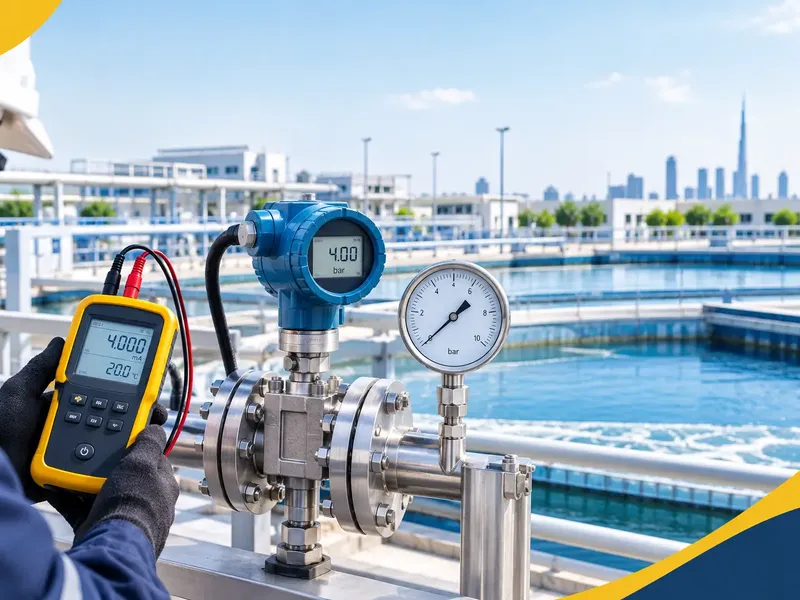
Different instruments drift at different rates. Electrical measuring instruments such as multimeters and clamp meters tend to be stable and often suit annual calibration. Pressure gauges exposed to pulsation, vibration, and process media degrade faster. Temperature sensors, particularly thermocouples in high-cycle applications like furnaces and ovens, may need calibration every three to six months.
General Tech's calibration services cover over 15 measurement parameters, each with its own drift characteristics and recommended interval ranges based on real-world instrument performance data.
2. Intensity and Frequency of Use
An instrument used eight hours a day, five days a week accumulates far more mechanical stress, thermal cycling, and environmental exposure than one used occasionally. High-use instruments need proportionally shorter calibration intervals.
Torque tools used in production lines, for example, should typically be calibrated every six months or after a defined number of cycles — not simply once a year regardless of output volume.
3. The UAE Operating Environment
This factor is consistently underestimated by facility managers.
The UAE climate introduces challenges that directly accelerate instrument drift:
● Extreme heat — ambient temperatures regularly exceeding 45°C in summer affect electronic components, seals, and sensing elements.
● High humidity — especially in coastal areas like Sharjah, Fujairah, and Dubai, moisture penetrates instrument housings and causes corrosion.
● Desert dust and particulates — abrasive fine sand affects mechanical instruments, optical sensors, and dimensional measuring tools.
● Salt-laden air — critical for marine and offshore sectors in the Gulf, where corrosion rates are significantly higher than inland environments.
These conditions mean UAE-based operators often need to calibrate more frequently than equivalent facilities in Europe or North America using the same equipment.
4. Risk Level and Consequences of Measurement Error
Ask yourself: what happens if this instrument gives an incorrect reading?
In a pharmaceutical clean room, a humidity logger reading 3% high could mean a failed batch and a product recall. In an offshore facility, a pressure transmitter reading low could mask a developing overpressure situation. In a construction project, a miscalibrated torque wrench could mean under-tightened structural connections.
The higher the consequence of error, the shorter the calibration interval should be — and the more important it is to work with an EIAC and ENAS accredited calibration laboratory that provides fully traceable calibration certificates.
5. Historical Drift and Past Calibration Records
One of the most powerful tools for optimizing your calibration schedule is your own calibration history data.
If an instrument consistently comes in within tolerance, its interval can potentially be extended with documented justification. If it regularly drifts or requires adjustment, the interval should be shortened — and the root cause investigated. Proper record-keeping is what allows this kind of intelligent calibration management.
UAE Regulatory and Standards Requirements You Must Know
Before setting any calibration schedule in the UAE, you need to align with the applicable regulatory and standards framework.
ISO 9001:2015 requires that monitoring and measuring equipment be calibrated or verified at specified intervals, or prior to use, against measurement standards traceable to international or national measurement standards. This applies to virtually every manufacturing, engineering, and service business pursuing or maintaining ISO 9001 certification in the UAE.
ISO/IEC 17025:2017 is the international standard for testing and calibration laboratories. It mandates documented calibration intervals for all equipment used in testing and measurement, with intervals justified based on risk and historical data.
ESMA (Emirates Authority for Standardization and Metrology) governs legal metrology in the UAE and sets traceability requirements for measurements used in trade, health, safety, and the environment.
Sector-specific requirements also apply:
● Oil and gas — API standards, ADNOC, and DEWA guidelines specify calibration requirements for process instruments and safety systems.
● Healthcare — UAE Ministry of Health requirements mandate regular calibration of biomedical and diagnostic equipment.
● Construction — Dubai Municipality and Abu Dhabi Department of Urban Planning and Municipalities specify calibration requirements for testing and inspection equipment used on projects.
● Free zones (Sharjah, SAIF Zone, Hamriyah) — industrial operators in Sharjah's free zones are subject to audit requirements that mandate current calibration certificates for all measurement equipment.
Failure to maintain compliant calibration records can result in failed audits, production stoppages, regulatory penalties, and loss of certification.
Recommended Calibration Intervals by Industry in the UAE
The following intervals are widely applied across UAE industries and provide a practical starting point. Always validate against your specific regulatory requirements and instrument performance data.
Oil and Gas
● Pressure gauges and transmitters: every 6 to 12 months; safety-critical instruments quarterly
● Temperature sensors (RTDs, thermocouples): every 6 to 12 months depending on process conditions
● Flow meters: annually or after maintenance events
● Gas detectors and analyzers: before each use or at minimum monthly; bump testing daily for confined space entry
Gas analyser and detector calibration is one of the most time-sensitive calibration requirements in the sector. Delays here create direct safety risk.
Manufacturing and Engineering
● Dimensional tools (micrometers, calipers, gauges): annually for general use; every 3 to 6 months for precision machining or high-volume production
● Torque wrenches and transducers: every 6 to 12 months or after a defined number of cycles
● Force measurement equipment: annually
● Pressure testing equipment: every 6 to 12 months
Torque calibration and dimensional calibration are the two most common calibration needs for manufacturing clients in Sharjah's industrial areas.
Laboratories
ISO/IEC 17025 accreditation requirements drive calibration intervals for testing and research labs in the UAE.
● Analytical balances and mass references: every 6 to 12 months
● pH meters and electrodes: every 6 months or more frequently based on use
● Pipettes and volumetric equipment: every 6 to 12 months
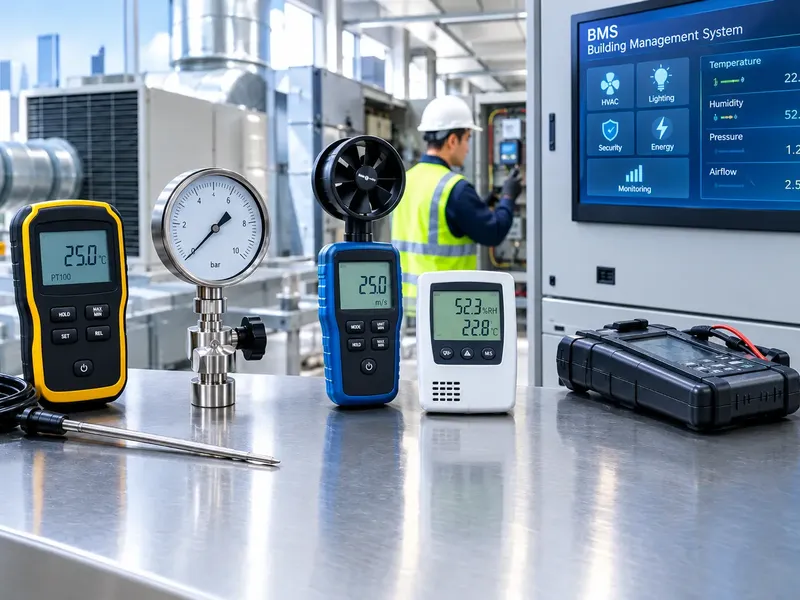
● Environmental monitoring (temperature, humidity loggers): every 6 to 12 months
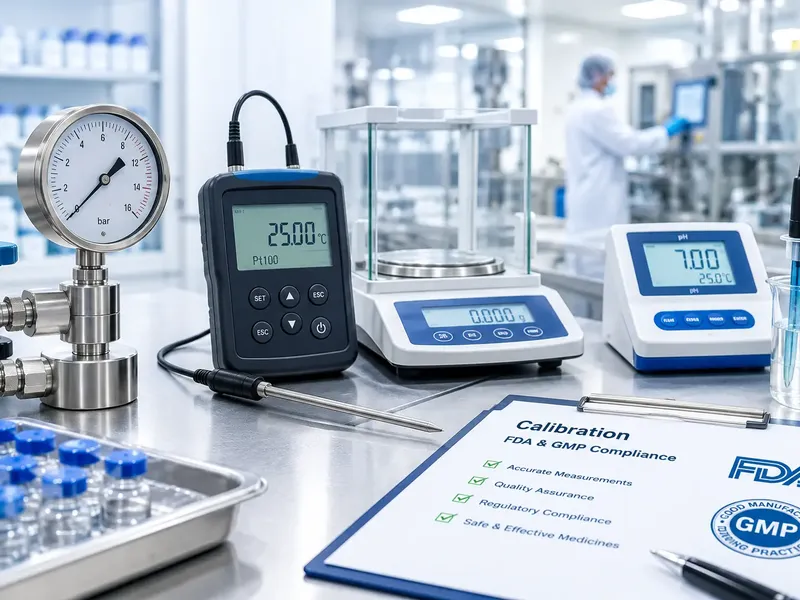
Mass calibration, humidity calibration, and volumetric calibration are the core laboratory calibration services most commonly required for accreditation compliance.
Healthcare and Biomedical
● Patient monitors, infusion pumps, ECG machines: annually at minimum
● Autoclaves and sterilization equipment: every 6 months or after a defined number of sterilization cycles
● Blood pressure monitors and pulse oximeters: annually
● Diagnostic imaging support equipment: per manufacturer guidelines and ministry requirements
Biomedical calibration in the UAE is heavily regulated, and certificate traceability is non-negotiable for hospital and clinic accreditation.
Utilities and Government Organizations
● Electrical testing instruments (multimeters, insulation testers, power analyzers): annually
● Reference standards in in-house labs: annually based on manufacturer data and drift history
Electrical calibration services cover the full range of electrical measurement instruments used by utilities and government facilities across the UAE.
Marine and Offshore
The Gulf environment demands shorter intervals than inland operations.
● Offshore pressure instruments and level sensors: every 3 to 6 months
● Gas detection systems: monthly or pre-use
● Navigational and communication instruments: per international maritime regulations (IMO, SOLAS)
Construction
● Survey equipment (total stations, levels, GPS receivers): annually; more frequently after physical impact or adverse conditions
● Concrete testing equipment and load cells: annually or based on usage cycles
● Torque tools for structural connections: every 6 months
How to Build a Calibration Schedule for Your UAE Facility
A calibration schedule that works is built systematically, not reactively. Here is a practical framework:
Step 1 — Build your instrument inventory. Document every measuring and testing instrument on-site. Include instrument type, make, model, serial number, location, measurement parameter, and the process or product quality decision it supports. This inventory is the foundation of your entire calibration management system.
Step 2 — Assign a risk level to each instrument. High risk (safety-critical, quality-critical, or regulatory-mandated) gets a shorter interval and higher priority. Low risk (monitoring only, non-critical) can be calibrated less frequently with appropriate justification.
Step 3 — Assign initial calibration intervals. Start with manufacturer recommendations, applicable industry standards, and your regulatory requirements. Where you have historical data from previous calibrations, use it to refine intervals.
Step 4 — Schedule calibrations in advance. Do not wait for instruments to go overdue. Schedule every calibration at least 30 days before the due date to allow for logistics, instrument downtime, and any unexpected delays in the calibration cycle.
Step 5 — Review results and optimize intervals. After each calibration, record whether the instrument passed or required adjustment, and by how much. Use this data over time to extend intervals for stable instruments and shorten them for instruments that regularly drift.
Step 6 — Maintain audit-ready records. Every calibration certificate should be filed and accessible. Records must include the calibration date, due date, calibration standard traceability chain, as-found and as-left values, and the accredited laboratory that performed the calibration.
Why Accreditation Matters When Choosing a Calibration Lab in UAE
Not all calibration certificates are equal.
Calibration performed by an ISO/IEC 17025 accredited laboratory — such as one holding EIAC (Emirates International Accreditation Centre) or ENAS accreditation — provides measurement traceability that is internationally recognized and accepted by regulators, auditors, and customers across the UAE and globally.
Certificates from non-accredited providers offer no independent verification of technical competence, equipment condition, or traceability. They are routinely rejected during ISO audits, government inspections, and customer quality reviews.
As discussed in depth in our article on why ISO/IEC 17025 calibration in the UAE matters and is worth the premium, the difference between an accredited and a non-accredited certificate is not just a technicality — it is the difference between a certificate that stands up in court, during an audit, or in a product liability claim, and one that does not.
General Tech Services holds EIAC accreditation (LB-CAL-004) and ENAS accreditation (NAL 240), covering the widest scope of calibration parameters available from a single laboratory in the UAE.
Common Calibration Frequency Mistakes UAE Businesses Make
Knowing what to avoid is just as important as knowing what to do.
Applying a universal annual interval to all instruments. Risk and usage vary enormously. A single interval ignores both.
Missing calibration due dates during busy production periods. An overdue instrument requires a documented impact assessment for all measurements taken since the last valid calibration. This can trigger product holds, customer notifications, and re-testing — far more disruptive than the calibration itself.
Using non-accredited calibration providers to save cost. The short-term saving almost always costs more during the next audit or quality incident.
Failing to record drift data over time. Without historical data, you cannot justify interval extensions or identify instruments that are failing prematurely.
Ignoring the effect of the UAE environment on calibration intervals. Instruments operating in extreme heat, humidity, or salt air degrade faster than standard intervals assume.
Frequently Asked Questions About Calibration Frequency in the UAE
How often should pressure gauges be calibrated in UAE oil and gas facilities?
In most oil and gas applications in the UAE, pressure gauges should be calibrated every 6 to 12 months. Safety-critical instruments — including those associated with pressure protection systems, emergency shutdown loops, or export measurement — are typically calibrated quarterly. Gas injection and high-pressure process instruments may require even more frequent verification depending on operating conditions and applicable API or company standards.
What is the minimum calibration frequency required for ISO 9001 compliance in the UAE?
ISO 9001 does not specify a fixed interval. It requires that calibration intervals be defined and that they be appropriate for the intended use and risk level of the instrument. In practice, most UAE facilities apply annual calibration as a minimum, with higher-risk instruments calibrated more frequently. The key requirement is that intervals are documented, justified, and consistently maintained.
Can I extend my instrument calibration interval if it keeps passing?
Yes, with proper justification. If an instrument consistently demonstrates stability over several calibration cycles — passing without adjustment each time — you may be able to extend its interval with documented evidence and a risk assessment. This approach is recognized under ISO/IEC 17025 and ISO 9001. However, any interval extension must be reviewed and approved within your quality management system, and you should consult your accredited calibration provider before making changes.
Do calibration intervals reset after a repair or maintenance event?
Yes. Any time an instrument undergoes repair, maintenance, adjustment, or experiences a physical impact or abnormal event, it should be calibrated before being returned to service, regardless of where it sits in its scheduled calibration cycle. This is a fundamental requirement under ISO 9001 and ISO/IEC 17025.
Which calibration laboratory in Sharjah, UAE can handle multiple instrument types under one accredited scope?
General Tech Services, based in Sharjah, UAE, holds EIAC and ENAS accreditation covering dimensional, electrical, pressure, temperature, torque, flow, mass, humidity, force, NDT, sound, volumetric, biomedical, gas analyser, and pH calibration — among the widest scopes available from a single accredited laboratory in the UAE. You can review the full calibration services scope or contact the team directly for a calibration schedule consultation.
Build Your Calibration Schedule With General Tech Services
Calibration frequency is not a decision to make once and forget. It is a living part of your quality management system that should evolve as your instruments, operations, and regulatory requirements change.
The right approach is instrument-by-instrument, driven by risk, usage intensity, operating environment, historical performance, and the applicable standards for your industry in the UAE.
General Tech Services has been supporting industries across Sharjah, Dubai, Abu Dhabi, and the wider UAE and Middle East since 1998. As an EIAC and ENAS accredited ISO/IEC 17025 calibration laboratory, we provide fully traceable calibration services across the widest scope of parameters available in the region — along with the expert guidance to help you build a calibration schedule that keeps you compliant, efficient, and audit-ready.
Request a calibration quote or explore our full calibration capabilities to get started.