Public sector and defence organizations buy calibration differently from most businesses. Instruments sit in secure facilities, procurement runs through formal tenders, documentation requirements are strict, and the consequences of a bad measurement reach well beyond one company: public health results, infrastructure inspection, environmental monitoring, safety systems and mission readiness.
This guide covers what calibration for defence and government entities in the UAE involves from a buyer's point of view: which instruments matter, what documentation tenders typically expect, how secure and on-site work is handled, and how to keep records audit-ready. It is general guidance, since every entity has its own procurement and security rules, and you should follow yours.
Why Public Sector Calibration Is Different
Public sector calibration usually combines several pressures:
- Formal procurement. Suppliers are qualified through tenders, pre-qualification and documented evidence rather than a quick quotation
- Accountability. Public bodies answer to auditors, regulators and the public, so records must be complete and defensible
- Security. Many facilities restrict access, equipment and information, which affects how calibration is delivered
- Wide instrument variety. A single entity may run laboratories, workshops, inspection teams, health facilities and building services
- Safety and public impact. Errors can affect public safety, health outcomes or enforcement decisions
Where Government and Defence Instruments Typically Sit
Different parts of the public sector depend on different instruments. Common examples include:
- Public health and environmental laboratories, using balances, pH meters, volumetric glassware, temperature and humidity equipment. See our guides to mass calibration, pH meter calibration and volumetric calibration
- Noise and environmental monitoring, using sound level meters for compliance and enforcement. See our guide to sound level meter calibration
- Safety and emergency services, relying on gas detectors and related safety instruments. See our guide to gas detector calibration
- Infrastructure inspection and materials testing, using NDT equipment, load cells and testing machines. See our guides to NDT calibration and load cell calibration
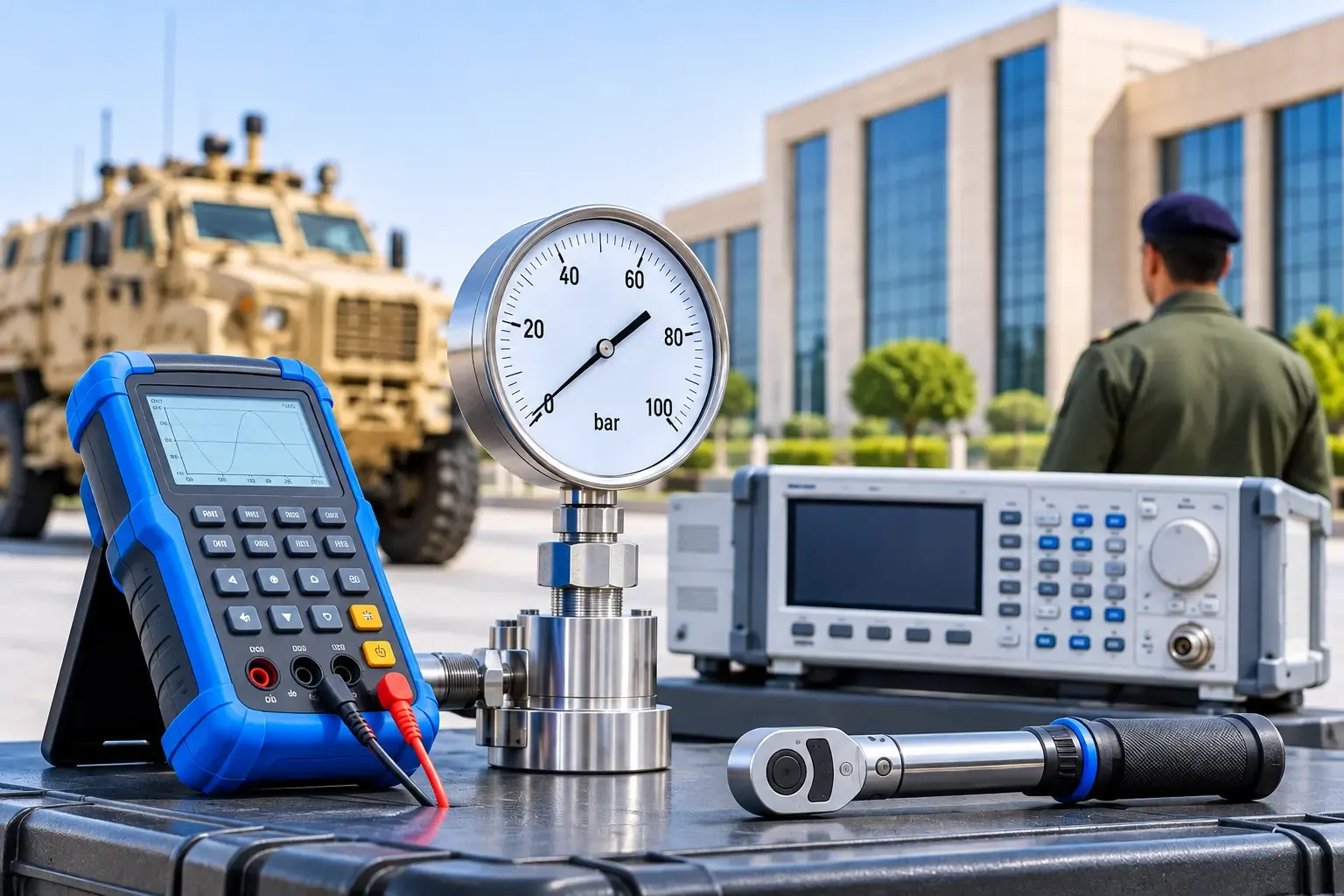
- Workshops and maintenance facilities, using torque tools, pressure gauges and dimensional instruments
- Healthcare facilities, using temperature, electrical and biomedical test equipment
What Tenders and Procurement Typically Ask For
Requirements vary, but public sector tenders for calibration commonly ask suppliers to show:
- Valid trade licence and company registration
- Accreditation to ISO/IEC 17025 for the relevant disciplines, with the accreditation scope
- Evidence of a quality management system such as ISO 9001
- Sample calibration certificates showing the content and format
- Technical capability, such as equipment, staff competence and turnaround
- References or experience in comparable work
- Insurance, health and safety documentation and compliance with site rules
- Clear pricing, terms and service levels
Preparing these documents in advance, and checking that the accredited scope covers the exact instruments in the tender, saves time and avoids disqualification on technicalities. Our laboratory is accredited by EIAC (LB-CAL-004) and ENAS (NAL 240), and the scope can be reviewed against your instrument list.
Secure On-Site Calibration
When instruments cannot leave a secure site, on-site calibration needs planning. Typical considerations include:
- Advance notification of the technicians and equipment that will attend, in line with your entity's access procedures
- Escort and access rules, including identification, passes and supervised movement
- Restrictions on devices and tools, for example limits on phones, cameras and electronic storage, which may affect what technicians can bring
- Confidentiality, with agreements covering what is seen, recorded and shared
- Clear scope and scheduling, so work is done within approved windows
These arrangements are set by the entity, and a provider should adapt to them. Our guide to on-site versus in-lab calibration helps decide which instruments suit each route.
Chain of Custody for Instruments
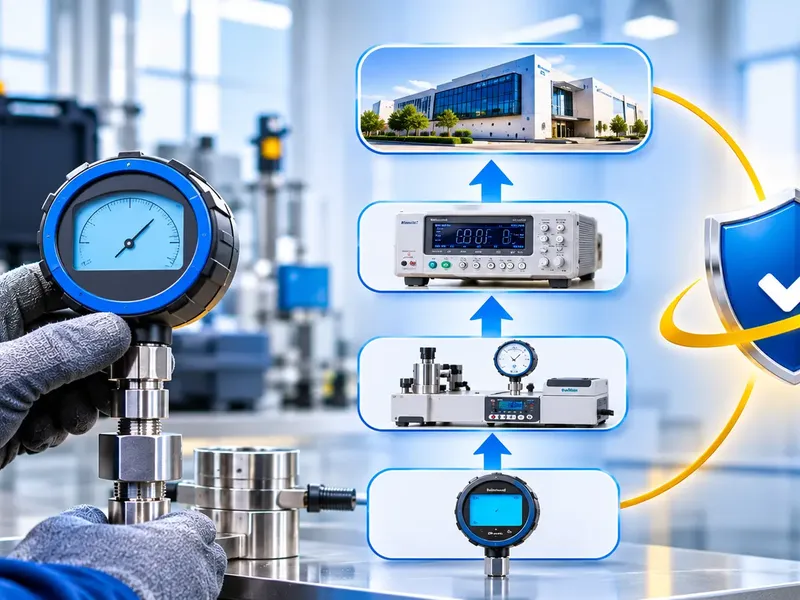
When instruments leave a facility for laboratory calibration, accountability matters. Good practice includes:
- A written transfer record listing each instrument by ID, serial number and condition
- Secure packaging and agreed transport
- Receipt confirmation at the laboratory with condition noted
- A return record, with the certificate matched to the instrument
- Clear handling of instruments that fail or need repair
This protects both parties and keeps the register accurate.
Documentation and Audit Readiness
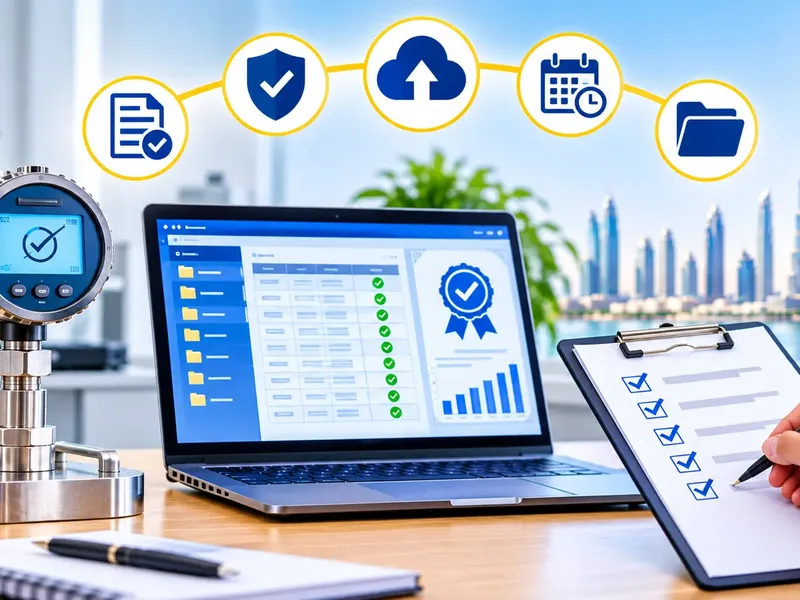
Public bodies are audited internally and externally, so calibration records need to be strong:
- A complete instrument register with unique IDs, owners and due dates
- Certificates linked to every instrument, with accreditation numbers visible
- As-found results and follow-up records for any failure
- Documented intervals and the reasons for them
- Labels showing calibration status on the instruments
Our guides to how to get a calibration certificate in the UAE and calibration frequency in the UAE help build this, and our guide to multi-site calibration management covers entities with many locations.
Choosing a Calibration Provider for Public Sector Work
When evaluating a provider, consider:
- Accreditation scope. Does it cover your instrument types and ranges?
- Capability across disciplines. Fewer vendors simplify procurement and records
- On-site ability. Can they work within your access and security procedures?
- Turnaround and service levels. Can they meet your schedule, including urgent needs?
- Documentation quality. Do certificates show as-found data, uncertainty and traceability?
- Transparency. Are scope, limits and pricing clear?
Frequently Asked Questions
Do government tenders require accredited calibration? Many do, commonly asking for ISO/IEC 17025 accreditation covering the instruments involved. Check the tender's specific wording.
What documents do suppliers usually need to provide? Typically licence and registration, accreditation scope, quality system evidence, sample certificates, technical capability, references and compliance with site rules.
Can calibration be done inside a secure facility? Often yes, using on-site calibration planned around the entity's access, escort and confidentiality procedures.
How are instruments tracked when they leave the site? Through a chain of custody with transfer records, secure transport, receipt checks and matched return documentation.
Which public sector instruments most often need calibration? Laboratory balances and pH meters, temperature equipment, sound level meters, gas detectors, NDT and testing equipment, and workshop tools such as torque wrenches.
Closing Thoughts
Calibration for defence and government entities in the UAE is as much about process as measurement. Well-prepared tender documents, accredited certificates matched to your instruments, secure on-site and chain-of-custody arrangements, and clean audit records let a public body keep instruments trustworthy while meeting the accountability expected of it.
To discuss calibration requirements for your entity, reach out through the General Tech Services contact page, or explore the full range of ISO 17025 accredited calibration disciplines.