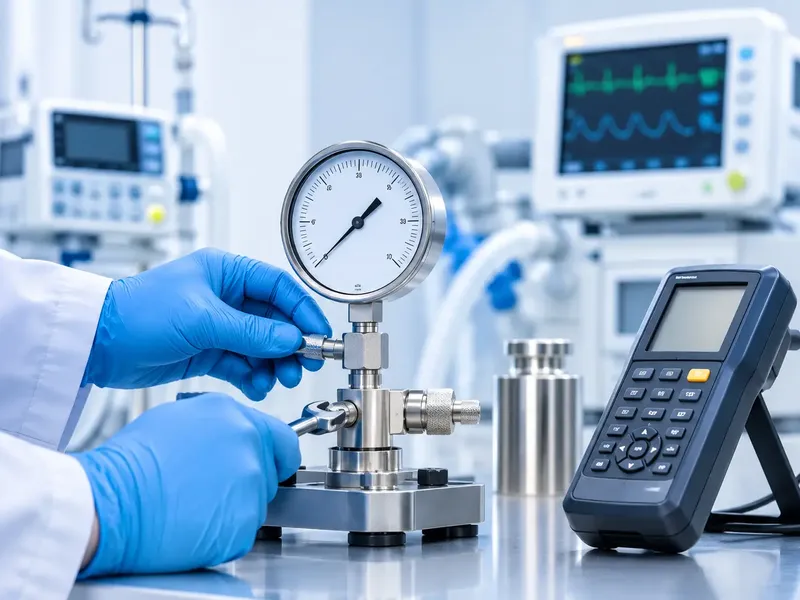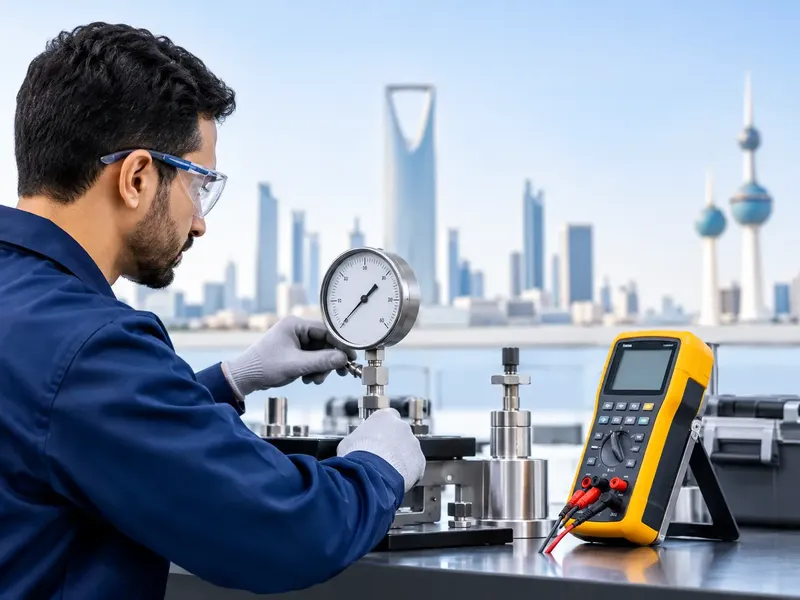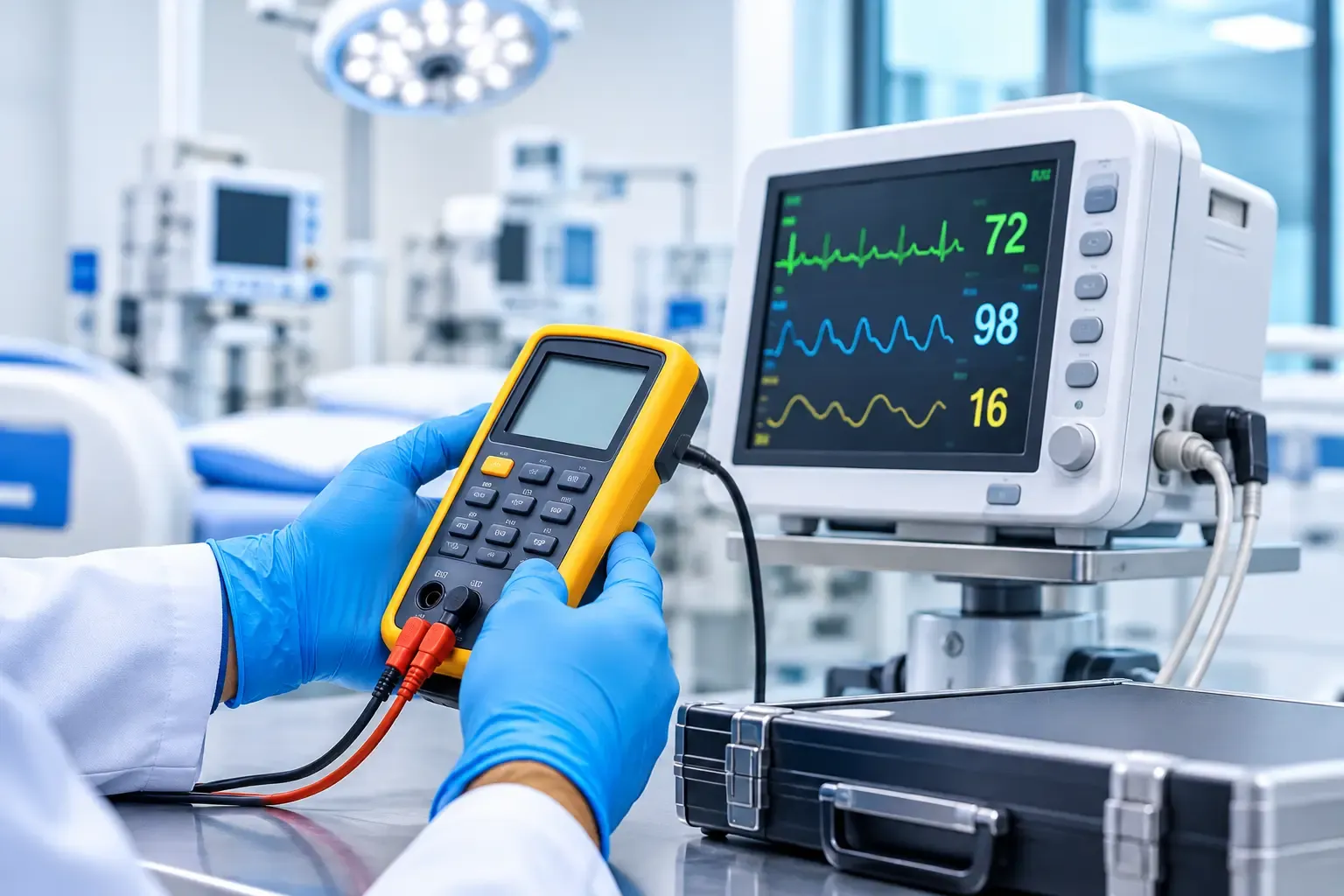
Dubai Healthcare City is a healthcare and medical education free zone in Dubai, home to clinics, hospitals, diagnostic laboratories, specialist centers and academic institutions. A facility there depends on measurement at every level: the energy a defibrillator delivers, the flow rate of an infusion pump, the temperature inside a vaccine refrigerator, the weight of a reagent on a laboratory balance, the electrical safety of equipment touching a patient.
This guide explains how calibration services in Dubai Healthcare City work with General Tech Services, an EIAC and ENAS accredited ISO 17025 laboratory in neighboring Sharjah and the only authorised Fluke Bio-Medical calibration centre in the GCC for several categories of biomedical test equipment, according to our website. It covers which instruments matter most, what healthcare standards expect, and how to keep records ready for inspections and accreditation reviews.
How We Serve Dubai Healthcare City
Our accredited laboratory is in Industrial Area 11, Sharjah. We serve Dubai Healthcare City customers in two ways:
- On-site calibration, where technicians bring reference standards to your clinic, hospital or laboratory, which suits fixed equipment, installed systems and instruments that are difficult to move
- In-lab calibration, where portable instruments and test equipment go to our Sharjah laboratory for precision calibration under controlled conditions
Many healthcare customers combine the two: on-site visits for cold storage, chambers and installed equipment, and in-lab calibration for portable analyzers, thermometers, balances and meters. Our guide to on-site versus in-lab calibration helps decide which suits each instrument.
Biomedical Test Equipment: Our Fluke Bio-Medical Authorization
Biomedical engineering teams use specialized analyzers and simulators to verify that clinical equipment performs correctly. Those test instruments need calibration themselves, because an inaccurate analyzer can approve a device that is out of tolerance. According to our website, General Tech Services is the only authorised Fluke Bio-Medical calibration centre in the GCC for:
- Defibrillator analyzers
- Electrical safety analyzers
- Electrosurgery analyzers
- Infusion pump analyzers
- Patient monitor simulators
Calibration here covers the test equipment that biomedical teams use, not the clinical devices themselves. Servicing and preventive maintenance of the clinical devices is normally handled by your biomedical engineering team or the equipment's manufacturer or service provider, using calibrated test equipment.
Other Instruments Healthcare Facilities Rely On
Temperature Storage and Monitoring
Vaccine refrigerators, medication fridges, blood and sample storage, incubators and freezers need accurate temperature control. A drifting sensor or logger can compromise stored products without any visible sign. See our guides to temperature calibration and temperature data logger calibration.
Humidity and Environmental Monitoring
Pharmacies, laboratories, sterile storage and clean areas monitor humidity and room conditions. See our guide to humidity calibration.
Laboratory Balances, pH Meters and Volumetric Instruments
Clinical and diagnostic laboratories rely on balances, pH meters, pipettes and glassware for accurate results. See our guides to mass calibration, pH meter calibration and volumetric calibration.
Sterilization and Pressure Equipment
Autoclaves and sterilizers depend on accurate temperature and pressure instruments. See our guide to pressure gauge calibration.
Electrical Test Equipment
Biomedical and facilities teams use multimeters, clamp meters and other electrical instruments for installation and maintenance work. See our guide to clamp meter calibration.
What Healthcare Standards Expect
Healthcare organizations are reviewed against several frameworks, and calibration appears in most of them:
- Medical laboratory standards, such as ISO 15189, expect equipment to be calibrated with metrological traceability, and laboratories often work under accreditation programs that review calibration records
- Hospital and facility accreditation programs, such as Joint Commission International, expect documented medical equipment management, including inspection, testing and maintenance of equipment
- Electrical safety testing standards, such as IEC 62353 for recurrent testing of medical electrical equipment, rely on calibrated test instruments
- Licensing and regulatory requirements apply through the healthcare authorities and Dubai Healthcare City's regulatory body, and vary by facility type
Check the specific requirements that apply to your facility and license. In every case, a calibration certificate from an accredited laboratory with traceability and uncertainty is the evidence reviewers expect.
Why Calibration Matters More in Healthcare
A measurement error in a healthcare setting can reach a patient. An infusion pump that delivers the wrong rate, a defibrillator with the wrong energy, a refrigerator warmer than it displays, or a laboratory result based on a drifting instrument can have clinical consequences. That is why healthcare facilities usually keep tight control over calibration status and respond quickly when an instrument is found out of tolerance.
When that happens, the facility has to assess which patients, products or results were affected. Doing that depends on as-found data, so choose a provider whose certificates report as-found and as-left results, uncertainty and traceability. Our guide to how to get a calibration certificate in the UAE explains what a reliable certificate contains.
Planning Calibration Around Clinical Operations
Healthcare facilities can't always take equipment out of service. A practical approach:
- Keep a register of all measuring and test equipment, with IDs and due dates
- Prioritize critical instruments, such as those affecting patient safety or stored medicines
- Schedule calibration to avoid clinic peaks, and plan spares for critical test equipment
- Use on-site calibration for fixed or hard-to-move equipment
- Label instruments with status and keep certificates retrievable
- Review intervals using as-found history
Our guide to calibration frequency in the UAE explains how to set and review intervals.
Fifteen Disciplines Under One Provider
Instead of coordinating several vendors, a healthcare facility can cover most of its measuring instruments through one accredited laboratory. Our scope covers biomedical, dimensional, electrical, flow, force, gas analyser and detector, humidity, mass, NDT, pH and other instruments, pressure, sound, temperature, torque and volumetric calibration. Our laboratory is accredited by EIAC (LB-CAL-004) and ENAS (NAL 240). Explore the full range of calibration disciplines.
Frequently Asked Questions
Do you have a calibration laboratory in Dubai Healthcare City? Our accredited laboratory is in Sharjah. We serve Dubai Healthcare City through on-site calibration and in-lab calibration at our Sharjah laboratory.
What biomedical equipment can you calibrate? According to our website, we are the only authorised Fluke Bio-Medical calibration centre in the GCC for defibrillator analyzers, electrical safety analyzers, electrosurgery analyzers, infusion pump analyzers and patient monitor simulators.
Do you calibrate the clinical devices themselves? Our biomedical calibration covers the test equipment used to verify clinical devices. Servicing the clinical devices is normally handled by your biomedical team or the manufacturer.
Which other instruments should a clinic calibrate? Temperature sensors and loggers on refrigerators and incubators, balances, pH meters, pipettes, pressure gauges on sterilizers, and electrical test instruments.
How long does calibration take? Standard turnaround is typically two to five working days, with urgent and same-day options for critical requirements.
Closing Thoughts
Calibration services in Dubai Healthcare City have to protect patients as well as satisfy auditors. Calibrated biomedical test equipment, accurate temperature and laboratory instruments, as-found data, clear records and an accredited provider help healthcare facilities keep their measurements trustworthy and their accreditation reviews calm.
To arrange calibration in Dubai Healthcare City, reach out through the General Tech Services contact page or call +971 6 5436933.