A pH meter reading confidently displayed to two decimal places gives a false sense of precision if the electrode behind it hasn't been properly calibrated. Unlike most measurement instruments, a pH electrode's response actually changes over time through a predictable but variable process, aging, chemical contamination, and dehydration all shift how the sensor responds, which is exactly why calibration isn't optional maintenance here, it's a required step before every serious measurement session.
This guide covers pH meter calibration UAE water treatment facilities, laboratories, and food and beverage operations depend on, including how buffer calibration actually works, why two-point and three-point methods exist, and what determines whether an electrode still meets its accuracy specification.
The Physics Behind Why pH Meters Need Calibration
A pH meter measures pH using potentiometry, where the glass electrode responds to hydrogen ion activity in a solution, generating an electrical potential that changes in a linear relationship with pH according to the Nernst equation. At 25°C, this theoretical relationship predicts that every one-unit change in pH produces a potential change of 59.16 millivolts, a figure referred to as the electrode's slope.
In practice, no electrode maintains this exact theoretical slope indefinitely. Electrode aging, chemical contamination, and dehydration all cause the actual slope to deviate from the theoretical value, and the zero-potential point, the pH at which the electrode outputs no potential difference, also shifts gradually over time. Calibration exists specifically to measure the electrode's current actual slope and zero offset, allowing the meter's software to correctly translate raw electrical potential into an accurate pH reading despite this ongoing sensor drift.
Two-Point vs Three-Point Calibration: What the Difference Actually Means
Two-Point Calibration
Uses two standard buffer solutions, commonly pH 4.00 and pH 6.86 or pH 7.00, bracketing the expected sample range on either side. This method calculates both the electrode's offset and its slope, giving considerably more accuracy than a single-point calibration, which only corrects for offset and tells you nothing about how the electrode's sensitivity has actually changed. Two-point calibration works well when your samples consistently fall on one side of neutral, either acidic or alkaline, and stay within the bracketed range between your two calibration points.
Three-Point Calibration
Adds a third buffer solution, typically pH 9.18 or pH 10.00, extending coverage across the acidic, neutral, and alkaline ranges in a single calibration. This matters because glass electrodes don't necessarily have identical slopes in acidic and alkaline regions, meaning a two-point calibration performed entirely on one side of neutral can't verify how the electrode actually behaves on the other side. If your samples span both sides of pH 7, three-point calibration eliminates the extrapolation error that a two-point calibration would otherwise introduce when measuring outside its bracketed range.
Why pH 7 Buffer Always Comes First
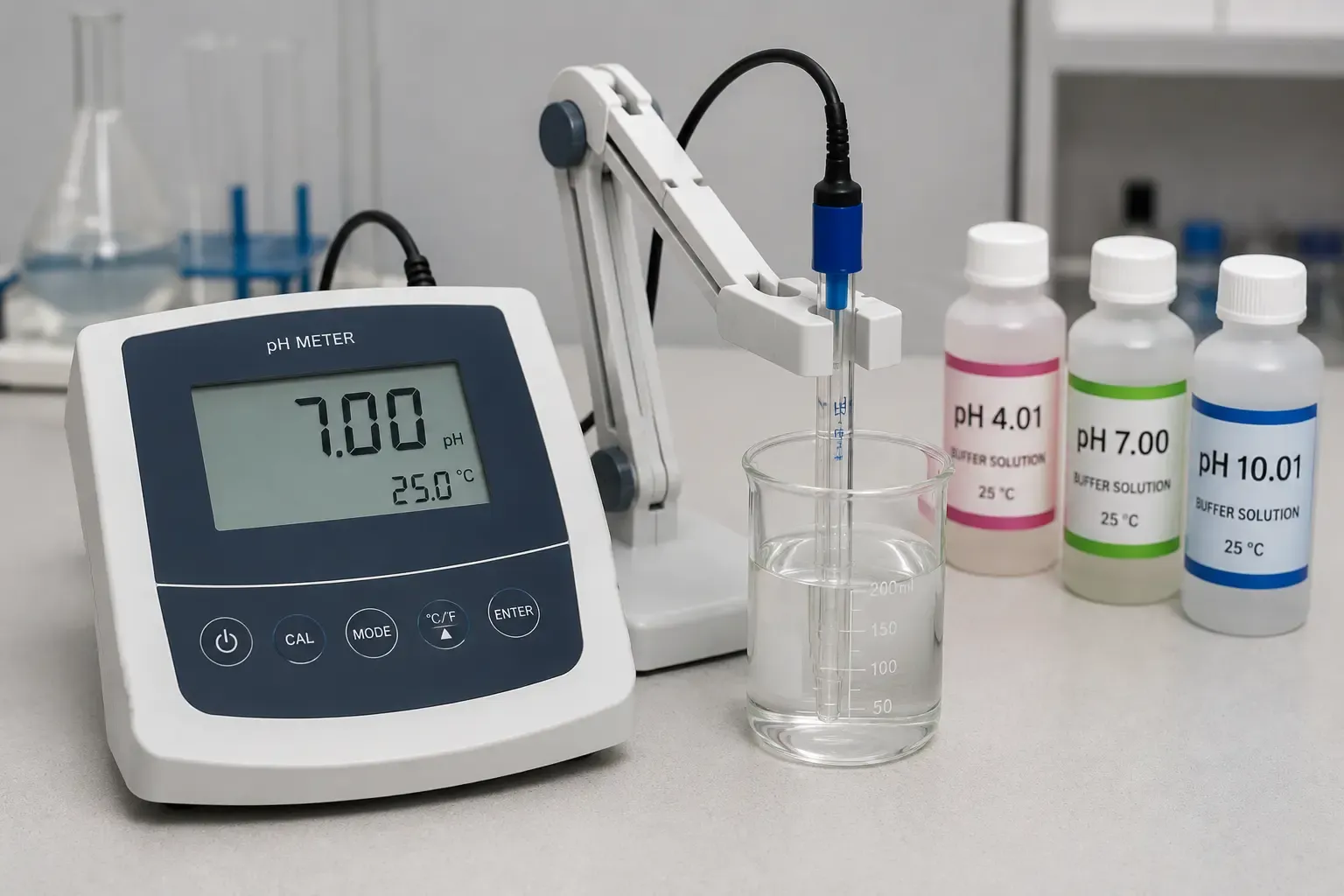
Regardless of whether you're running a two-point or three-point calibration, the pH 7.00 buffer is used first, since this establishes the meter's zero point before the slope is calculated using subsequent buffers. Every calibration procedure follows the same underlying sequence: rinse the electrode with distilled or deionized water, immerse it in the buffer, wait for the reading to fully stabilize, confirm or adjust the meter to match the buffer's stated value, then rinse again before moving to the next buffer.
How the Full Calibration Process Actually Works
A properly executed pH meter calibration follows this general sequence:
- Pour fresh buffer solutions into clean beakers, since reused or contaminated buffers introduce error regardless of how carefully the rest of the procedure is followed
- Choose buffers that are appropriately spaced apart, typically one to three pH units, and that reasonably bracket your expected sample range
- Rinse the electrode with distilled water and immerse it in the pH 7.00 buffer first, waiting for a fully stable reading before confirming the zero point
- Rinse again, then immerse the electrode in the second buffer, selected based on whether your samples run acidic or alkaline, waiting for stabilization before confirming this second point
- For three-point calibration, rinse and repeat the process with the third buffer covering the opposite range from the second buffer used
- Check the resulting electrode slope, which should fall within roughly 92% to 102% of the theoretical Nernst value to be considered acceptable
- Rinse the electrode one final time and store it according to the manufacturer's recommended storage solution and conditions
Why Temperature Control Matters During Calibration
Since pH measurements are directly affected by temperature, the temperature needs to remain as stable as possible throughout the calibration process. Modern pH meters typically include a built-in temperature probe and automatically compensate for temperature effects on the reading, but the underlying buffer solutions themselves still need to be at a known, stable temperature for the calibration itself to be accurate, since buffer pH values are only certified at specific reference temperatures.
Verifying Electrode Health: The Slope Check
Checking the electrode slope regularly, ideally through at minimum a daily two-buffer calibration in active laboratory use, is one of the most important diagnostic checks available for pH electrode health. An acceptable slope generally falls between 92% and 102% of the theoretical 59.16 mV per pH unit value. A slope consistently falling outside this range, even after a fresh calibration, typically indicates the electrode itself needs cleaning, reconditioning, or replacement rather than simply needing another calibration attempt.
pH Meters in Water Quality and Industrial Applications
Beyond general laboratory use, pH measurement plays a critical compliance role across several UAE industries:
- Water and wastewater treatment, where pH directly affects treatment process efficiency and discharge compliance
- Food and beverage processing, where pH influences both product safety and quality across a wide range of production processes
- Pharmaceutical manufacturing, where pH control affects formulation stability and product specification compliance
- Environmental testing, where accurate pH data supports regulatory reporting and environmental monitoring programs
In each of these contexts, an improperly calibrated pH meter doesn't just produce an inaccurate number, it can mean a treatment process running outside its intended parameters, or a compliance report built on data that won't hold up under review.
ISO 17025 Accredited pH Meter Calibration
Working with an ISO 17025-accredited laboratory for pH meter calibration ensures buffer solutions used as reference standards are properly certified and traceable, calibration methodology is validated and consistently applied, and a documented measurement uncertainty accompanies the result. Our full range of ISO 17025 accredited calibration disciplines extends this same accredited rigor across volumetric, temperature, and electrical laboratory instrumentation alongside pH measurement equipment.
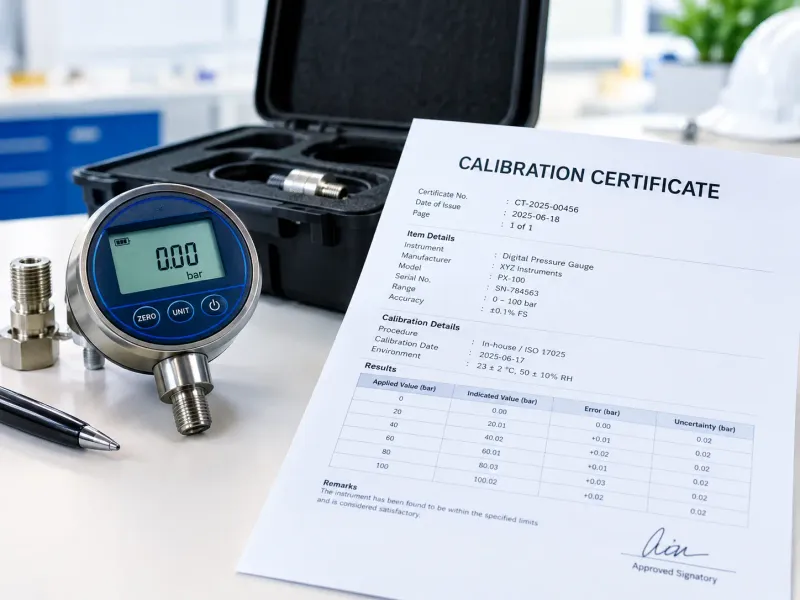
What a pH Meter Calibration Certificate Should Include
A properly issued calibration certificate should clearly document:
- The specific meter and electrode make, model, and serial number
- The buffer solutions used, including their certified pH values and lot traceability
- The measured electrode slope and offset resulting from calibration
- Stated tolerance and pass or fail status based on slope acceptance criteria
- The measurement uncertainty associated with the calibration
- The accreditation body and standard the issuing laboratory operates under
How Often Should pH Meters Be Calibrated
General guidance for calibration frequency includes:
- Daily two-buffer calibration checks for pH meters in active laboratory or process use, verifying electrode slope remains within acceptable range
- Full calibration before each significant measurement session, rather than relying on a calibration performed days or weeks earlier
- Immediate recalibration whenever slope checks fall outside the acceptable 92% to 102% range
- Electrode replacement, rather than continued recalibration attempts, once an electrode consistently fails to meet slope requirements even after cleaning and reconditioning
Frequently Asked Questions
Why is pH 7 buffer always used first in calibration? The pH 7 buffer establishes the meter's zero point before the electrode's slope is calculated using subsequent buffers, making it the foundational reference point regardless of whether a two-point or three-point calibration is being performed.
When should I use three-point calibration instead of two-point? Three-point calibration is preferable when your samples span both acidic and alkaline ranges, since a two-point calibration performed entirely on one side of neutral can't verify electrode behavior on the other side, introducing extrapolation error for out-of-range samples.
What is an acceptable electrode slope value? An acceptable slope typically falls between 92% and 102% of the theoretical Nernst value of 59.16 mV per pH unit at 25°C. A slope consistently outside this range suggests the electrode needs cleaning, reconditioning, or replacement.
Does temperature really affect pH calibration accuracy? Yes. Buffer pH values are only certified accurate at specific reference temperatures, and while modern meters compensate for sample temperature automatically, the buffer solutions themselves need to be at a known, stable temperature during calibration.
How often should a pH meter be calibrated? Daily slope checks are recommended for meters in active use, with full calibration performed before each significant measurement session rather than relying on a calibration from days or weeks prior.
Closing Thoughts
pH meter calibration UAE water treatment, food and beverage, and pharmaceutical operations depend on relies on more than a quick buffer dip. Understanding the Nernst-equation basis for electrode slope, choosing the right calibration method for your sample range, and verifying slope health regularly is what keeps pH data genuinely trustworthy for the compliance and quality decisions built on top of it.
To schedule pH meter or broader laboratory instrument calibration across the UAE, reach out through the General Tech Services contact page, or explore the complete range of ISO 17025 accredited calibration disciplines available across the UAE.