A refinery or petrochemical plant is a continuous machine. Thousands of instruments watch pressures, temperatures, flows and levels around the clock, and a smaller set of them stands between normal operation and an incident: the transmitters that trigger shutdowns, the relief valves that protect vessels, the gas detectors that guard people. Most of the time these instruments do nothing noticeable. Their value is realized only when something goes wrong.
That makes calibration for petrochemical and refinery plants in the UAE a different job from calibration in a typical factory. The work is concentrated into turnaround windows, the consequences of failure are severe, and the instruments sit in hazardous areas. This guide covers what matters most in these plants: how to plan around turnarounds, how safety instrumented systems change the calibration conversation, which instruments carry the highest risk, and how to keep documentation ready for demanding audits.
Why Process Plants Are Different
Compared with general industry, refineries and petrochemical plants share several characteristics that shape calibration:
- Continuous operation, so many instruments can only be reached during planned shutdowns, known as turnarounds
- Hazardous areas, where equipment is selected and handled for explosive atmospheres
- Safety layers, with instruments that exist specifically to prevent or limit incidents
- Large instrument populations, where tracking and prioritizing is a real challenge
- Severe consequences, since errors can mean releases, fires, lost production or regulatory action
These conditions push plants toward risk-based calibration, with the tightest control on the instruments that protect people, the environment and the process.
Turnaround Planning: Where Most Calibration Gets Done
Many instruments in a running plant cannot be isolated safely, so calibration is bunched into turnaround windows. Good planning here is the difference between a smooth turnaround and a scramble:
- Build the instrument scope early. Identify which instruments are due, which are critical, and which can only be done during the shutdown
- Calibrate and prepare portable standards in advance. Reference equipment used on site should itself be in calibration with certificates available
- Group work by area. Sequencing by unit and location reduces travel time and permit handling
- Plan permits and access. Hot work, confined space and isolation requirements affect how long each job takes
- Order spares and rental equipment ahead. Consider rented calibrators, communicators and test pumps for peak workload. See our guide to equipment rental in the UAE
- Record as-found data. It shows how the instrument performed during the previous run, which feeds interval decisions
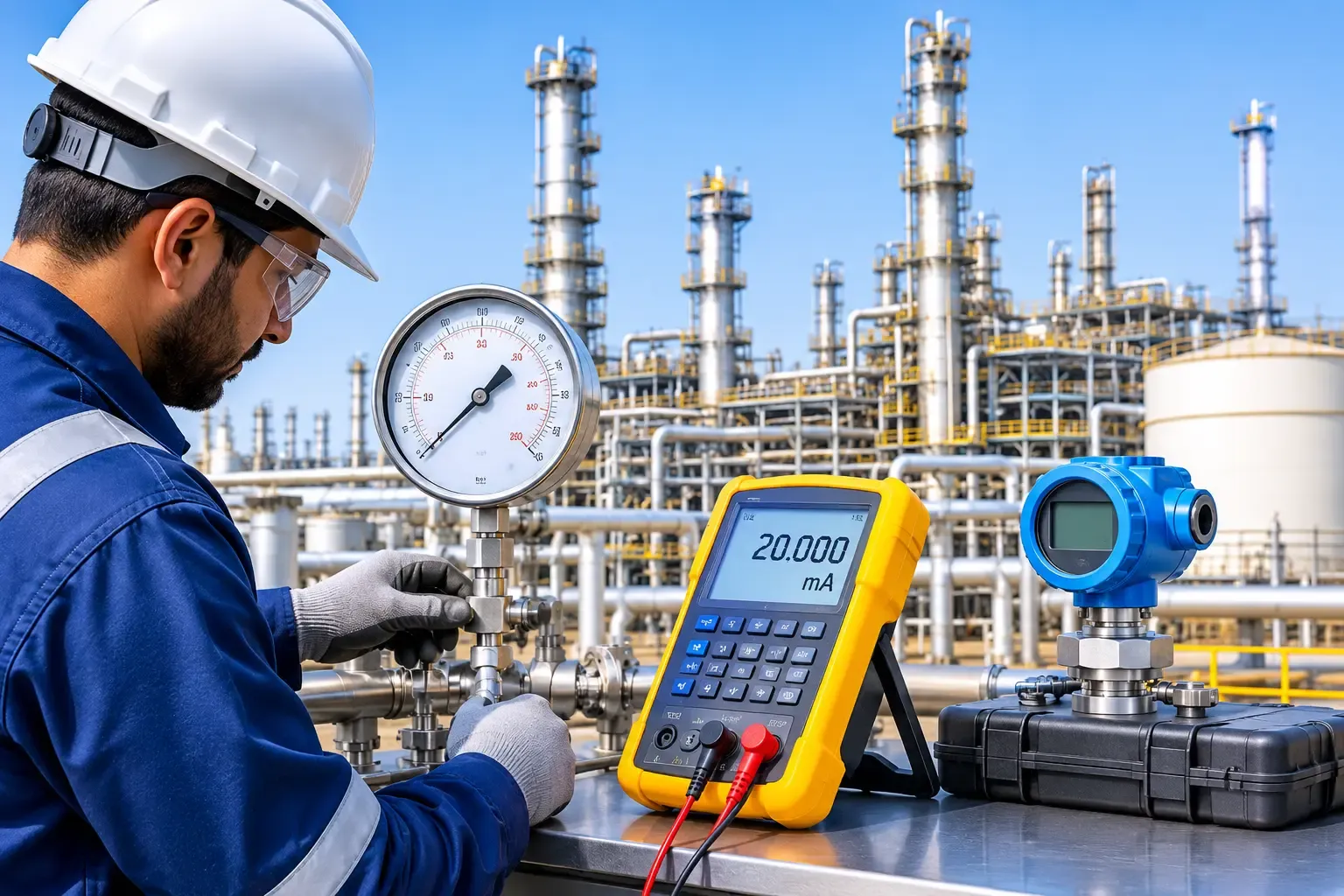
On-site calibration brings reference standards to the plant, which is how most turnaround calibration is delivered.
Safety Instrumented Systems and Why They Raise the Bar
Process plants use safety instrumented systems, often called SIS, to bring a process to a safe state when it goes outside safe limits. The sensors, logic solvers and final elements such as shutdown valves in these systems are designed to a risk target, and international functional safety practice for the process industry, such as IEC 61511, expects them to be proof tested at intervals that support that target.
In practice, this means:
- The sensors in the SIS, such as pressure, temperature and level transmitters, need calibration that is documented and traceable
- Proof tests check not only that a sensor responds but that it trips at the correct value
- Results, including any failures found, feed back into whether the test interval is adequate
- A drifting transmitter that still looks fine on the screen can quietly erode the safety integrity the plant believes it has
Your functional safety team defines the test requirements for each loop. Calibration provides the accurate, traceable measurement on which that testing relies.
The Instruments That Carry the Most Risk
Pressure Transmitters
Pressure transmitters appear everywhere in a refinery, in control loops, alarms and safety systems. They need verification of both the sensor and the output signal. See our guide to pressure transmitter calibration.
Pressure Relief Valves
Relief valves are the last line of defense against overpressure. Their set pressure and seat tightness need testing to recognized standards. See our guide to PRV testing.
Temperature Instruments
Thermocouples and RTDs control furnaces, reactors and columns, and protect equipment from overheating. See our guides to thermocouple calibration and temperature calibration.
Flow Meters
Flow measurement supports process control, custody transfer and allocation, and mass balance. Errors are costly and easy to miss. See our guide to flow meter calibration.
Gas Detectors
Fixed and portable detectors protect people from toxic and flammable gases, and they need both routine bump tests and scheduled calibration. See our guide to gas detector calibration.
Torque Tools and NDT Equipment
Flange bolting and mechanical assembly during turnarounds rely on torque tools, and inspection of vessels, pipework and welds relies on NDT instruments. See our guides to torque wrench calibration and NDT calibration.
Process Analyzers
Online analyzers measure composition and quality parameters. They are typically verified against reference gases or standard solutions, often through a combination of plant and specialist work. Confirm with your calibration provider which analyzer types and parameters fall within their accredited scope.
Hazardous Areas and Safe Working
Instruments in classified areas must be handled so that their protection concept is not compromised. Calibration in these areas typically involves permits, gas testing, appropriate certified equipment and clear procedures. Plan this into scope and timing, and make sure your calibration provider understands your site's safety requirements before arriving.
Setting Intervals by Consequence
A risk-based approach works better than a single interval:
- Rank instruments by the consequence of failure, with SIS, relief and gas detection at the top
- Use shorter intervals, or additional checks, for critical instruments and those in harsh services
- Align calibration with turnaround cycles where instruments cannot be accessed otherwise
- Use as-found history to extend or shorten intervals deliberately
- Treat any as-found failure on a critical instrument as an event to investigate
Our guide to calibration frequency in the UAE explains how to set and review intervals.
Documentation Auditors and Operators Expect
For process plants, reviewers typically look for:
- A register of critical instruments with status and due dates
- Certificates from an accredited laboratory with traceability, uncertainty and as-found data
- Evidence that loop checks and proof tests tie back to calibrated reference equipment
- Records of failures found and what was done about them
- Reference equipment brought on site that is itself in calibration
Clients and operators may specify their own documentation requirements, including for contractors and suppliers, so confirm what applies to your contract.
Calibration Support for Process Plants
Our laboratory is accredited to ISO/IEC 17025 by EIAC (LB-CAL-004) and ENAS (NAL 240) across pressure, temperature, flow, gas detection, torque, NDT and other disciplines, with on-site service across the UAE. For a broader view, see our overview of calibration for the oil and gas industry, and explore the full range of calibration disciplines.
Frequently Asked Questions
Why is turnaround planning so important for calibration? Many plant instruments can only be isolated during a shutdown, so calibration work is concentrated there, and early scoping, permits and spares determine how smoothly it goes.
What is a safety instrumented system? A system of sensors, logic and final elements that brings a process to a safe state when it goes outside safe limits, designed to a risk target and proof tested at intervals that support it.
Why does calibration matter for safety systems? Proof testing relies on accurate, traceable measurement, and a drifting sensor can reduce the safety integrity a plant believes it has without any visible warning.
Can instruments be calibrated on site in hazardous areas? Often yes, using suitable equipment, permits and procedures. Make sure your provider understands your site's safety requirements in advance.
How often should critical process instruments be calibrated? Intervals are set by consequence and history, often aligned to turnaround cycles for instruments that cannot be accessed otherwise, with shorter intervals or extra checks for the most critical.
Closing Thoughts
Calibration for petrochemical and refinery plants in the UAE is about protecting the instruments that protect everything else. Planning around turnarounds, treating safety system sensors with extra rigor, recording as-found data, handling hazardous areas safely and using an accredited provider keeps these plants running safely and their records defensible.
To plan calibration for your plant or turnaround, reach out through the General Tech Services contact page.