A gas detector that reads wrong doesn't just fail a test, it fails to warn someone standing next to a real hazard. In confined spaces, refineries, and process plants across the UAE, that failure can be fatal. Gas analyser calibration UAE isn't a compliance checkbox, it's the thing standing between a false sense of safety and an accurate one.
This guide covers what gas detector calibration UAE actually involves, which instruments need it, how often, and what to look for in an accredited provider before you book a slot.
What Gas Analyser and Detector Calibration Actually Involves
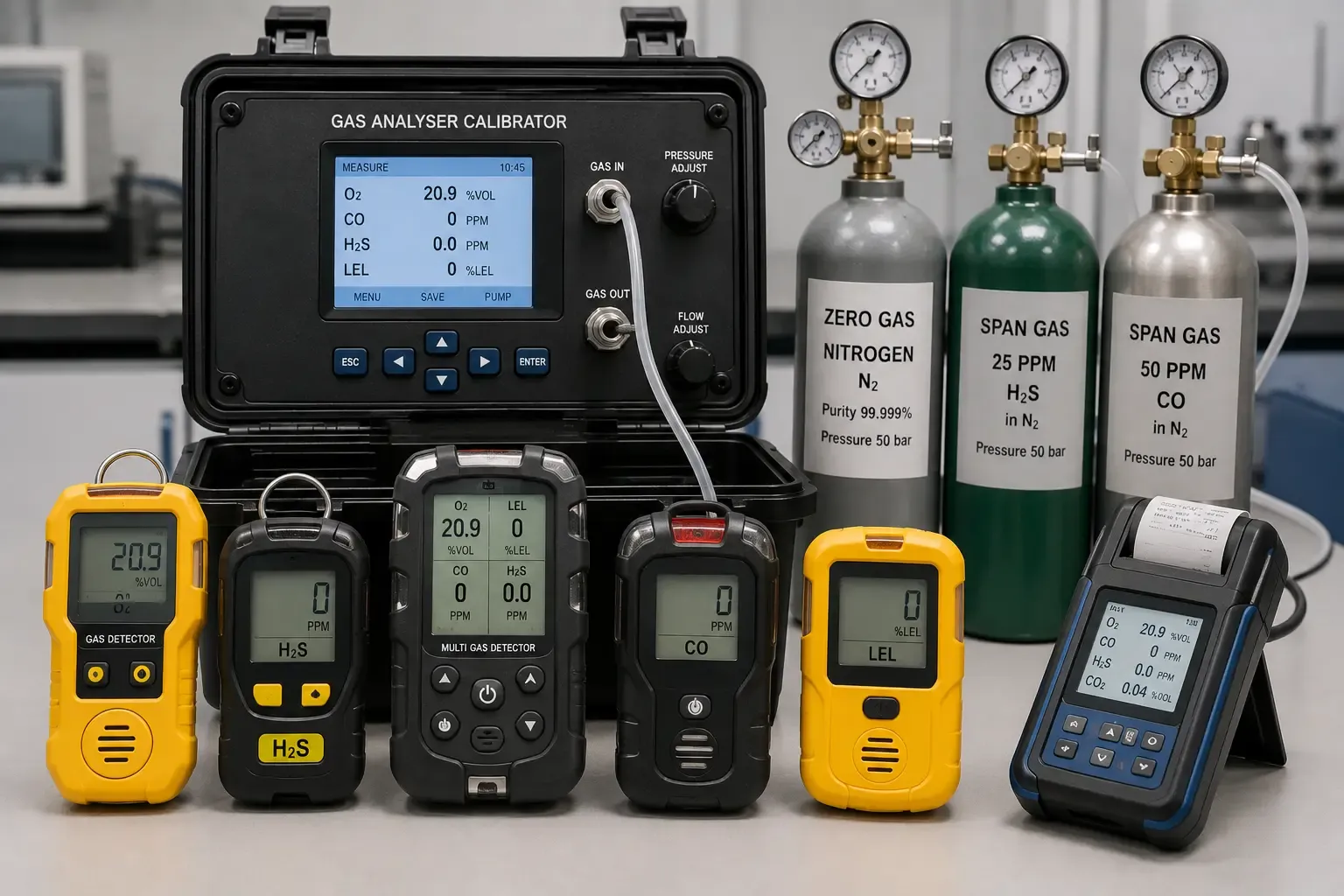
Gas analyser calibration UAE means testing a detector's response against a certified reference gas mixture of known concentration, then adjusting the instrument until its reading matches that known value. Any drift gets corrected, and a post-calibration check confirms the fix held before a certificate is issued.
This applies across a wide range of equipment, from single-gas monitors to combustion and flue gas analysers. Without it, sensors drift silently. A detector can look like it's working right up until the moment it doesn't.
Why This Matters More in the UAE Than Almost Anywhere Else
UAE industry runs on gas-heavy environments: oil and gas platforms, petrochemical plants, confined space entry work, water treatment facilities. Regulatory frameworks like OSHAD, OSHSAD, and JAFZA all expect documented, traceable calibration records, not a best-effort internal check.
There's also the operational cost of getting it wrong in the other direction. An uncalibrated sensor that over-reads triggers unnecessary evacuations and process shutdowns. One that under-reads misses a real leak. Neither outcome is acceptable, and both are avoidable with a proper calibration schedule.
Instruments That Need Regular Calibration
Gas detector calibration UAE covers a broad equipment list, including:
- Portable gas detectors — used for spot checks and confined space entry work
- Fixed gas detection systems — installed for continuous area monitoring
- Multi-gas monitors — covering combustible gas, O2, CO, and H2S in one unit
- Single gas monitors — dedicated to one specific hazard
- H2S detectors — critical for oil and gas and wastewater environments
- Flue gas and combustion analysers — used for emissions and efficiency monitoring
- Refrigerant leak detectors — common in HVAC and cold chain facilities
Any organization running confined space entry programs, process safety monitoring, or emissions reporting needs these on a fixed calibration interval, not an as-needed basis.
Portable Gas Detector Calibration Dubai: What's Different
Portable gas detector calibration Dubai and across the wider UAE typically demands faster turnaround than fixed systems, since these units go back into daily field use. A good provider tests sensor response across each gas channel using certified mixtures traceable to national metrology standards, then verifies post-calibration accuracy before handing the unit back. For teams running multiple portable units, batching calibration visits keeps downtime to a minimum.
Fixed Gas Detection System Calibration UAE: A Different Process
Fixed gas detection system calibration UAE usually happens on-site, since these systems are wired into a facility's safety infrastructure and can't be shipped to a lab. On-site gas analyser calibration Abu Dhabi and Dubai providers typically bring certified gas mixtures directly to the facility, testing each sensor head in place. This keeps continuous monitoring systems compliant without pulling them offline for extended periods.
Bump Test Versus Calibration
These two get confused often enough to be worth separating clearly.
- Bump test — a quick pass or fail check that exposes the sensor to gas briefly to confirm it responds and alarms. It does not correct drift.
- Calibration — the full process of testing against a certified concentration and adjusting the instrument to match.
Most safety programs need both: bump tests before each use, and full calibration on a set interval.
How Often Should Gas Detectors Be Calibrated
Most gas detectors in safety-critical UAE applications need calibration every six to twelve months, though the right interval depends on manufacturer guidance, the operating environment, and applicable regulatory requirements. Instruments used in high-contamination or corrosive environments may need shorter intervals. Every calibration certificate should state the next due date so nothing lapses.
Confined Space Gas Detector Calibration UAE
Confined space gas detector calibration UAE is treated as a life-critical requirement rather than a routine task. No permit-to-work should be issued for confined space entry without a currently calibrated detector on hand, since these environments are exactly where undetected O2 deficiency, H2S, or combustible gas buildup causes the most harm.
Choosing an Accredited Gas Calibration Provider
Before booking, check for:
- ISO 17025 accreditation, ideally backed by both EIAC and ENAS recognition
- Certified gas mixtures traceable to national metrology standards
- Post-calibration performance verification, not just an adjustment and a signature
- Coverage across multiple gas types, brands, and detector technologies
- On-site capability for fixed systems and large portable fleets
General Tech Services, an EIAC and ENAS accredited ISO 17025 gas analyser and detector calibration provider operating since 1998, covers combustible gas detectors, H2S and O2 detectors, multi-gas monitors, and flue gas analysers across Dubai, Abu Dhabi, Sharjah, and all seven Emirates, backed by over 33,000 calibrations a year. Their broader calibration lab performs the same accredited process across other safety-critical disciplines, including NDT calibration services UAE.
Frequently Asked Questions
What is gas analyser and detector calibration, and why does it matter? It's the process of testing a gas detector against a certified reference gas and adjusting it so readings stay accurate. Without it, sensors drift and can miss real hazards or trigger false alarms.
What's the difference between a bump test and calibration? A bump test confirms the detector responds to gas and alarms correctly. Calibration corrects any measurement drift against a certified reference. Bump testing doesn't replace calibration.
How often should gas detectors be calibrated? Typically every six to twelve months, depending on manufacturer guidance, usage environment, and applicable regulations.
Is on-site calibration available for fixed gas detection systems? Yes. Fixed systems are usually calibrated on-site since they're wired into facility infrastructure, while portable units can often be dropped off at a lab for faster turnaround.
Which industries need gas detector calibration in the UAE? Oil and gas, petrochemical, water treatment, healthcare, HVAC, manufacturing, and any operation involving confined space entry all require regular gas detector calibration.
Closing Thought
A gas detector is only as trustworthy as its last calibration. Keeping portable and fixed detection equipment on a documented calibration schedule, backed by an accredited lab, is what turns a safety device from a formality into something you can actually rely on when it matters.