A temperature data logger is only as trustworthy as its last calibration. In pharmaceutical cold chains and food storage operations, that trust is not optional. It is the evidence base regulators, auditors, and quality teams rely on to prove that a vaccine, a biologic, or a perishable product stayed within its required temperature range from the moment it left production until it reached the end user.
This is exactly why temperature data logger calibration UAE pharmaceutical distributors, cold storage operators, and food businesses depend on has to be treated as a compliance-critical process, not a background maintenance task. This guide covers what calibration actually verifies, how it ties into GDP and GxP requirements, and what a defensible calibration program looks like for temperature-sensitive supply chains.
Why Data Logger Calibration Carries Regulatory Weight
Unlike a general industrial temperature sensor, a data logger used in pharmaceutical or food cold chain applications produces records that regulators and auditors treat as primary evidence. A logger reading inaccurately does not just create a data quality problem, it can invalidate an entire batch release decision or trigger an unnecessary product recall based on a false excursion reading, or worse, fail to catch a genuine excursion that actually occurred.
This regulatory weight comes from a few converging factors:
- Pharmaceutical monitoring commonly requires measurement accuracy of ±0.5°C or better, with calibration certificates documenting traceability to national standards
- GDP and GxP frameworks explicitly require qualified, calibrated equipment as part of demonstrating that storage and transport conditions met product requirements
- Calibration documentation is a frequent focus during regulatory audits, since it underpins the credibility of every temperature record the logger has produced
- A single uncalibrated or out-of-tolerance logger can compromise the defensibility of an entire shipment's temperature history, not just the specific reading in question
GDP Compliant Data Logger Calibration
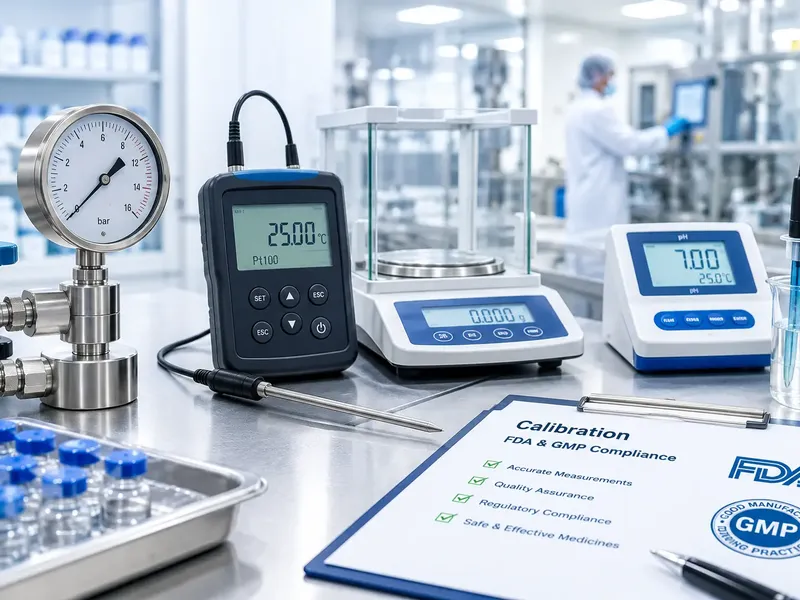
GDP compliant data logger calibration refers to calibration performed in a way that satisfies Good Distribution Practice requirements governing pharmaceutical storage and transport. Under GDP, temperature-sensitive products must be stored and transported according to the conditions specified on the product label, with every excursion from those conditions documented. This places specific demands on data logger calibration:
- Calibration must cover the actual temperature range the logger will monitor in service, not just a single reference point
- Certificates need to demonstrate traceability to national or international measurement standards
- Calibration intervals need to be defined, documented, and consistently followed as part of the broader quality system
- Both in-storage loggers monitoring facility conditions and in-transit loggers monitoring shipment conditions need equivalent calibration rigor
GxP Temperature Calibration Requirements
GxP temperature calibration sits within the broader family of Good Practice guidelines, "GxP" being a placeholder covering GMP, GDP, GLP, GCP, and related disciplines across manufacturing, distribution, laboratory work, and clinical trials. Across all of these frameworks, a consistent principle applies: equipment used to monitor or control temperature-sensitive processes must be qualified and calibrated, with that qualification documented as proof the equipment fulfills its intended monitoring purpose.
This qualification typically extends beyond calibration alone to include temperature mapping studies, which characterize how temperature actually varies throughout a storage space or vehicle, informing where loggers and sensors should be positioned for representative, defensible monitoring.
Cold Chain Data Logger Calibration Across Storage and Transit
Cold chain data logger calibration needs to account for the different conditions loggers experience depending on where they operate in the supply chain:
In-Storage Loggers
Monitor conditions within refrigerators, freezers, cold rooms, and warehouse storage areas. Calibration for these loggers should reflect the actual operating temperature range of the storage unit, whether that is standard refrigeration, deep freeze, or controlled room temperature storage.
In-Transit Loggers
Monitor conditions during shipment, whether by road, air, or sea freight, often operating under more variable environmental conditions than fixed storage equipment. Calibration for transit loggers needs to account for the wider range of temperatures the device may realistically encounter during transport, including potential extremes outside the target range that the logger still needs to accurately record.
Both logger categories ultimately feed into the same regulatory record: proof that the product stayed within its required temperature envelope throughout its entire journey.
Pharma Temperature Monitoring UAE Facilities Rely On
Pharma temperature monitoring UAE distributors and manufacturers depend on typically spans multiple monitoring points across a single supply chain: production environments, warehouse storage, refrigerated vehicles, and final delivery points. Each of these monitoring points relies on calibrated equipment to generate a trustworthy, continuous temperature record. A gap in calibration at any single point can undermine the credibility of the entire chain of custody record for a shipment, even if every other point was properly monitored.
Food Safety Temperature Calibration
Food safety temperature calibration follows similar underlying principles to pharmaceutical cold chain calibration, though regulatory frameworks differ. Food safety operations rely on accurate temperature data loggers to demonstrate that:
- Cold storage and refrigerated transport maintained safe temperatures throughout the supply chain
- Cooking and processing temperatures met required food safety thresholds
- Any temperature excursions were identified and addressed before affected products reached consumers
Given the direct public health implications, food businesses face similar audit scrutiny to pharmaceutical operations when it comes to demonstrating their temperature monitoring equipment is properly calibrated and traceable.
ISO 17025 Data Logger Calibration and What It Confirms
ISO 17025 data logger calibration means the laboratory performing the work has been independently assessed for technical competence, using reference standards traceable to national or international standards, with a documented measurement uncertainty reported for the calibration. This accreditation matters significantly for pharmaceutical and food applications because:
- It gives calibration certificates defensible standing during regulatory audits
- It confirms the calibration methodology has been validated rather than self-declared
- It provides the traceability chain auditors specifically look for when reviewing temperature monitoring documentation
Our temperature calibration services cover data loggers, thermocouples, RTDs, and related temperature monitoring equipment under full EIAC ISO 17025 accreditation, spanning the range from cold storage through high-temperature process applications.
Temperature Mapping Validation UAE Facilities Should Not Skip
Temperature mapping validation UAE cold storage and warehousing operations rely on characterizes how temperature actually varies across a storage space, vehicle, or facility, identifying hot spots, cold spots, and areas of greatest temperature variability. This process directly informs where data loggers should be positioned for genuinely representative monitoring, since a logger placed in an unrepresentative location can produce technically accurate readings that still fail to reflect actual product storage conditions elsewhere in the space.
Mapping and calibration work together: mapping determines where monitoring should happen, and calibration ensures the equipment doing that monitoring is producing trustworthy data once positioned.
What a Data Logger Calibration Certificate Should Include
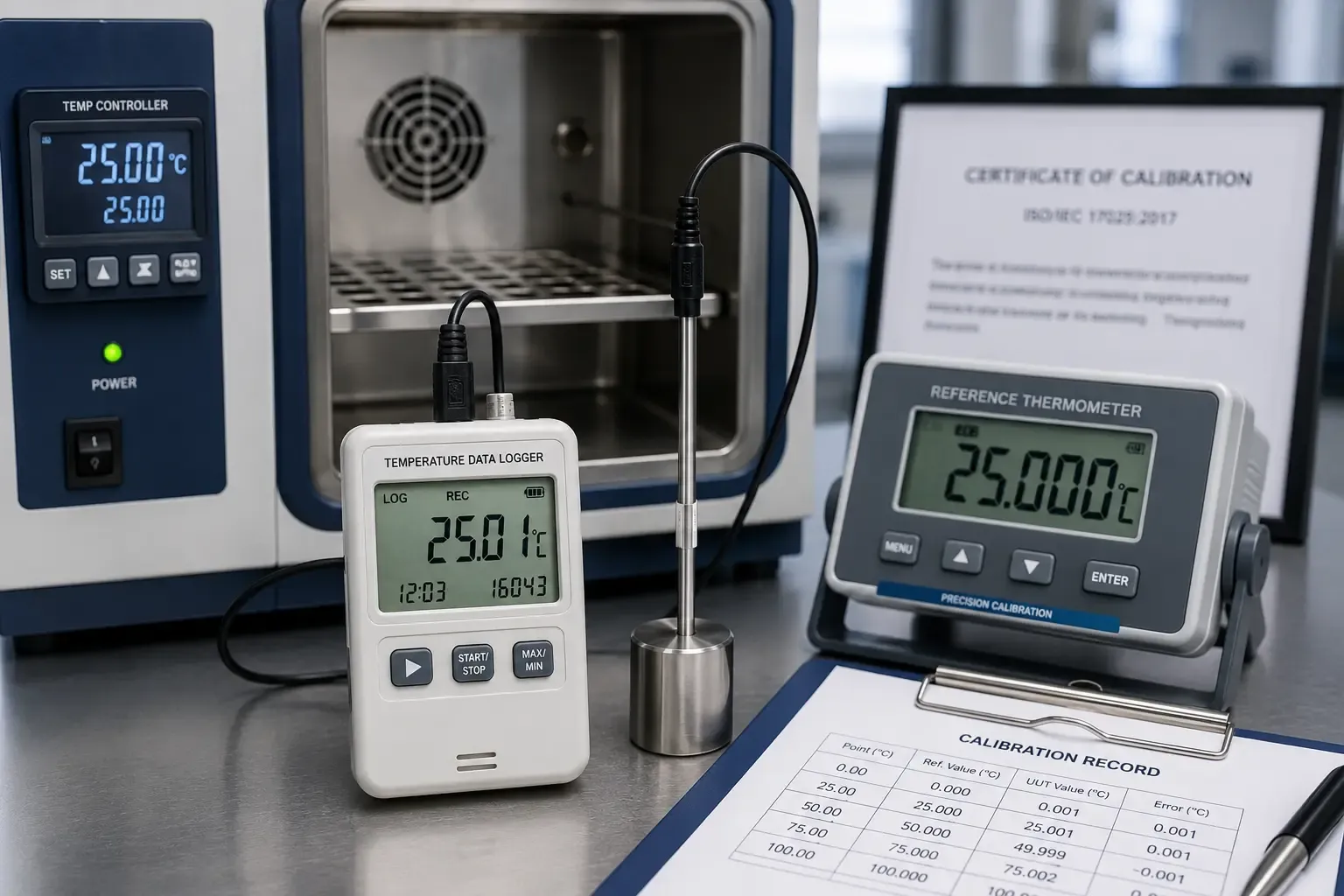
A properly issued data logger calibration certificate should clearly document:
- The specific logger make, model, and serial number, along with any associated probe or sensor identification
- Measurement results at multiple points across the logger's actual operating temperature range
- Stated tolerance and pass or fail status at each point
- The measurement uncertainty associated with the calibration
- Traceability details for the reference standards used
- The accreditation body and standard the issuing laboratory operates under
For regulated pharmaceutical and food applications, this documentation should be readily retrievable and organized in a way that supports rapid response during an audit, rather than requiring extensive searching to locate.
FDA 21 CFR Part 11 Compliance Considerations
FDA 21 CFR Part 11 compliance becomes relevant for organizations using electronic data logging systems subject to FDA oversight, governing electronic records and electronic signatures. While this regulation addresses data integrity and record-keeping practices more broadly, it reinforces the same underlying principle driving calibration requirements: the equipment generating regulatory records needs to be demonstrably accurate and its calibration status needs to be verifiable as part of the overall data integrity picture.
How Often Should Temperature Data Loggers Be Calibrated
General guidance for calibration frequency includes:
- Annual calibration as a standard baseline, aligned with common industry and regulatory expectations
- More frequent calibration for loggers used in the most sensitive applications, such as vaccine cold chains or narrow-tolerance biologics storage
- Immediate recalibration after any suspected malfunction, physical damage, or unexplained reading inconsistency
- Calibration intervals defined within a documented quality system, with automated tracking to prevent equipment from remaining in service past its due date
Cold Storage Calibration UAE Facilities Need as Part of a Broader Program
Cold storage calibration UAE pharmaceutical and food operations rely on typically extends beyond data loggers alone to include the refrigeration and freezer equipment itself, along with any fixed temperature sensors integrated into building management or facility monitoring systems. Coordinating calibration across all of these under a single accredited provider reduces the risk of a gap in one part of the monitoring chain undermining the credibility of the whole system.
General Tech Services operates an EIAC and ENAS accredited ISO 17025 laboratory from its Sharjah headquarters, with temperature calibration covering data loggers, thermocouples, RTDs, and cold storage equipment used across pharmaceutical, food, and general industrial applications throughout the UAE. For fixed cold storage units or facility-integrated loggers that cannot be easily removed, on-site calibration services are also available.
Frequently Asked Questions
How often should pharmaceutical cold chain data loggers be calibrated? Annual calibration is a common baseline, though loggers used for the most sensitive products, such as vaccines or narrow-tolerance biologics, often warrant more frequent calibration as defined within the organization's documented quality system.
What is the difference between calibration and temperature mapping? Calibration verifies that a data logger's readings are accurate against a traceable reference standard. Temperature mapping characterizes how temperature actually varies across a storage space or vehicle, informing where loggers should be positioned for representative monitoring. Both are typically required for full GxP compliance.
Why does accuracy of ±0.5°C matter for pharmaceutical monitoring? Many pharmaceutical products have narrow approved storage temperature ranges, and a logger with insufficient accuracy could fail to detect a genuine excursion or falsely indicate one, either of which undermines confidence in product quality and regulatory compliance decisions.
Does food safety temperature calibration require the same standard as pharmaceutical calibration? The underlying accreditation standard, ISO/IEC 17025, is generally the same, though specific regulatory frameworks and audit expectations differ between food safety and pharmaceutical contexts, with pharmaceutical applications often requiring tighter tolerances and more extensive documentation.
Can a single data logger be used for both storage and transit monitoring? Some loggers are designed for both applications, but calibration should reflect the specific temperature range and operating conditions the logger will actually encounter, since transit conditions often involve wider temperature swings than fixed storage environments.
Closing Thoughts
Temperature data logger calibration UAE pharmaceutical and food supply chains depend on is the evidence layer beneath every temperature compliance claim an organization makes to regulators, auditors, and customers. Whether monitoring vaccine storage, biologic distribution, or perishable food logistics, calibration performed against traceable reference standards, documented to GDP and GxP expectations, is what keeps that evidence defensible.
To schedule temperature data logger or broader cold chain calibration across the UAE, reach out through the contact page, or explore the full range of ISO 17025 accredited calibration disciplines covering temperature, pressure, dimensional, and electrical measurement.