Electrical and mechanical failures rarely happen without warning, they just don't warn you in a way you can see. A loose connection heating up inside a panel, a bearing running progressively hotter before it seizes, insulation quietly breaking down under load, all of these produce a thermal signature long before they produce a visible symptom. The only way to actually see that warning is to look at the equipment in a wavelength human eyes can't perceive.
This is exactly what thermal imaging services UAE facilities running critical electrical and mechanical equipment depend on for genuine preventive maintenance, rather than reactive repair after something has already failed. This guide covers how thermographic surveys actually work, what they catch, and what real value they deliver over waiting for a failure to announce itself.
Why Failures Happen Without Warning, and Why Thermal Imaging Catches Them Anyway
Connection degradation causes fire hazards, bearing overheating triggers seizure, insulation breakdown eliminates protection, and moisture penetration accelerates deterioration, and none of these failure modes give a visible sign until they've already progressed significantly. What they do give off, consistently and measurably, is heat, since virtually every developing electrical or mechanical fault generates abnormal temperature as a direct byproduct of increased resistance, friction, or current leakage.
Regular thermal scanning identifies developing problems before critical failure by validating equipment temperature profiles against manufacturer specifications under real operating conditions, rather than theoretical ratings that assume everything is functioning perfectly. This distinction matters: a component can be running within its rated capacity on paper while running measurably hotter than it should be in actual service, and that gap is exactly what a thermal survey is designed to catch.
How a Proper Thermal Imaging Survey Actually Works
A properly conducted survey generally follows this sequence:
- Comprehensive visual assessment establishing a baseline understanding of the equipment and installation before any thermal scanning begins
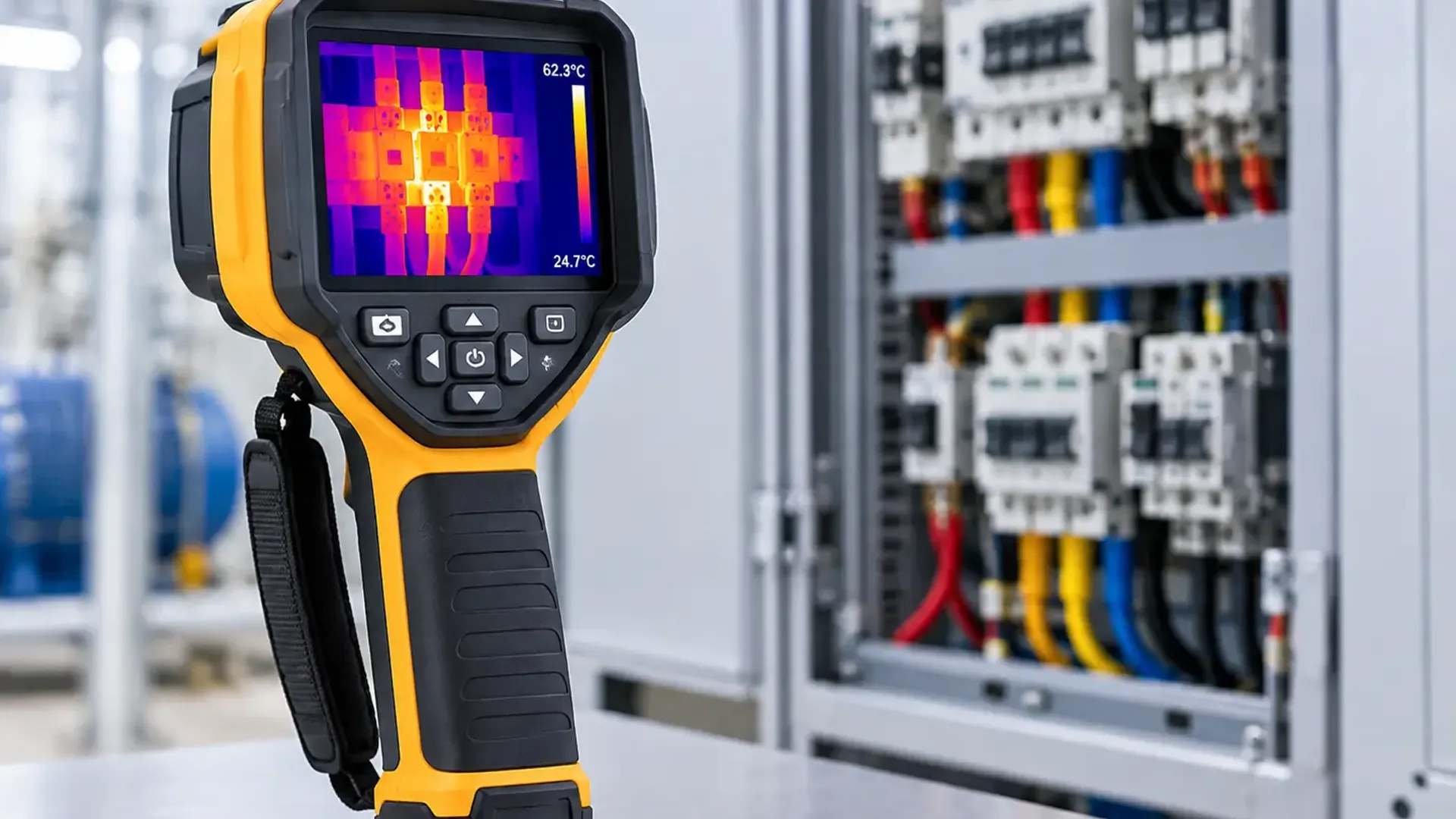
- High-resolution infrared scanning capturing invisible heat energy as thermograms across electrical panels, connections, motors, and mechanical components
- Identification of abnormal temperature patterns under actual operating load, since equipment behaves differently under load than at rest
- Precision temperature measurement and component-level data analysis, going beyond a simple visual color map to quantify exactly how far a component deviates from expected temperature
- Detailed reporting documenting findings, recommending corrective actions, establishing next inspection dates, and providing thermographic images to support both planning and compliance documentation
Because thermal imaging is non-contact and non-invasive, this entire process can typically be performed while equipment remains energized and operational, avoiding the production disruption that a full shutdown inspection would require.
What Thermal Imaging Actually Catches
Thermographic surveys cover two related but distinct categories of equipment, each with its own common failure signatures.
Electrical Systems
Continuous monitoring of electrical panels, switchgear, and connection points identifies loose or degrading connections before they progress to arcing, overheating, or fire risk. This is particularly valuable in distribution panels and switchgear where connection points naturally loosen over time due to thermal cycling and vibration, a slow process that produces measurable heat well before it produces a visible or audible warning.
Mechanical Equipment
Motors and bearing condition monitoring catches developing mechanical wear before it triggers seizure or catastrophic failure. A bearing running progressively hotter, even by a few degrees, often indicates developing wear, insufficient lubrication, or misalignment long before the mechanical symptoms become obvious through vibration or noise.
The Business Case: Why This Matters Beyond Just Catching Faults
Early fault detection prevents 85%+ of potential equipment failures, protecting both operations and revenue in a way that's genuinely measurable rather than theoretical. Beyond the direct failure prevention, the financial case compounds further: preventive monitoring reduces total cost of ownership by 50-65% compared to emergency repairs and replacement, since a planned repair based on a thermal finding is virtually always cheaper than an emergency response to equipment that has already failed catastrophically.
There's also a safety dimension that shouldn't be understated. Identifying electrical hazards and overheating prevents fires and personnel injury, eliminating hidden fire risks that would otherwise remain invisible until an actual incident occurs. For facilities managing insurance requirements or safety compliance programs, this preventive documentation carries real weight beyond the direct equipment protection it provides.
Documentation That Actually Supports Compliance and Planning
Professional documentation supports regulatory audits and facility compliance requirements comprehensively, which matters considerably more than a simple pass or fail summary. A properly delivered thermal imaging report should include the actual thermographic images alongside corresponding visual photographs, since a thermal image without its visual counterpart becomes difficult to identify and act on later. Complete documentation typically also includes equipment identification, load conditions at the time of scanning, emissivity settings used, ambient temperature, and any relevant environmental notes, giving facility managers everything needed to plan corrective action and budget for it appropriately.
How Often Should Thermal Surveys Be Performed
Survey frequency should scale with equipment criticality rather than following a single blanket schedule across an entire facility:
- Critical electrical distribution equipment generally warrants quarterly surveys, given the consequences of an undetected fault in this category
- General distribution equipment can typically follow a semi-annual schedule
- Mechanical equipment benefits from monthly thermal rounds for the most critical machines, with quarterly surveys sufficient for less critical equipment
- Steam traps and similar lower-risk equipment are commonly surveyed annually or semi-annually
This risk-based approach ensures the equipment where a failure carries the highest consequence receives the most frequent attention, rather than spreading survey resources evenly across equipment with very different actual risk profiles.
Thermal Imaging Services Across the UAE
General Tech Services provides professional thermal imaging services with advanced infrared inspection covering both electrical thermography and mechanical condition monitoring, delivered by expert engineers with 24/7 support across all 7 Emirates. Standard inspection packages start from AED 4,000 to 6,000 depending on facility scope, with detailed reports documenting findings, recommended corrective actions, and next inspection dates for ongoing budgeting and compliance planning. Explore thermal imaging services covering electrical panels, motors, and mechanical equipment across Dubai, Sharjah, Abu Dhabi, and the wider UAE.
Coordinating Thermal Surveys With Broader Equipment Reliability
Thermal imaging works best as part of a coordinated condition monitoring program rather than an isolated annual check. Facilities running thermal surveys alongside live panel cleaning get compounding benefit, since cleaning contaminated switchgear reduces the risk of surface tracking and flashover that thermal surveys are specifically designed to catch developing signs of. Similarly, thermal cameras themselves require accredited calibration against blackbody reference sources to ensure the temperature readings feeding into every survey report are themselves trustworthy.
Frequently Asked Questions
Does a thermal imaging survey require shutting down equipment? No. Thermal imaging is non-contact and non-invasive, meaning surveys can typically be performed while equipment remains energized and under normal operating load, which is actually when developing faults are most visible thermally.
How much can thermal imaging actually save compared to reactive repair? Preventive thermal monitoring reduces total cost of ownership by 50-65% compared to emergency repairs and replacement, since planned corrective action based on an early thermal finding is consistently cheaper than responding to equipment that has already failed.
What's included in a thermal imaging survey report? A complete report includes thermographic images alongside corresponding visual photographs, equipment identification, load conditions, emissivity settings, ambient temperature, findings, recommended corrective actions, and a recommended next inspection date.
How often should critical electrical equipment be thermally surveyed? Critical electrical distribution equipment generally warrants quarterly surveys, while general distribution equipment can typically follow a semi-annual schedule, with frequency scaling based on equipment criticality rather than a single fixed interval.
Can thermal imaging detect mechanical problems, or is it only for electrical equipment? Both. Thermal imaging effectively monitors motors and bearing condition for developing mechanical wear, in addition to its widely known application in detecting loose electrical connections and overheating in panels and switchgear.
Closing Thoughts
Thermal imaging services UAE facilities rely on turn an invisible warning sign, heat, into a documented, actionable finding well before it becomes an expensive failure or a genuine safety hazard. With early detection preventing the large majority of potential equipment failures and preventive monitoring cutting total cost of ownership significantly compared to emergency repair, thermal surveys deliver a rare combination of safety benefit and measurable financial return.
To schedule a thermal imaging survey for your electrical or mechanical equipment across the UAE, reach out through the General Tech Services contact page, or explore the full range of services covering thermography, calibration, and electrical maintenance.