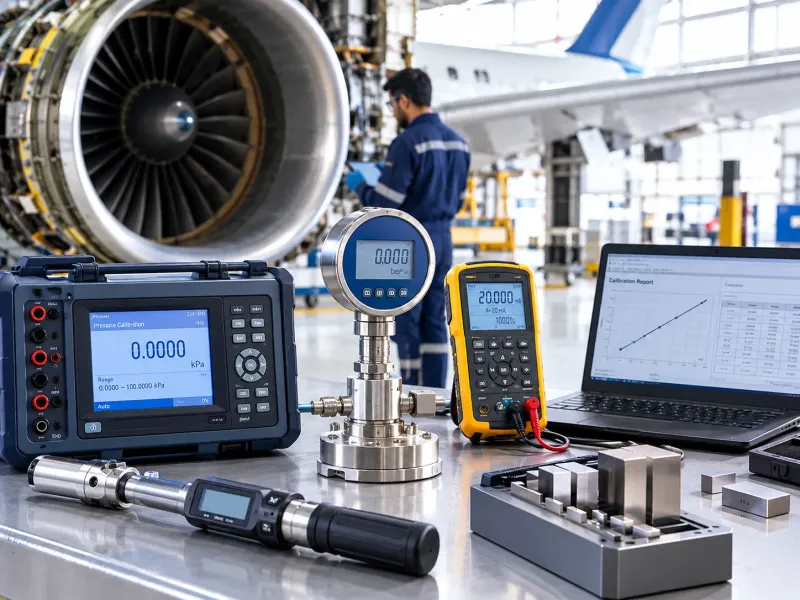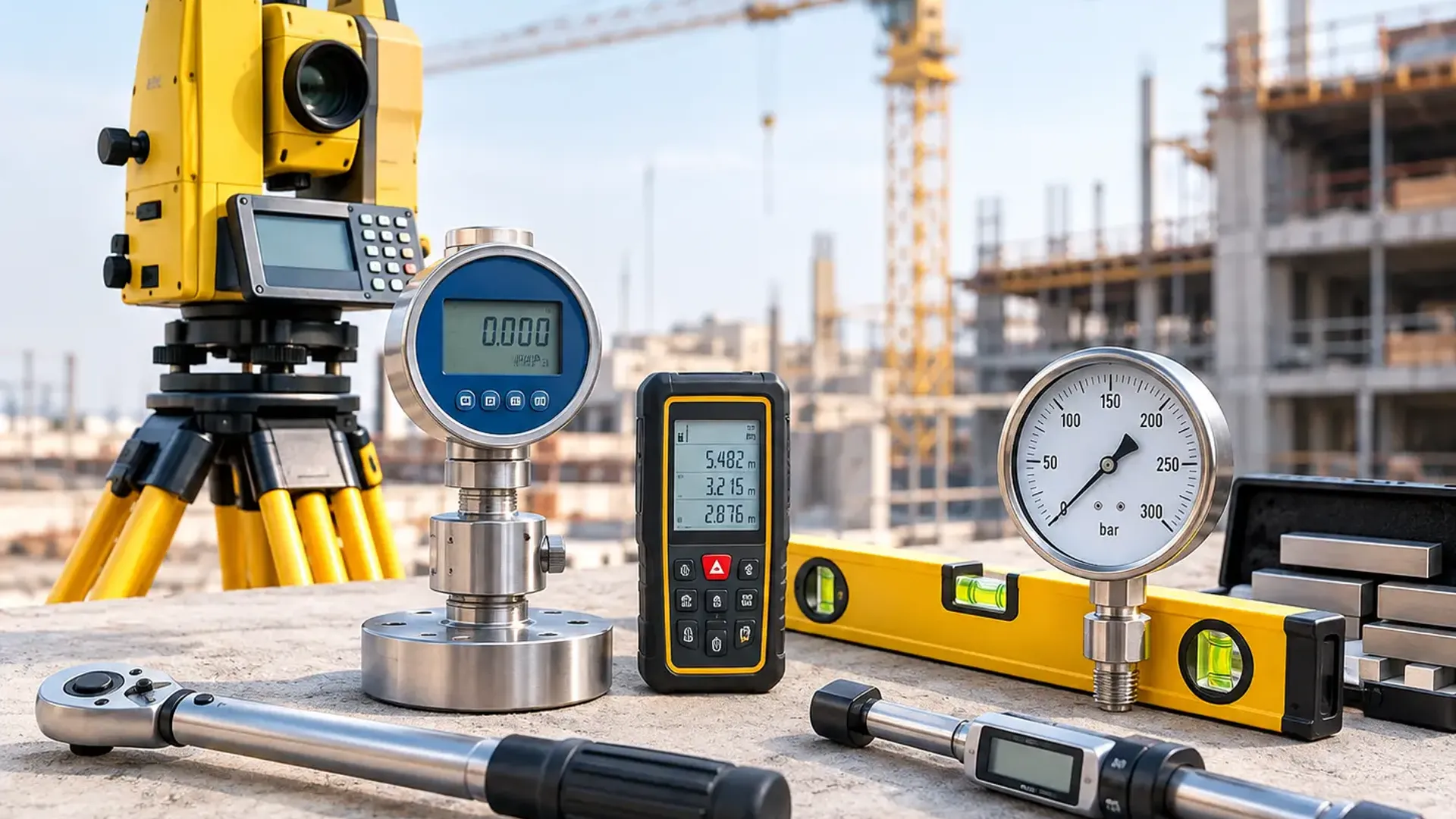
Construction measures things that cannot be undone. A concrete cube is crushed once. A bolt is tightened to a specified torque once. A weld is inspected once before it is covered. When the result is recorded, the structure moves on, and the measurement becomes part of the permanent evidence that the building was built to specification.
That is why calibration for construction and civil engineering in the UAE matters well beyond paperwork. A compression machine that reads a few percent high can pass concrete that was too weak. A torque wrench that is out of tolerance can leave structural bolts under-tightened. A pressure gauge that misleads during a hydrostatic test can approve a pipeline that should have failed. This guide explains which instruments carry the most risk on construction projects and how to keep them trustworthy.
Why Construction Instruments Wear Out Faster
Construction environments are tough on measuring equipment. Instruments are carried between sites, used outdoors in heat and dust, dropped, vibrated and stored in vehicles. Testing machines in materials laboratories are used heavily, with frequent high loads. These conditions shorten the time an instrument stays within tolerance, so calibration needs to be more deliberate than in a controlled factory setting.
The Instruments That Matter Most
Concrete and Materials Testing Machines
Compression testing machines crush concrete cubes and cylinders to verify strength, and universal testing machines test steel reinforcement in tension. These results decide whether concrete pours and rebar deliveries are accepted. The machines are verified using calibrated force-measuring devices, and their accuracy classes are defined by testing machine standards. Our force calibration capability covers tension and compression up to 3000 kN, which spans common compression machine capacities. See our guides to load cell calibration and force gauge calibration.
Torque Tools for Structural and Mechanical Work
Structural bolting, flange assembly, scaffolding and plant installation all rely on specified torque values. Wrenches used on structural joints should be calibrated and tracked. See our guide to torque wrench calibration.
Pressure Gauges and Test Equipment
Hydrostatic testing of pipework, fire protection systems and plumbing relies on pressure gauges, and hydraulic jacks used for tensioning rely on calibrated gauges. A misleading gauge on a pressure test undermines the entire test. See our guide to pressure gauge calibration..
Weighing Equipment
Laboratory balances and scales are used for aggregate grading, density and mix design work, and site weighing. See our guide to mass calibration.
Non-Destructive Testing Instruments
Weld inspection, thickness measurement and surface flaw detection rely on ultrasonic, magnetic particle and related equipment. Because these inspections leave no sample to retest, instrument accuracy is critical. See our guide to NDT calibration.
Noise Monitoring Equipment
Construction projects must manage noise, and sound level meters used for compliance monitoring should be calibrated and field-checked before and after each session. See our guide to sound level meter calibration.
Gas Detectors for Confined Spaces
Excavations, tanks, tunnels and manholes can contain oxygen-deficient or toxic atmospheres. Detectors protecting workers need routine bump tests and scheduled calibration. See our guide to gas detector calibration.
Surveying and Setting-Out Instruments
Levels, total stations and similar instruments set out positions and elevations. If your project depends on them, check with your provider whether these instruments fall within their accredited scope, since scope varies between laboratories.
Calibration and Accredited Testing Laboratories
Many construction materials testing laboratories seek ISO/IEC 17025 accreditation, and that standard requires the equipment used for tests to be calibrated with traceability to national or international standards. Clients, consultants and authorities often prefer, or specify, test results from accredited laboratories. For these labs, calibration certificates from an accredited provider are an expected part of the evidence, not an extra.
Site Instruments Versus Laboratory Instruments
A practical program separates the two environments:
- Laboratory instruments, such as testing machines, balances and ovens, are fixed and heavily used. They should be on a defined schedule, often with shorter intervals for high-use machines, and verified after any move or repair
- Site instruments, such as torque wrenches, gauges, noise meters and gas detectors, travel and take knocks. They benefit from a sign-out process, routine checks before use, and calibration status labels that site teams can see
Labeling matters. A visible calibration sticker with a due date lets a site engineer or inspector spot an overdue instrument in seconds.
Setting Calibration Intervals for Construction Use
Use risk and usage to decide, not a single blanket interval:
- Start from the manufacturer's recommended interval
- Shorten it for heavily used, frequently moved or harshly treated instruments
- Shorten it further for instruments tied to structural safety, such as torque tools and testing machines
- Calibrate immediately after any drop, overload or suspected fault
- Review intervals yearly using as-found results
Our guide to calibration frequency in the UAE explains how to set and review intervals.
On-Site Calibration for Large and Fixed Equipment
Large testing machines and fixed laboratory equipment are not easy to move, and site projects cannot afford long delays. On-site calibration brings reference standards to the laboratory or project, so equipment can be verified in place and returned to use quickly.
What Consultants and Clients Typically Ask For
When a consultant, main contractor or client reviews a project's quality records, they commonly check:
- Valid calibration certificates for the instruments used on tests and inspections
- That the calibrating laboratory is accredited, with the accreditation number shown
- That the calibration date was before the test or inspection date
- Records showing what was done when an instrument was found out of tolerance
- Calibration status labels on instruments in the field
A project that keeps this evidence ready avoids delays when a result is challenged.
Calibration Support for Construction Projects
Our laboratory is accredited by EIAC (LB-CAL-004) and ENAS (NAL 240) to ISO/IEC 17025 across force, torque, pressure, mass, sound, gas, NDT and other disciplines, so a contractor or testing laboratory can cover most of its measuring equipment through one provider. Explore the full range of calibration disciplines.
Frequently Asked Questions
Do concrete compression testing machines need calibration? Yes. They should be verified against calibrated force-measuring devices at defined intervals, since the results decide whether concrete and reinforcement are accepted.
Why do torque wrenches on construction sites need calibration? Structural and mechanical joints depend on specified torque values, and a wrench that has drifted can leave bolts under- or over-tightened without any visible sign.
How often should construction site instruments be calibrated? Annual calibration is a common baseline, with shorter intervals for heavily used instruments and those tied to structural safety, and immediate calibration after a drop or overload.
Do materials testing laboratories need accredited calibration? For ISO/IEC 17025 accreditation, test equipment must be calibrated with traceability to national or international standards, and accredited calibration certificates are the usual evidence.
Can calibration be done on-site? Yes. On-site calibration suits large or fixed equipment and keeps projects and laboratories running.
Closing Thoughts
Calibration for construction and civil engineering in the UAE protects results that cannot be repeated. Keeping testing machines, torque tools, pressure gauges and NDT equipment traceable, labeling instruments clearly, and using an accredited provider means every recorded number can be defended later, when it matters most.
To discuss calibration for your project or laboratory, reach out through the General Tech Services contact page.