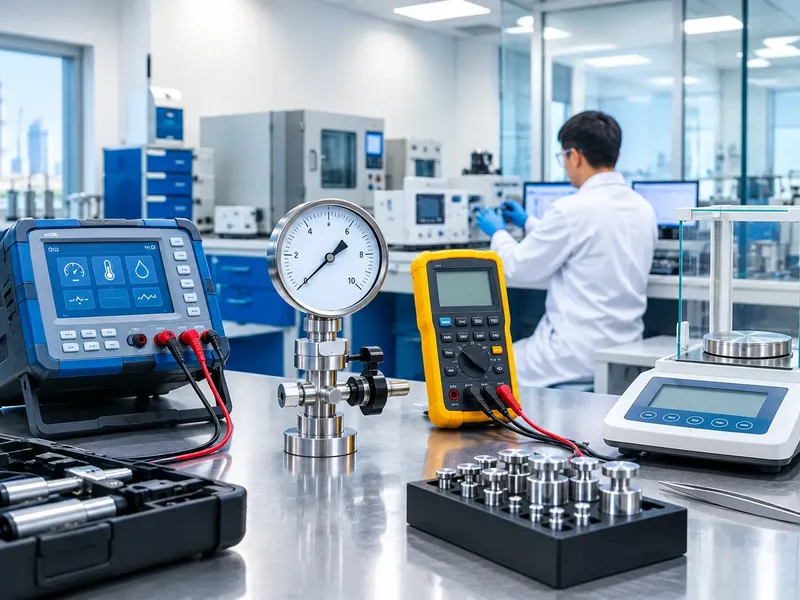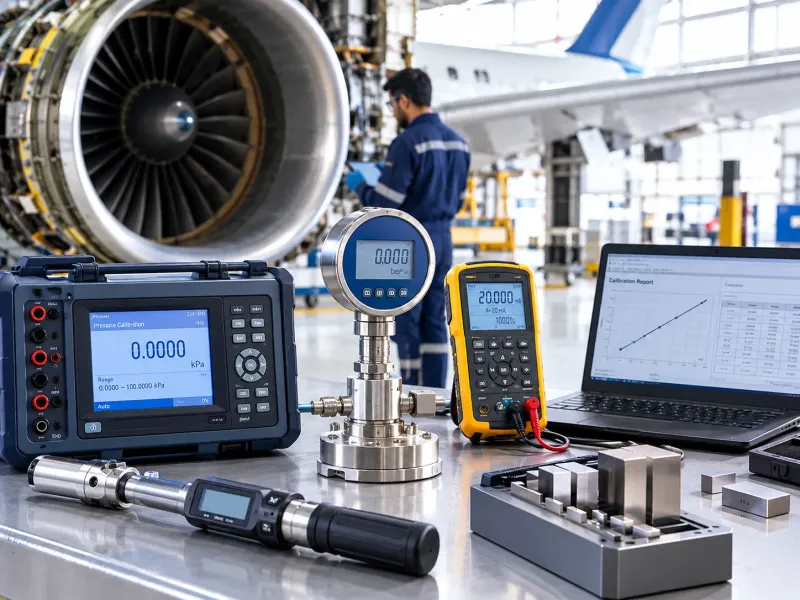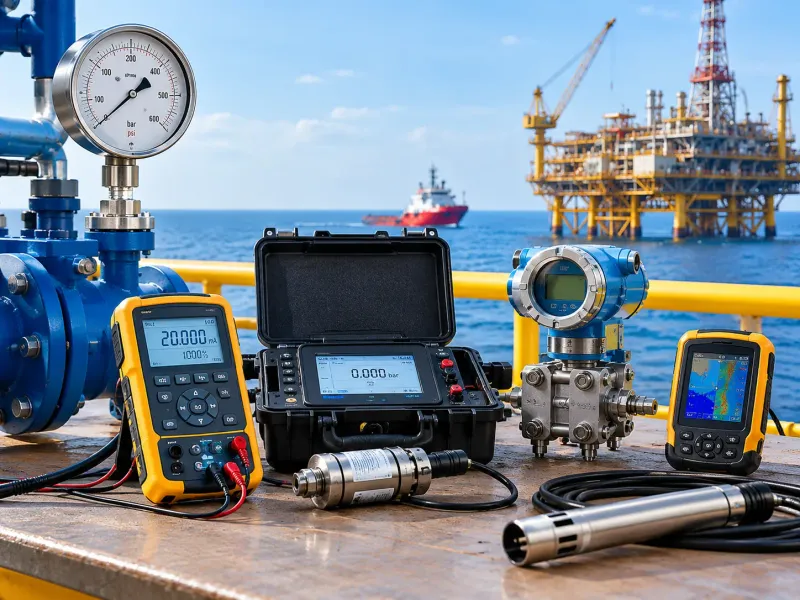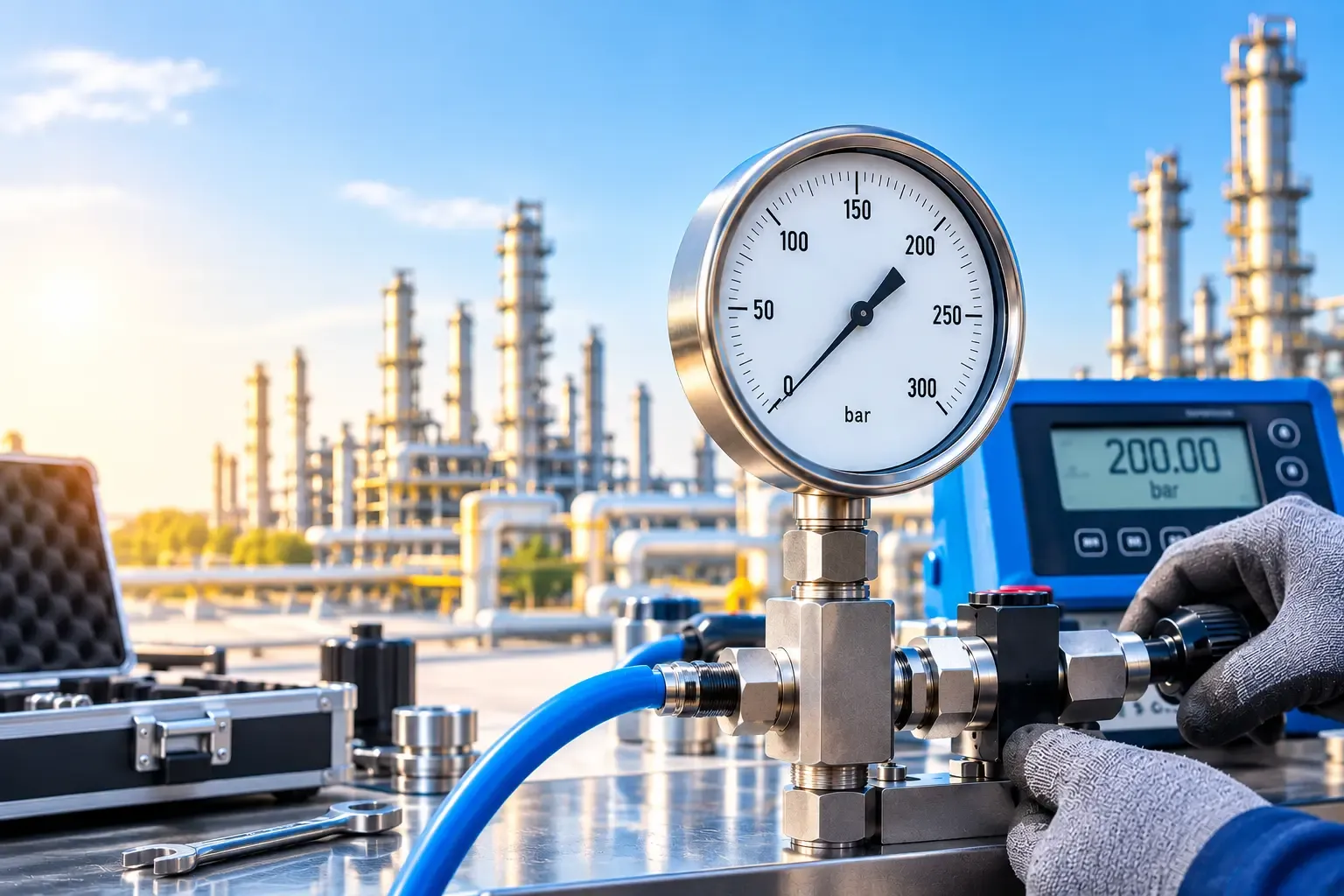
You can get a pressure gauge calibrated in the UAE at an accredited calibration laboratory, ideally one accredited to ISO/IEC 17025 by EIAC or ENAS for pressure calibration. General Tech Services calibrates pressure gauges from vacuum up to 40,000 PSI at its Sharjah laboratory, or on-site at your facility, and issues a traceable certificate with measurement uncertainty.
The rest of this guide explains what to look for when choosing a provider, how the process works, what to bring, and how long it takes, so you can get the right certificate the first time.
What to Look for in a Provider
Not every business offering calibration can issue a certificate that stands up to an audit. Before sending a gauge anywhere, check:
- Accreditation. Is the laboratory accredited to ISO/IEC 17025 by EIAC or ENAS? Ask for the accreditation number and verify it with the accrediting body
- Scope. Does the accreditation specifically cover pressure calibration, and does it cover your gauge's range? Accreditation is granted per discipline and range, not as a blanket approval
- Reference standards. Are they traceable, and are they accurate enough for your gauge's accuracy class?
- Certificate content. Will it show readings at several points, rising and falling, with uncertainty and as-found data?
- Turnaround and flexibility. Can they meet your deadline, and can they come on-site if the gauge can't be removed?
Our guide to how to get a calibration certificate in the UAE explains what a reliable certificate contains.
Where We Calibrate Pressure Gauges
Our accredited laboratory is in Industrial Area 11, Sharjah, and we also calibrate on-site across the UAE. Our laboratory is accredited by EIAC (LB-CAL-004) and ENAS (NAL 240), and these numbers can be verified with each body. Our pressure calibration services cover gauges, transducers, transmitters, manometers and dead weight testers across the full range from vacuum to 40,000 PSI.
You can:
- Bring or send the gauge to our Sharjah laboratory, which suits portable gauges and batches
- Book on-site calibration, which suits gauges installed on plant, pipework and equipment that can't be removed
Our guide to on-site versus in-lab calibration helps decide which suits each gauge.
What Types of Gauge Can Be Calibrated
Pressure gauge calibration covers a wide range of instruments:
- Standard Bourdon tube gauges, both liquid-filled and dry
- Diaphragm and capsule gauges
- Vacuum and compound gauges
- Digital pressure gauges
- Test and master gauges
- Differential pressure gauges
Related instruments can be calibrated at the same visit. See our guides to pressure transmitter calibration, manometer calibration and dead weight tester calibration. For the full explanation of how gauges are tested, read our guide to pressure gauge calibration.
What to Bring or Prepare
A little preparation avoids delays:
- The gauge's make, model, serial number and pressure range
- Any accuracy class marked on the dial, which affects the tolerance used
- The connection thread type, and any adapters you use
- The medium the gauge normally measures, so it can be cleaned safely before testing
- Your asset or tag number, so the certificate matches your register
- Whether you need as-found data before any adjustment
- Any deadline for audits, tenders or shutdowns
Gauges used on oxygen, chemical or other hazardous services should be flagged in advance, because they need special handling.
How Long It Takes
Standard calibration turnaround is typically two to five working days, with urgent and same-day options available for critical requirements. On-site calibration is scheduled according to location and scope. Booking early is wise ahead of shutdowns and audits.
How Often Gauges Should Be Calibrated
There is no single rule. Annual calibration is a common baseline, with shorter intervals for gauges on safety-critical lines, pulsating pumps or harsh services, and immediate calibration after any overpressure event or impact. See our guide to calibration frequency in the UAE.
Related Safety Equipment
If your pressure gauges sit alongside safety valves on pressure systems, you can arrange verification together. See our guide to PRV testing in the UAE.
Frequently Asked Questions
Where can I calibrate a pressure gauge in the UAE? At an accredited ISO/IEC 17025 laboratory, such as General Tech Services in Sharjah, in-lab or on-site, with a traceable certificate.
What range of pressure gauges can you calibrate? Our pressure calibration covers vacuum up to 40,000 PSI, including mechanical and digital gauges.
Can you calibrate a gauge that is installed on my plant? Yes. On-site calibration is available for gauges that can't be removed from service.
How long does pressure gauge calibration take? Standard turnaround is typically two to five working days, with urgent and same-day options for critical needs.
How do I know the certificate will be accepted? Check that it shows the laboratory's accreditation number and logo, covers readings across the range with uncertainty, and that the accrediting body's records confirm the scope.
Closing Thoughts
Finding where to get a pressure gauge calibrated in the UAE is mostly about choosing a laboratory whose accreditation covers pressure, whose standards are traceable and whose certificate shows what an auditor needs to see. With EIAC and ENAS accreditation, a range from vacuum to 40,000 PSI and both in-lab and on-site options, we can handle gauges from a single instrument to a full plant inventory.
To book pressure gauge calibration, reach out through the General Tech Services contact page or call +971 6 5436933.