
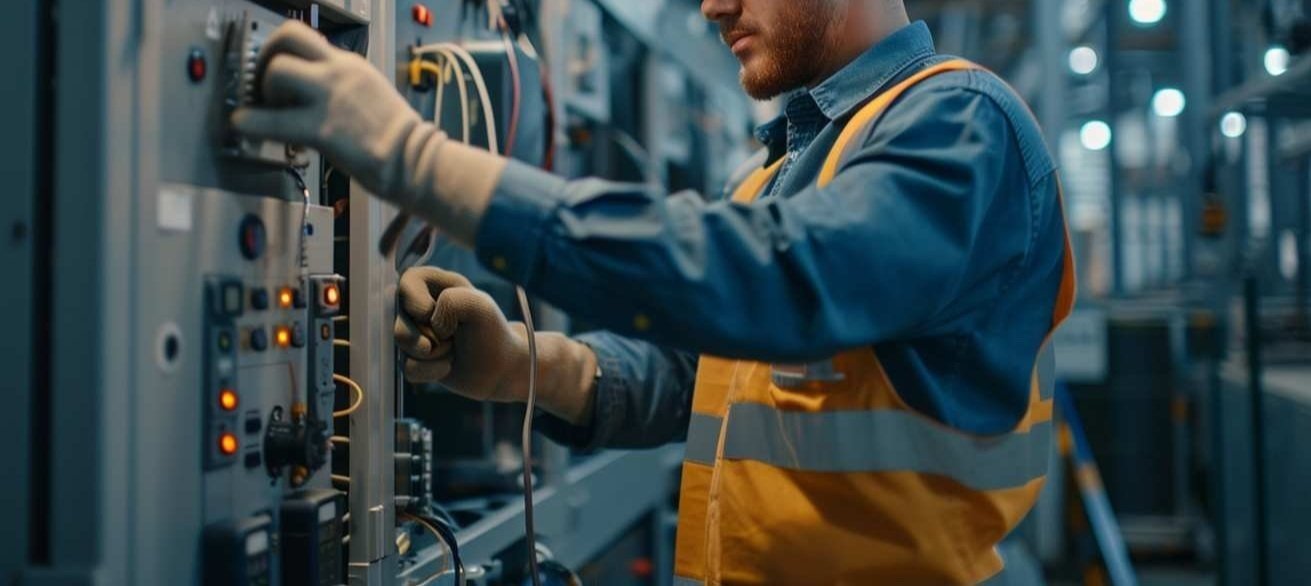
Retrofitting is one of the most practical ways for facility management (FM) teams and end-user companies—including manufacturing, print & packaging, food processing, warehouses, and industrial utilities—to improve reliability, safety, and energy performance without the cost and disruption of a full system replacement.
Most sites in the UAE run a mix of equipment generations: older HVAC control panels, aging VFDs, legacy PLCs, unsupported HMIs, and instrumentation that no longer provides stable readings. Over time, this leads to recurring breakdowns, unplanned stoppages, spare-part panic, and "temporary fixes" that become permanent.
At General Tech Services, we support retrofit projects end-to-end by combining:
- Automation supply (supported components and spares)
- On-site installation and panel modifications
- Commissioning and handover support
So you can upgrade with confidence and keep operations running.
Why retrofits matter for FM and end users?
1) Reduce downtime and reactive maintenance
Old control systems fail unpredictably—often when you can least afford it. Retrofitting critical weak points improves system stability and reduces emergency callouts.
2) Eliminate obsolete parts and spare shortages
Many facilities still depend on discontinued drives, controllers, and relays. Retrofits standardize your system on supported, readily available components with a clean spares strategy.
3) Improve energy performance without changing mechanical assets
A large portion of energy waste in facilities comes from outdated control logic and constant-speed motor operation. Retrofitting drives and control sequences can cut consumption while keeping existing pumps, fans, and chillers.
4) Enhance safety, compliance, and maintainability
Retrofitting provides an opportunity to correct poor wiring practices, improve protection coordination, add safety interlocks, and deliver proper documentation and labeling—critical for FM teams and audits.
Industries that benefit most from retrofit programs
Manufacturing (general industrial)
Manufacturing sites need stable utilities: compressed air, chilled water, process cooling, pumps, and reliable panel controls. A retrofit improves uptime and reduces production loss.
Print & packaging
Print and packaging lines are sensitive to:
- stable pneumatic supply,
- reliable motor speed control,
- repeatable temperature and process conditions.
Retrofits reduce scrap, rework, and line stoppages.
Food, beverage, and cold-chain facilities
These facilities prioritize:
- consistent HVAC and refrigeration control,
- safe instrumentation,
- reduced unplanned downtime.
Retrofitting controls and drives improves stability and reduces temperature excursions.
Warehouses, logistics hubs, and large commercial facilities
Energy and reliability are key: HVAC optimization, BMS upgrades, VFD control of fans/pumps, lighting control upgrades, and improved monitoring reduce operational cost.
What retrofit services typically include?
A) HVAC, chiller plant, and pump system retrofits
Common upgrade items:
- VFD retrofit for chilled water pumps, condenser pumps, and AHU fans
- Controller upgrades and improved sequencing (lead/lag, staging, alarms)
- Sensor replacement (pressure/temperature/flow) to stabilize control loops
- Control panel re-termination, labeling, and protection improvements
Outcome: more stable comfort conditions, fewer trips, lower energy consumption.
B) Motor control and drive retrofits (high impact)
VFDs and motor controls are frequent failure points. Retrofit scope typically includes:
- Replacing aging VFDs with modern equivalents
- Adding bypass arrangements for critical motors
- Parameterization and tuning for stable operation
- Improving protection, earthing, and panel ventilation
Outcome: fewer breakdowns, smoother process control, and energy savings.
C) Control panel retrofits (without replacing the whole panel)
A full new panel is not always necessary. Many sites can extend panel life by upgrading targeted components:
- PLC/HMI replacement where legacy is unsupported
- Power supplies, contactors, relays, timers, terminal blocks
- Panel rewiring cleanup, ferruling, labeling, and documentation
Outcome: better maintainability and faster troubleshooting.
D) Instrumentation and sensing upgrades (often overlooked)
Many "control problems" are actually sensing problems. Instrument retrofits can include:
- Pressure/temperature transmitters
- Flow and level instruments
- Proximity sensors and safety devices
- Critical condition monitoring sensors where applicable
Outcome: stable control, fewer nuisance alarms, and consistent product quality.
E) Utility system monitoring and alarms (visibility retrofit)
Even small upgrades can improve operational control dramatically:
- SCADA/PLC integration (analog and digital signals)
- Alarm relays, fault history, and event logging
- Basic remote visibility for key utilities (HVAC status, pump trips, dryer faults)
Outcome: faster response, proactive maintenance, and reduced downtime.
How General Tech Services supports FM and end users?
1) Site assessment and retrofit scoping
We support a practical assessment to define the right scope:
- Identify high-failure components and obsolescence risks
- Confirm installation constraints and downtime windows
- Propose a replacement architecture that is serviceable and standardizable
- Build a clear BOM (bill of materials) and cutover plan
2) Automation supply (new supported hardware)
We supply and support a complete retrofit BOM including:
- PLCs, HMIs, I/O modules (where needed)
- VFDs and motor control components
- Relays, timers, contactors, protection devices
- Sensors and industrial measurement devices
- Accessories for installation and panel upgrades
The key goal: replace "hard-to-find legacy" with "supported and available" and reduce the number of unique parts across your sites.
3) Installation and retrofit execution services
We support on-site retrofit works such as:
- Panel modification and re-termination
- Cable pulling, glanding, and field wiring
- Drive replacement and parameter setup
- Loop checks and functional testing support
4) Commissioning and handover
A retrofit is only "done" when it's maintainable. We assist with:
- Commissioning support and troubleshooting
- Settings backup (drive parameters, key controller settings)
- As-built documentation guidance
- Recommended spares list for FM readiness
Typical retrofit wins you can expect
While results vary by site, retrofits usually deliver one or more of the following:
- Reduced breakdowns and emergency callouts
- Lower spare-part risk and fewer "unserviceable" situations
- Improved energy performance via VFD optimization and control logic improvements
- Better stability in production utilities (air, water, HVAC)
- Improved maintenance clarity (labeling, documentation, easier troubleshooting)
A practical retrofit roadmap (recommended approach)
For FM and end users managing multiple facilities, retrofits work best as a program:
- Criticality ranking: identify systems that cause the most downtime/cost
- Standardization plan: define preferred drive/controller families for spares control
- Pilot retrofit: retrofit one plant/panel, document results
- Rollout: apply the same architecture across similar systems/sites
- Spares strategy: hold a lean but effective spares kit to reduce downtime
Ready to plan a retrofit?
If you share any of the following, we can help structure a retrofit scope quickly:
- Photos of panels and nameplates
- Equipment list (HVAC, pumps, compressors, production utilities)
- Frequent faults / breakdown history
- Your downtime constraints (night works, weekend shutdowns)
General Tech Services can assist with retrofit scoping, automation supply, installation, and commissioning support to modernize your facility systems while keeping your operation running.