About hero

Blog

03
Feb

Industrial Retrofit Solutions: Control Panel, VFD, and Instrumentation Upgrades for UAE Facilities

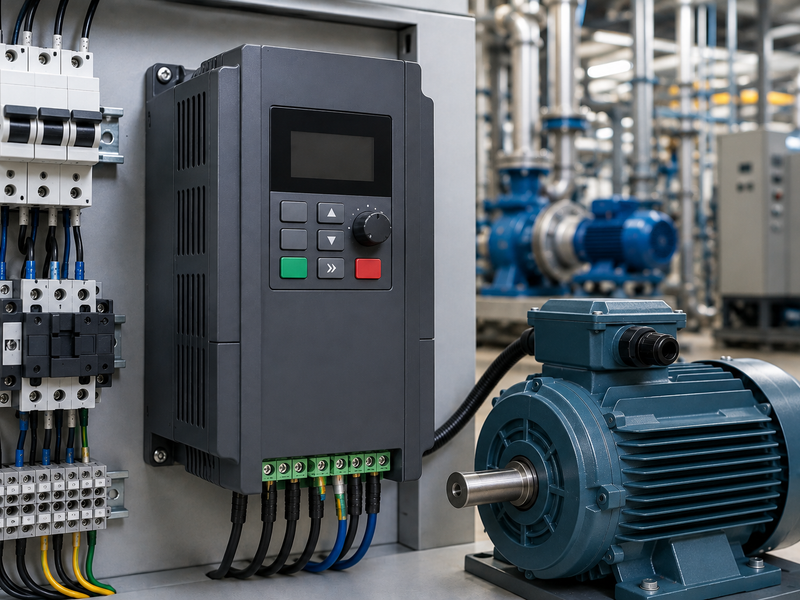
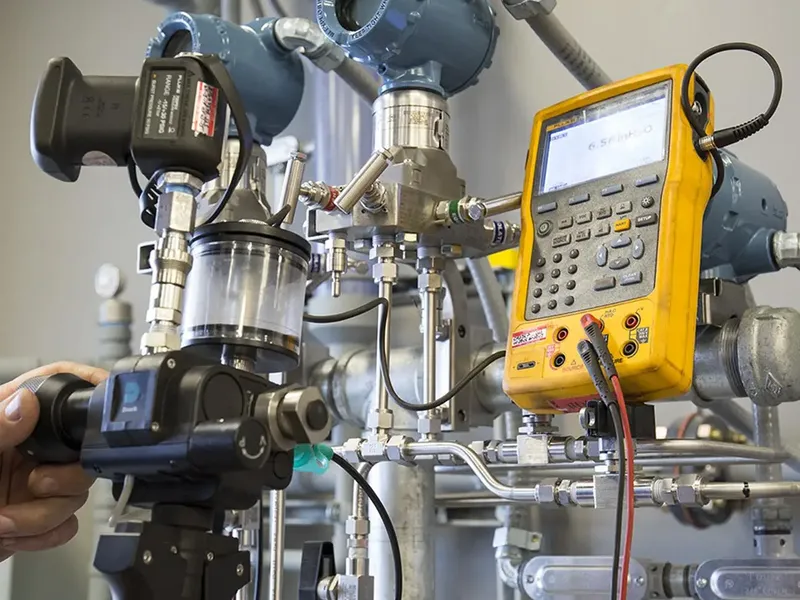
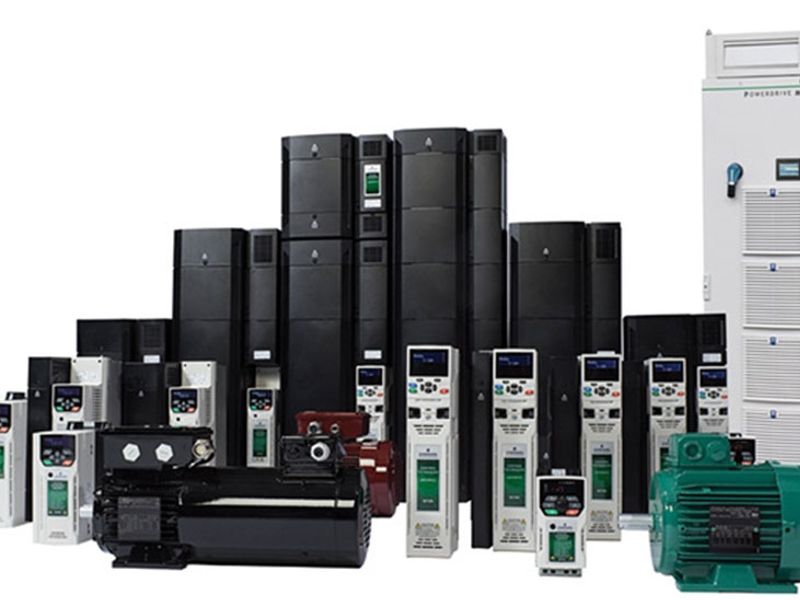
Retrofitting is one of the most practical ways for facility management (FM) teams and end-user companies—including manufacturing, print & packaging, food processing, warehouses, and industrial utilities—to improve reliability, safety, and energy performance without the cost and disruption of a full system replacement. Most sites in the UAE run a mix of equipment generations: older HVAC control panels, aging VFDs, legacy PLCs, unsupported HMIs, and instrumentation that no longer provides stable readings. Over time, this leads to recurring breakdowns, unplanned stoppages, spare-part panic, and “temporary fixes” that become permanent. At General Tech Services, we support retrofit projects end-to-end by combining: Automation supply (supported components and spares) On-site installation and panel modifications Commissioning and handover support So you can upgrade with confidence and keep operations running. Why retrofits matter for FM and end users? 1) Reduce downtime and reactive maintenance Old control systems fail unpredictably—often when you can least afford it. Retrofitting critical weak points improves system stability and reduces emergency callouts. 2) Eliminate obsolete parts and spare shortages Many facilities still depend on discontinued drives, controllers, and relays. Retrofits standardize your system on supported, readily available components with a clean spares strategy. 3) Improve energy performance without changing mechanical assets A large portion of energy waste in facilities comes from outdated control logic and constant-speed motor operation. Retrofitting drives and control sequences can cut consumption while keeping existing pumps, fans, and chillers. 4) Enhance safety, compliance, and maintainability Retrofitting provides an opportunity to correct poor wiring practices, improve protection coordination, add safety interlocks, and deliver proper documentation and labeling—critical for FM teams and audits. Industries that benefit most from retrofit programs Manufacturing (general industrial) Manufacturing sites need stable utilities: compressed air, chilled water, process cooling, pumps, and reliable panel controls. A retrofit improves uptime and reduces production loss. Print & packaging Print and packaging lines are sensitive to: stable pneumatic supply, reliable motor speed control, repeatable temperature and process conditions. Retrofits reduce scrap, rework, and line stoppages. Food, beverage, and cold-chain facilities These facilities prioritize: consistent HVAC and refrigeration control, safe instrumentation, reduced unplanned downtime. Retrofitting controls and drives improves stability and reduces temperature excursions. Warehouses, logistics hubs, and large commercial facilities Energy and reliability are key: HVAC optimization, BMS upgrades, VFD control of fans/pumps, lighting control upgrades, and improved monitoring reduce operational cost. What retrofit services typically include? A) HVAC, chiller plant, and pump system retrofits Common upgrade items: VFD retrofit for chilled water pumps, condenser pumps, and AHU fans Controller upgrades and improved sequencing (lead/lag, staging, alarms) Sensor replacement (pressure/temperature/flow) to stabilize control loops Control panel re-termination, labeling, and protection improvements Outcome: more stable comfort conditions, fewer trips, lower energy consumption. B) Motor control and drive retrofits (high impact) VFDs and motor controls are frequent failure points. Retrofit scope typically includes: Replacing aging VFDs with modern equivalents Adding bypass arrangements for critical motors Parameterization and tuning for stable operation Improving protection, earthing, and panel ventilation Outcome: fewer breakdowns, smoother process control, and energy savings. C) Control panel retrofits (without replacing the whole panel) A full new panel is not always necessary. Many sites can extend panel life by upgrading targeted components: PLC/HMI replacement where legacy is unsupported Power supplies, contactors, relays, timers, terminal blocks Panel rewiring cleanup, ferruling, labeling, and documentation Outcome: better maintainability and faster troubleshooting. D) Instrumentation and sensing upgrades (often overlooked) Many “control problems” are actually sensing problems. Instrument retrofits can include: Pressure/temperature transmitters Flow and level instruments Proximity sensors and safety devices Critical condition monitoring sensors where applicable Outcome: stable control, fewer nuisance alarms, and consistent product quality. E) Utility system monitoring and alarms (visibility retrofit) Even small upgrades can improve operational control dramatically: SCADA/PLC integration (analog and digital signals) Alarm relays, fault history, and event logging Basic remote visibility for key utilities (HVAC status, pump trips, dryer faults) Outcome: faster response, proactive maintenance, and reduced downtime. How General Tech Services supports FM and end users? 1) Site assessment and retrofit scoping We support a practical assessment to define the right scope: Identify high-failure components and obsolescence risks Confirm installation constraints and downtime windows Propose a replacement architecture that is serviceable and standardizable Build a clear BOM (bill of materials) and cutover plan 2) Automation supply (new supported hardware) We supply and support a complete retrofit BOM including: PLCs, HMIs, I/O modules (where needed) VFDs and motor control components Relays, timers, contactors, protection devices Sensors and industrial measurement devices Accessories for installation and panel upgrades The key goal: replace “hard-to-find legacy” with “supported and available” and reduce the number of unique parts across your sites. 3) Installation and retrofit execution services We support on-site retrofit works such as: Panel modification and re-termination Cable pulling, glanding, and field wiring Drive replacement and parameter setup Loop checks and functional testing support 4) Commissioning and handover A retrofit is only “done” when it’s maintainable. We assist with: Commissioning support and troubleshooting Settings backup (drive parameters, key controller settings) As-built documentation guidance Recommended spares list for FM readiness Typical retrofit wins you can expect While results vary by site, retrofits usually deliver one or more of the following: Reduced breakdowns and emergency callouts Lower spare-part risk and fewer “unserviceable” situations Improved energy performance via VFD optimization and control logic improvements Better stability in production utilities (air, water, HVAC) Improved maintenance clarity (labeling, documentation, easier troubleshooting) A practical retrofit roadmap (recommended approach) For FM and end users managing multiple facilities, retrofits work best as a program: Criticality ranking: identify systems that cause the most downtime/cost Standardization plan: define preferred drive/controller families for spares control Pilot retrofit: retrofit one plant/panel, document results Rollout: apply the same architecture across similar systems/sites Spares strategy: hold a lean but effective spares kit to reduce downtime Ready to plan a retrofit? If you share any of the following, we can help structure a retrofit scope quickly: Photos of panels and nameplates Equipment list (HVAC, pumps, compressors, production utilities) Frequent faults / breakdown history Your downtime constraints (night works, weekend shutdowns) General Tech Services can assist with retrofit scoping, automation supply, installation, and commissioning support to modernize your facility systems while keeping your operation running.  

07
Jan

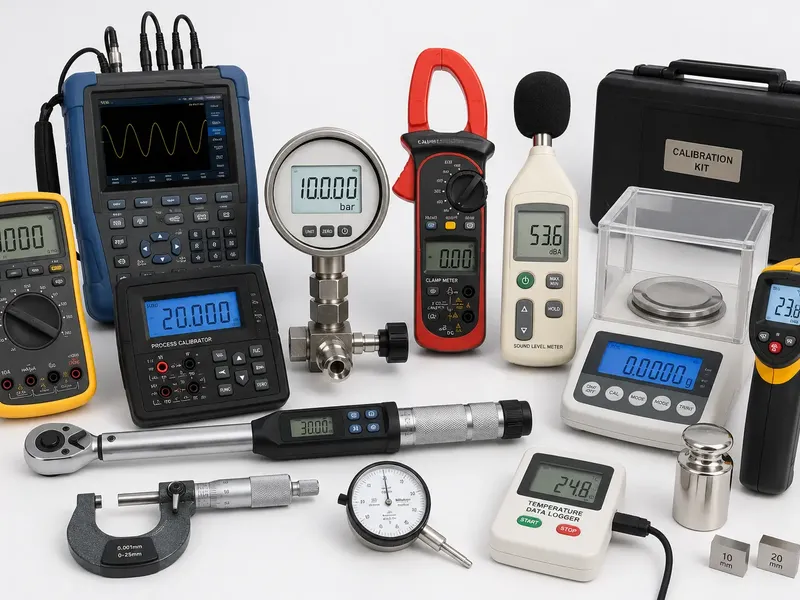
ISO/IEC 17025 Calibration in the UAE: Why It Matters and Why It Is Worth the Premium?

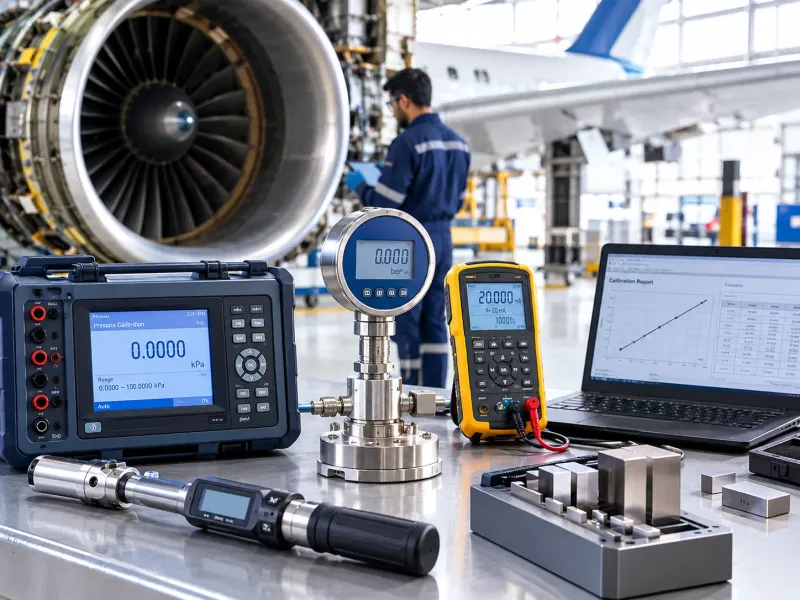
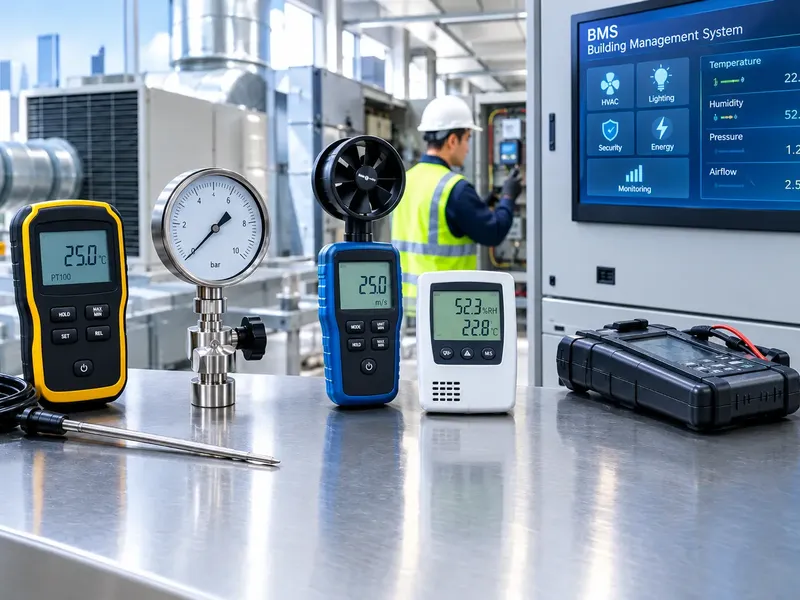
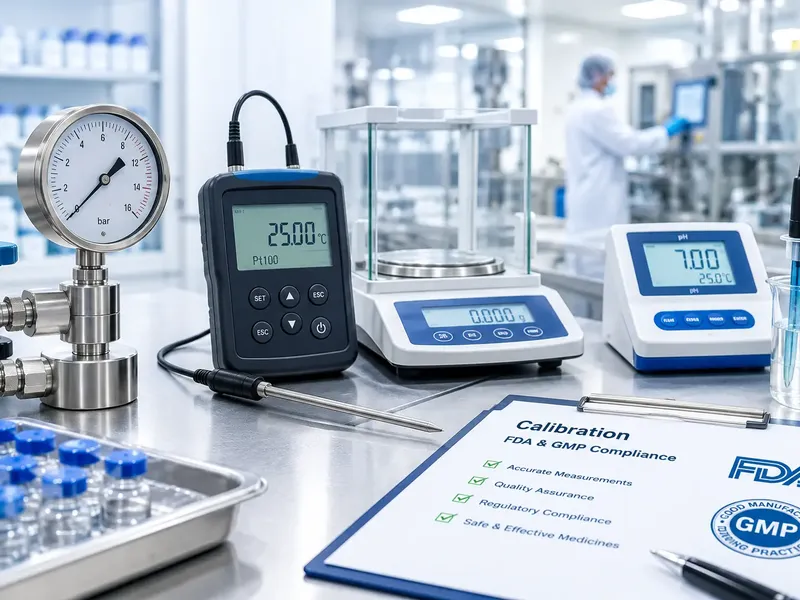
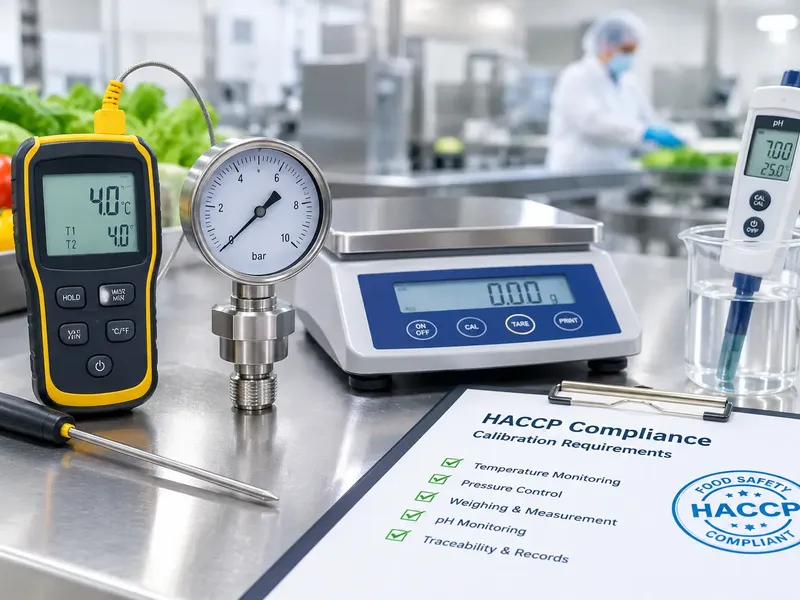
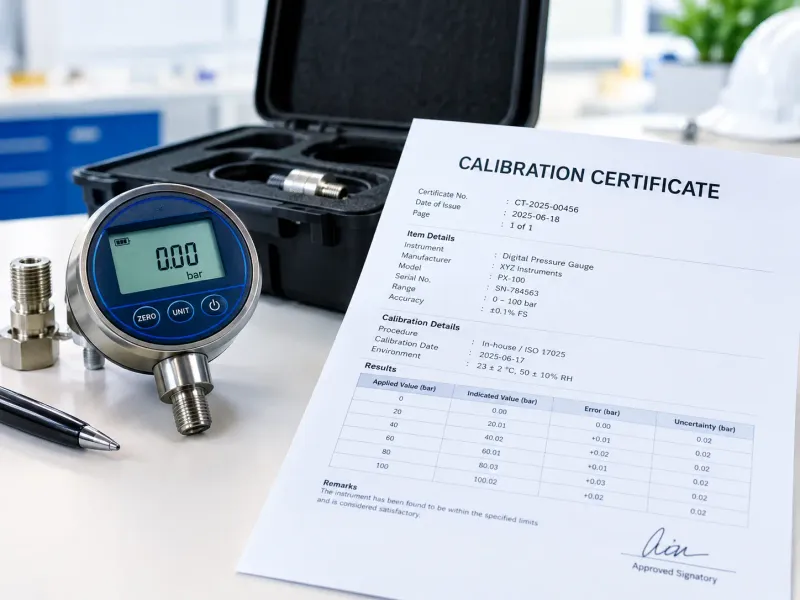
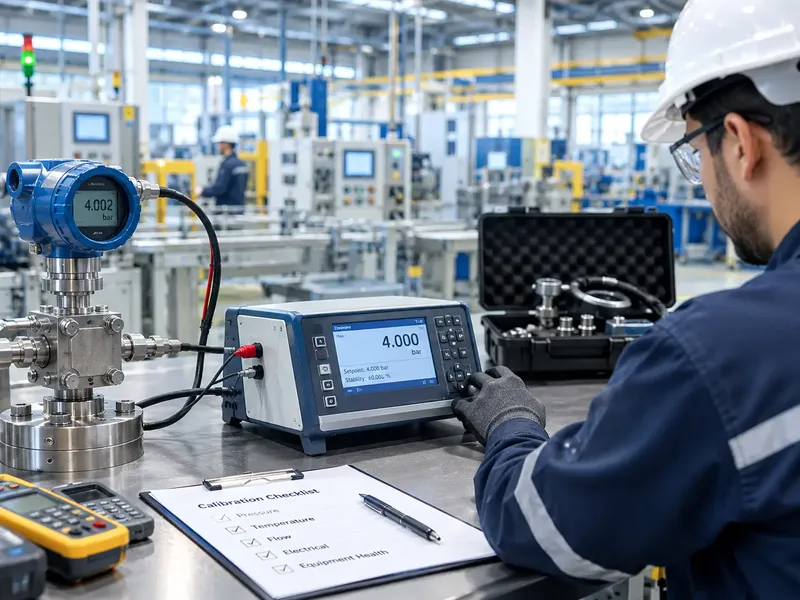
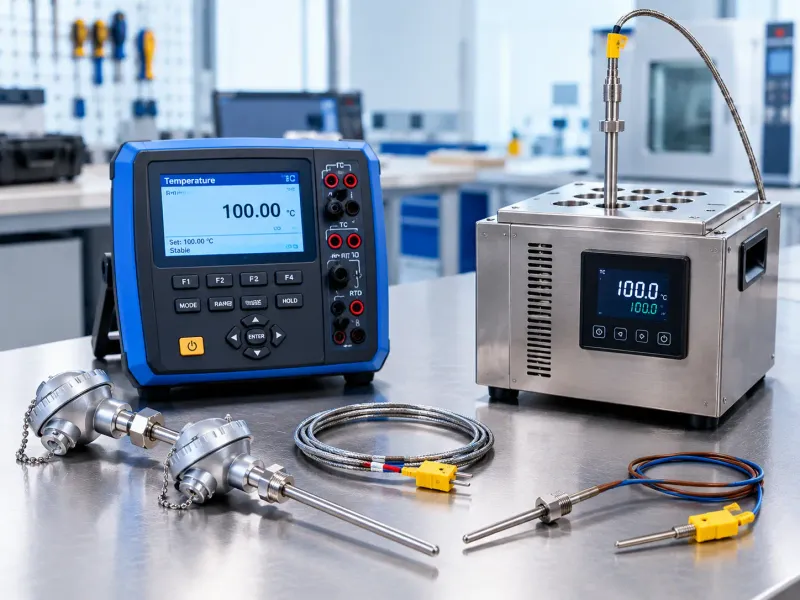
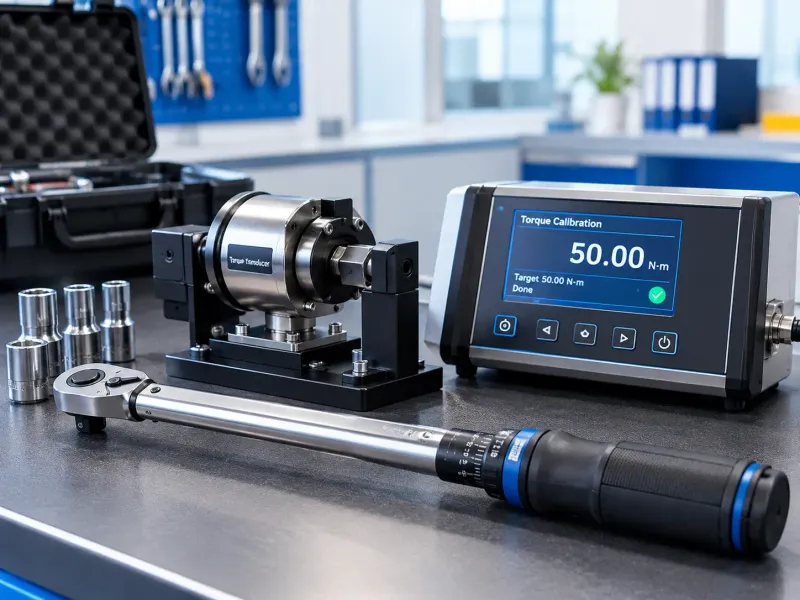
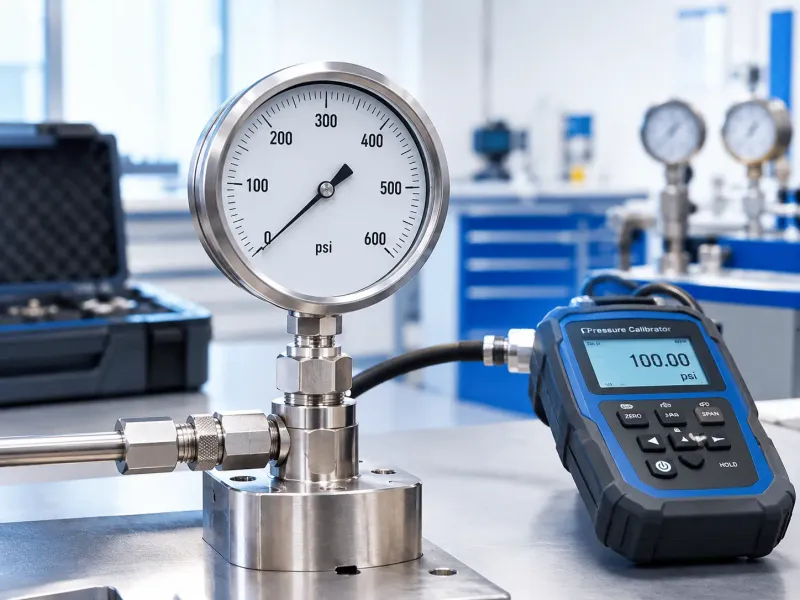
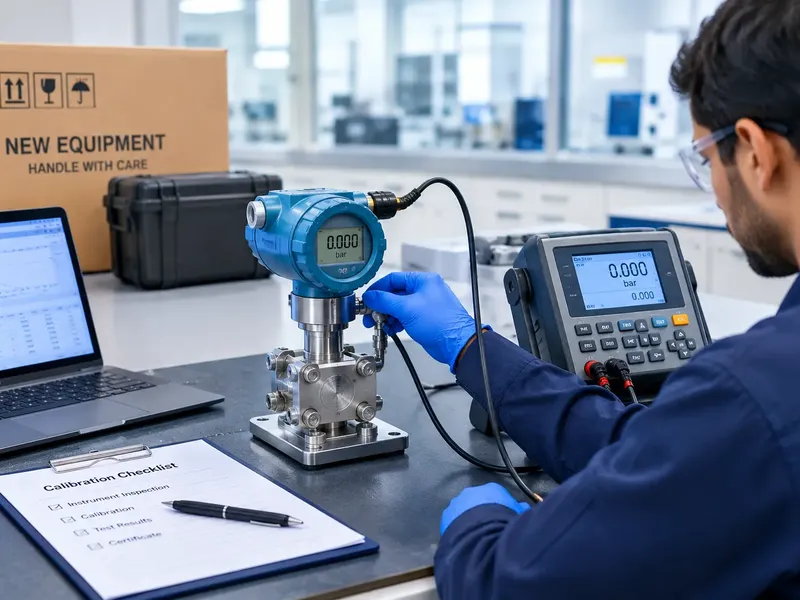
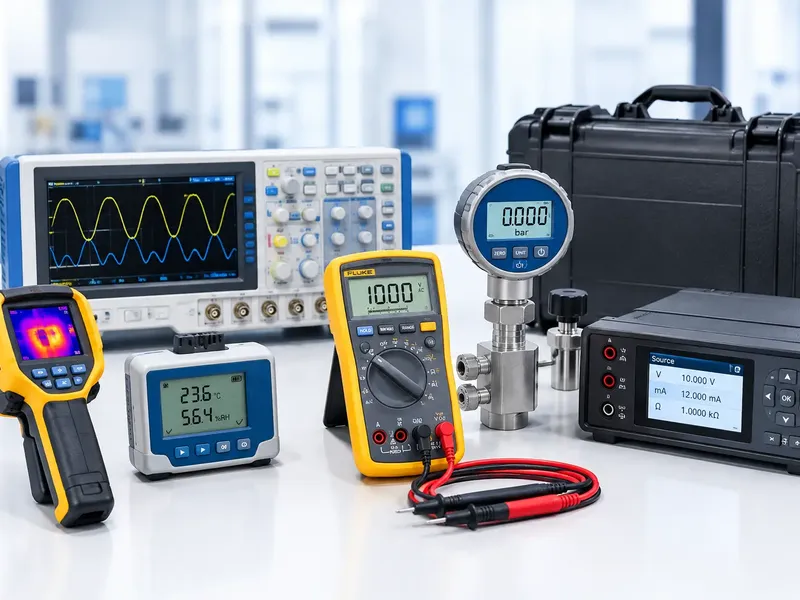
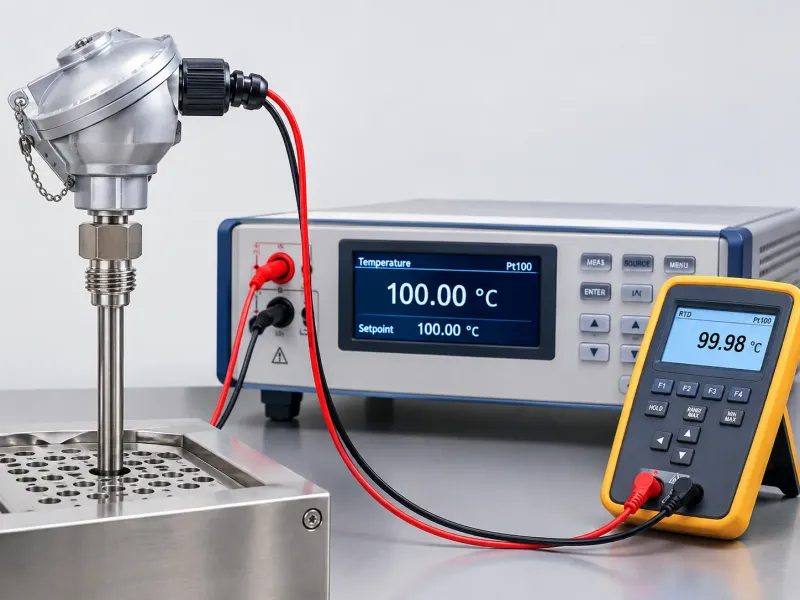
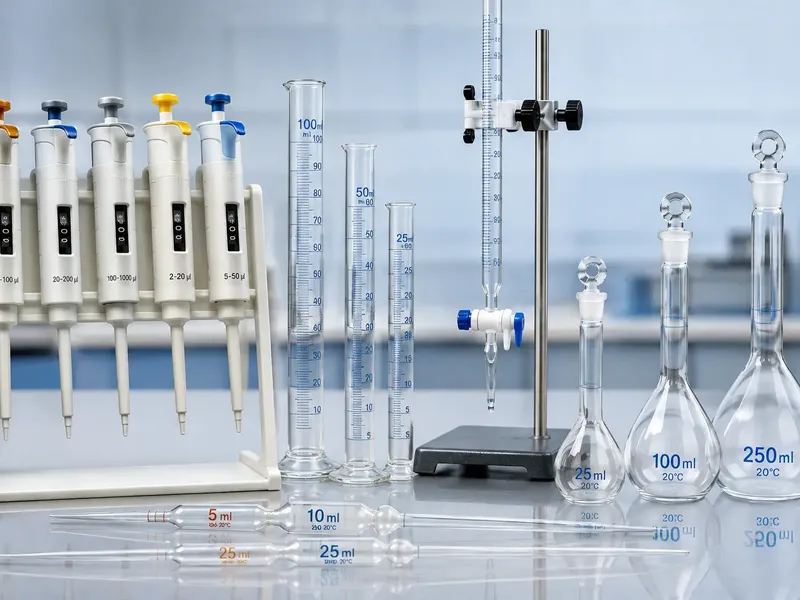
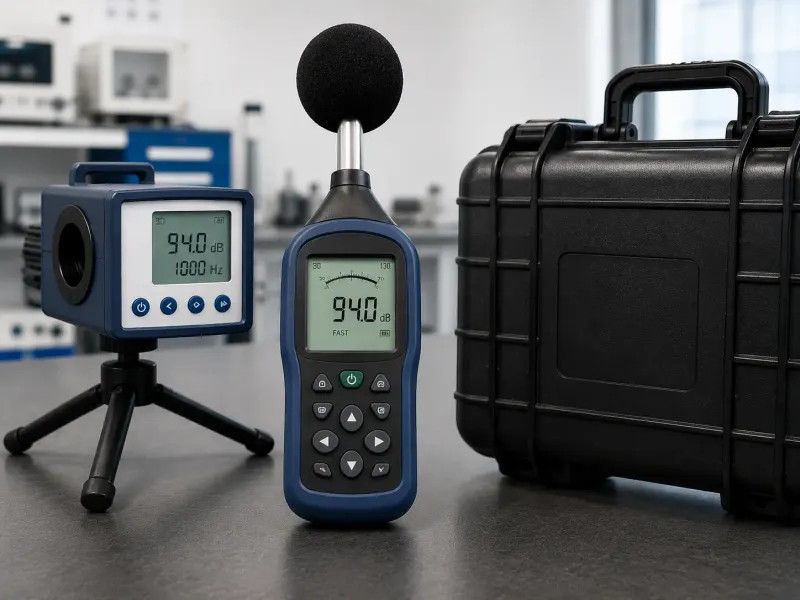
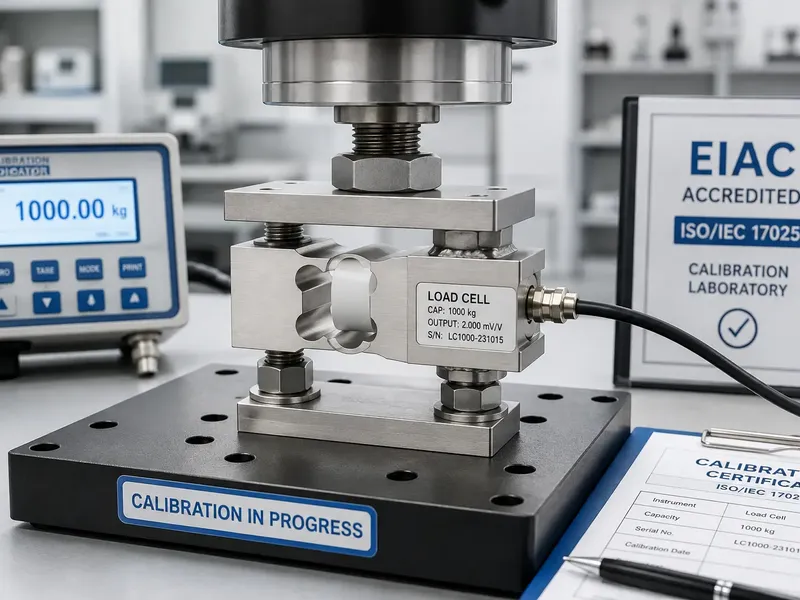
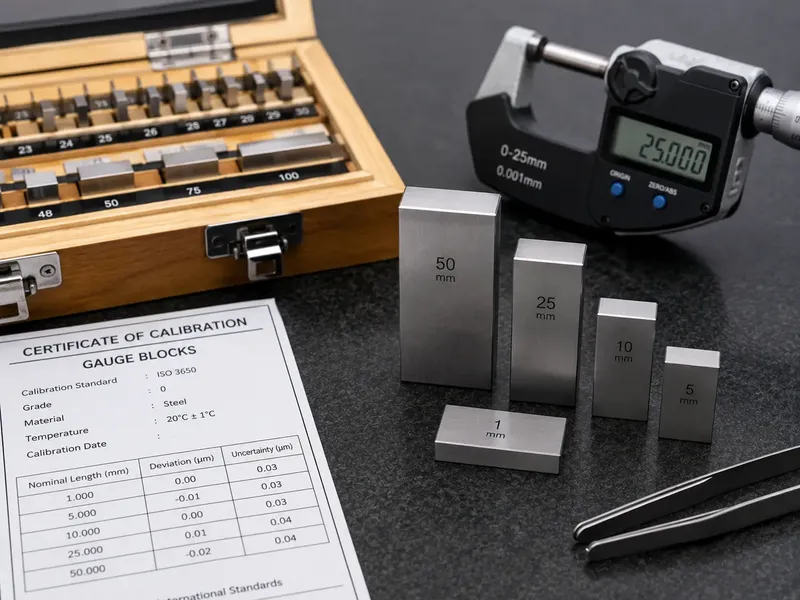
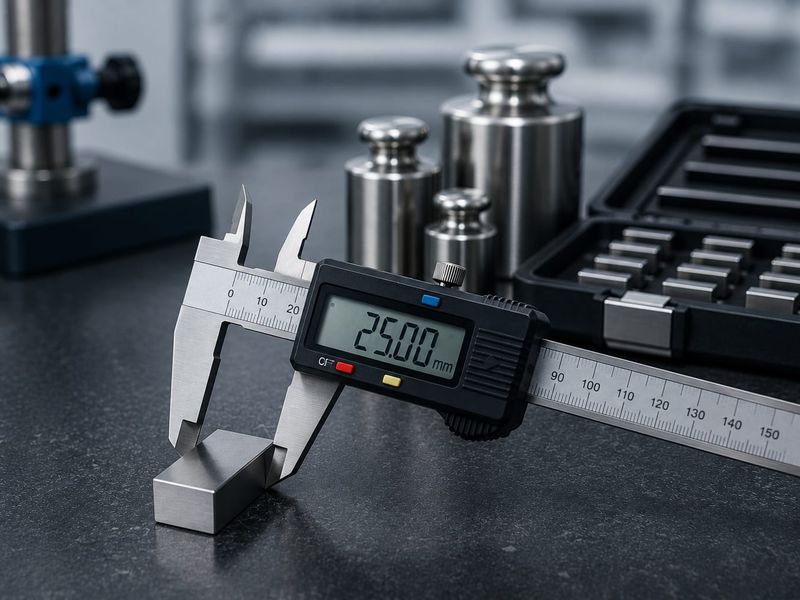
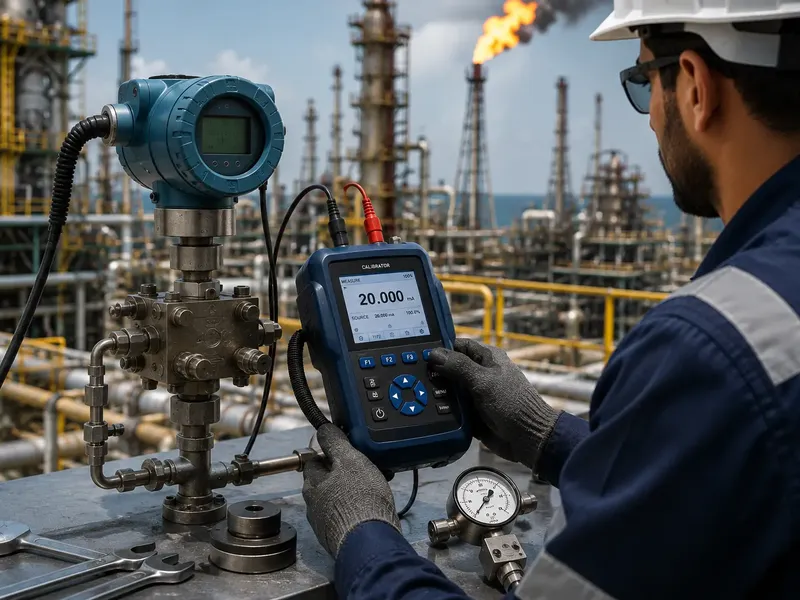
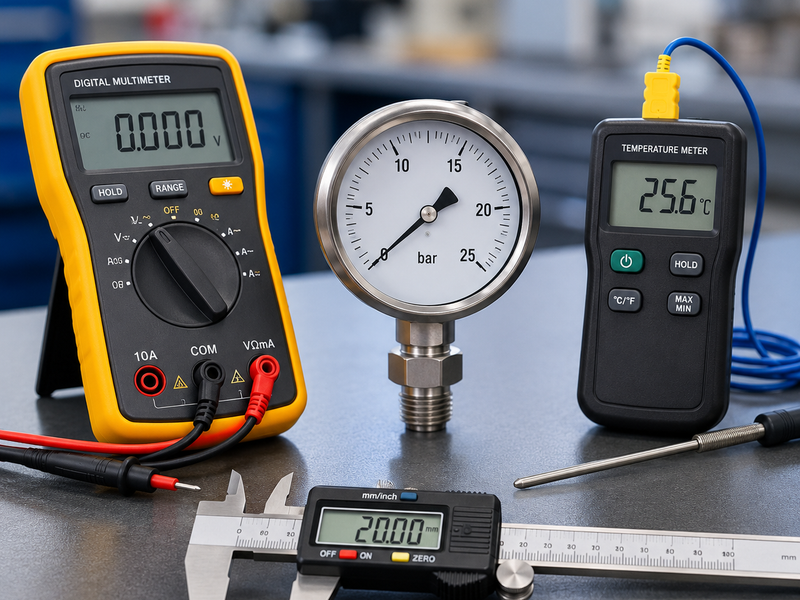
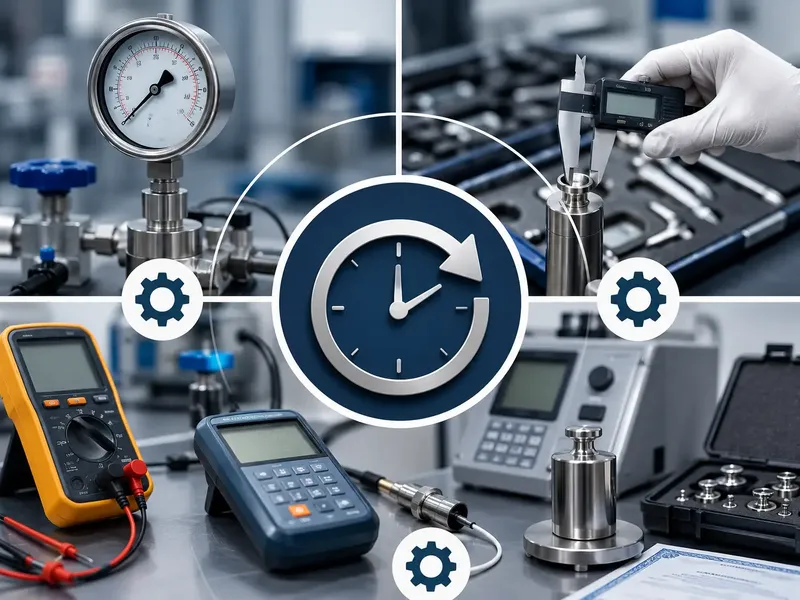
In industrial operations, the smallest measurement error can quietly become a costly problem—scrap increases, rework rises, downtime becomes frequent, and audit pressure grows. That is why ISO/IEC 17025 calibration is not a formality. It is a technical assurance system that protects measurement integrity and helps organizations make defensible decisions based on accurate data. For companies across the UAE, choosing the right calibration partner is equally important. General Tech Services has been serving the UAE since 1998, building a trusted name not only in calibration services but also in the supply of industrial instruments and solutions. This long-standing presence matters because calibration is not a one-time transaction—it is an ongoing control process that affects quality, safety, and profitability year after year. What ISO/IEC 17025 Means (In Practical Terms)? ISO/IEC 17025 is the international standard that defines competence requirements for calibration laboratories. In practice, it ensures calibration is performed under a controlled, auditable system with: Traceability to recognized national/international standards Documented measurement uncertainty, so results can be trusted and compared Validated methods and controlled procedures Technically competent personnel and systematic quality controls Reliable, audit-ready certification for customer and regulatory requirements For UAE-based manufacturers, utilities, oil & gas operators, and contractors, this is what turns calibration into a measurable business advantage rather than a compliance burden. Why ISO/IEC 17025 Calibration Helps UAE Businesses Across Industries? Oil & Gas, Petrochemicals, and Energy Measurements drive safety and efficiency—pressure, temperature, flow, vibration, and gas detection all influence critical decisions. Impact of 17025 calibration: Fewer process deviations due to sensor drift Improved shutdown/turnaround readiness with defensible records Reduced HSE risk caused by inaccurate readings Manufacturing, Fabrication, and Industrial Automation In production environments, measurement errors multiply into rejects and rework. Impact of 17025 calibration: Improved first-pass yield and reduced scrap More reliable inspection and acceptance decisions Stronger process capability and stable quality KPIs Utilities, Facilities Management, and Building Services Accurate instrumentation supports monitoring, performance, and compliance. Impact of 17025 calibration: Better reliability for control systems and energy management Reduced failures caused by undetected drift Stronger documentation for ISO audits and client inspections Pharmaceuticals, Food, and Laboratories Audit readiness and traceability are non-negotiable. Temperature, humidity, and critical measurements must be defensible. Impact of 17025 calibration: Reduced batch risk and fewer deviations Clear traceability and uncertainty reporting for audits Higher confidence in lab and production results Aviation, Defense, and Precision Engineering Tight tolerances demand stable and credible measurement systems. Impact of 17025 calibration: Consistent inspection outcomes and fewer nonconformities Stronger supplier qualification and quality traceability Why Paying a Premium for Quality Calibration Saves Money? It is common to compare calibration providers by price. However, calibration is a technical risk-control service—cost should be evaluated based on total business impact, not the invoice value. Short-Term Savings (Immediate, Measurable Benefits) 1) Reduced scrap and reworkAccurate instruments prevent bad acceptance/rejection decisions and reduce process variation. 2) Less downtime and fewer instrument-related stoppagesReliable calibration helps maintenance teams identify drift early and plan corrective action proactively. 3) Faster audits and fewer nonconformitiesClear, traceable certificates reduce audit time and eliminate documentation gaps. 4) Better operational decision-makingWhen uncertainty is properly reported, QC and engineering teams can make confident decisions—especially for tight tolerances. Long-Term Savings (Strategic Value) 1) Lower warranty claims and customer rejectionsMany recurring failures trace back to unreliable measurement systems. 2) Better asset life-cycle managementConsistent calibration history supports trending and replacement planning. 3) Reduced compliance and contractual riskWhen disputes occur, defensible measurement records protect your organization. 4) Stronger continuous improvement resultsLean and Six Sigma programs depend on accurate measurement data. Without it, KPI improvements can be misleading. The Hidden Cost of Low-Quality Calibration Low-cost calibration often results in: Weak traceability documentation Unclear or missing uncertainty reporting Inconsistent methods across technicians or sites Certificates that fail customer or regulatory audit expectations Limited guidance when instruments are found out-of-tolerance The real cost is rarely the calibration fee—it is the downstream impact of decisions made using unreliable measurements.

06
Dec

Comprehensive VFD, HMI, Instrumentation & Automation Repairs by General Tech Services- Reliable, Experienced, and Backed by Warranty

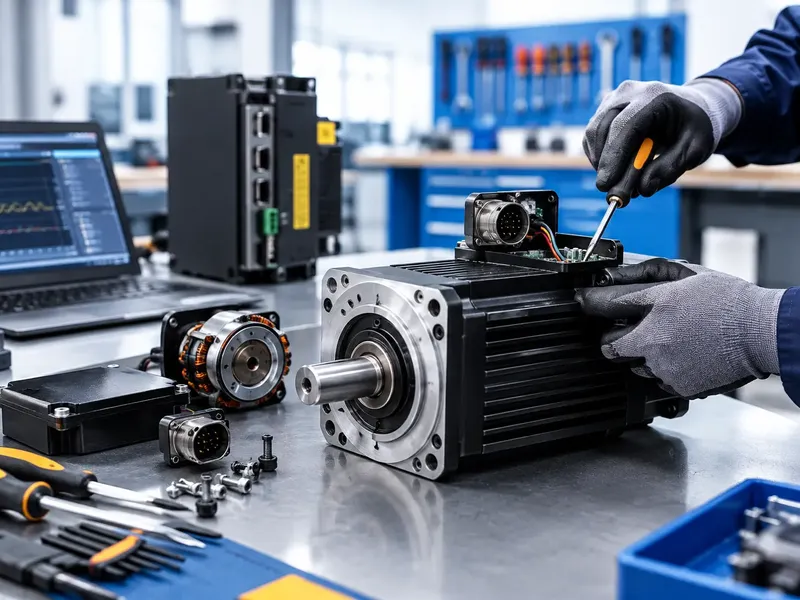
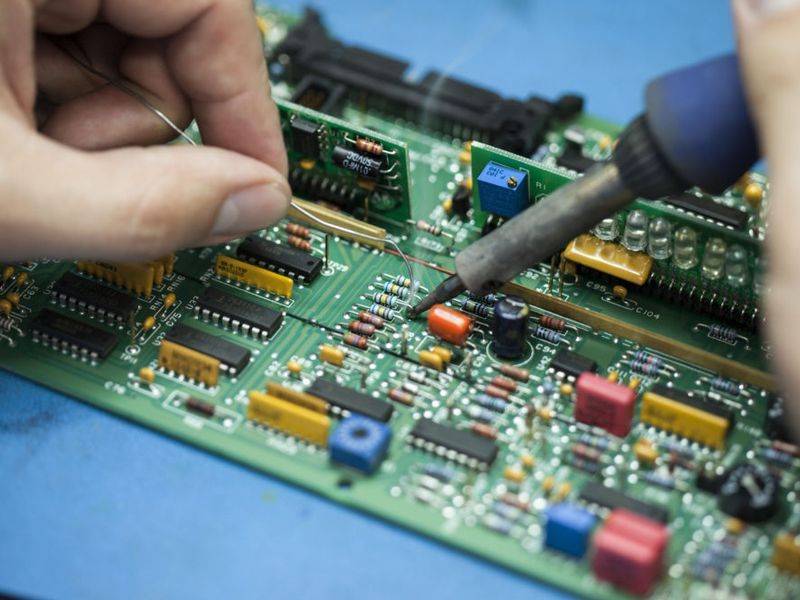
Industrial Repair Services in the UAE – Reliable, Experienced, and Backed by Warranty Across the UAE’s industrial sector, downtime is one of the biggest challenges companies face. When a key piece of equipment fails—whether it’s a drive, an HMI, or a critical instrument—the impact is immediate. Production slows down, safety margins shrink, and costs start adding up. To help businesses avoid extended downtime and unnecessary equipment replacement costs, General Tech Services offers a full suite of professional repair services for automation, electrical, and industrial control equipment. Every repair is backed by a service warranty, giving customers complete confidence in performance and reliability. VFD Repair Services – Keeping Motors and Production Lines Running Variable Frequency Drives (VFDs) are the heart of most industrial motor systems. Because of heat, dust, electrical fluctuations, and demanding operating environments, drives can fail over time. Our repair team handles everything from small HVAC drives to large industrial units used in pumps, compressors, conveyors, and process machinery. Typical VFD faults we address include: Overvoltage and undervoltage errors Power module and IGBT failures Burnt components or short circuits Control board and communication faults Capacitor failures Overheating and cooling fan issues Brands commonly repaired: Control Techniques, Emerson, ABB, Danfoss, Siemens, Schneider, Mitsubishi, Yaskawa, Omron, Allen-Bradley, Delta, Fuji, and others. What customers can expect: Thorough diagnostics and root-cause analysis Component-level repair instead of costly replacements Load testing to simulate real operating conditions A service warranty after repair Fast turnaround to reduce downtime HMI Repair Services – Restoring Your Operator Interface An HMI malfunction can bring an entire machine—or even an entire production line—to a standstill. We repair HMIs used in industrial automation, packaging, utilities, and manufacturing, ensuring that operators regain full visibility and control as quickly as possible. Common HMI issues we repair: Cracked or unresponsive touchscreens Damaged LCD or backlight Faulty communication ports Software or firmware issues Power supply board failures Non-responsive keypads or dead displays Brands we work with include: Omron, Siemens, Allen-Bradley, Weintek, Schneider, Advantech, Delta, Mitsubishi, Beijer, Wago, IFM, and similar panels used across UAE industries. Our HMI repair approach: Screen and touch panel replacement Calibration and testing under operating conditions Firmware restoration when required Warranty on all completed repairs Instrumentation & Calibration Equipment Repairs Many companies rely on sensitive measurement tools—pressure gauges, flow meters, torque devices, dimensional instruments, data loggers, and more. These tools must stay accurate and reliable, especially in industries where quality control is critical. We repair instruments from brands such as Mitutoyo, Mark-10, WIKA, IFM, Emerson, Honeywell, Jumo, Apera, Dwyer, and several others used throughout the UAE. Our process includes diagnostics, component replacement where needed, and a verification or calibration check to ensure the equipment performs as required. Electronic PCB & Power Supply Repairs For customers looking to extend the life of control systems, our electronics division handles board-level and module-level repairs, including: Power supply units PLC IO boards Control boards Servo drive boards Industrial communication modules Instead of replacing entire units, repairing individual boards can reduce costs significantly while keeping systems running smoothly. Servo Motor Repairs Servo motors are essential in CNC machines, robotics, and high-precision automation lines. We support: Bearing replacement Encoder servicing Stator rewinding Brake assembly repair Cleaning, alignment, and balancing All motors undergo detailed inspection and testing before return. PLC, IO and Automation Module Repairs Automation systems rely heavily on PLCs, IO cards, and communication modules. We repair components used in production plants, utilities, manufacturing lines, HVAC systems, and process industries. We work on modules from leading brands such as Siemens, Omron, Allen-Bradley, Schneider, Wago, and IFM. Why Companies in the UAE Prefer General Tech Services? Experienced technical team Our engineers bring extensive experience across industrial automation, instrumentation, and electrical systems. Transparent repair process Every repair comes with an inspection report detailing the issue and the work carried out. Cost savings Repairs often cost far less than buying new equipment—especially for imported items or discontinued models. Short turnaround times We understand how critical uptime is in UAE industries, so repairs are prioritised accordingly. Warranty-backed repairs Every completed repair is supported by a service warranty for peace of mind. Industry coverage We support companies in oil & gas, manufacturing, utilities, water treatment, aviation, logistics, metal fabrication, and engineering services. Your Trusted Repair Partner in the UAE Whether you need support for a single drive, an entire control panel, or a variety of industrial instruments, our repair team is ready to help. With reliable service, technical expertise, and warranty-backed work, General Tech Services remains a trusted partner for industrial repair needs across the UAE.  


04
Nov

Live Panel Cleaning in UAE: The Future of Preventive Electrical Maintenance

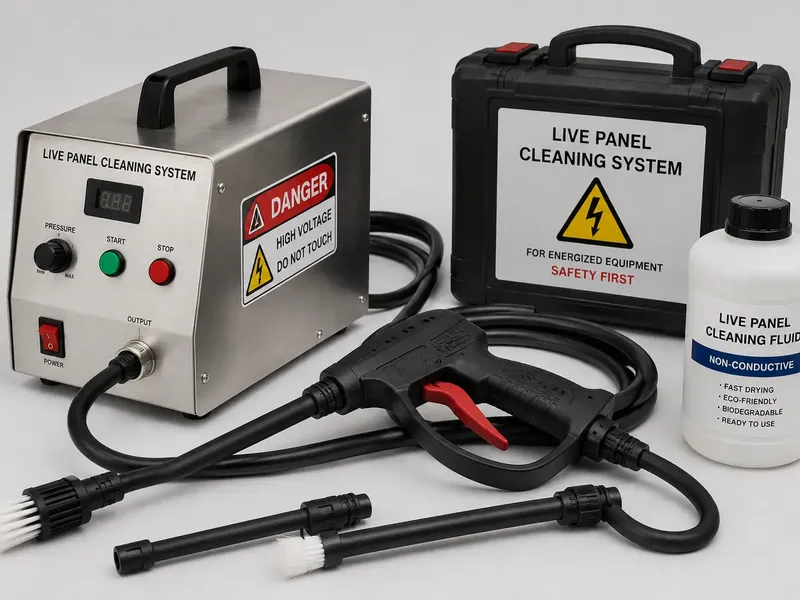
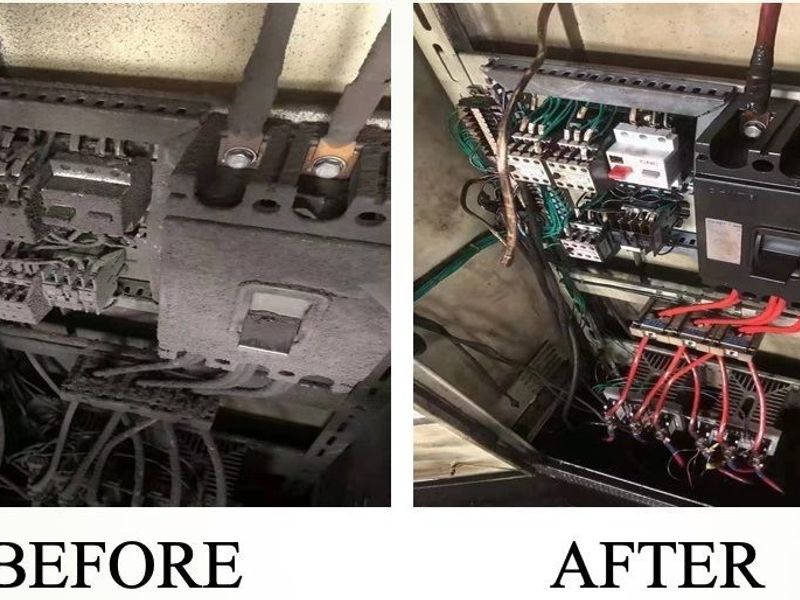
What is Live Panel Cleaning? Live Panel Cleaning is a specialized maintenance process that allows electrical panels, switchgear, and control cabinets to be cleaned while they remain energized. Instead of shutting down your system, trained professionals use non-conductive cleaning methods to safely remove dust, oil, moisture, and contaminants from live electrical components. This process has been used globally for over 20 years and has proven to be one of the safest and most effective preventive maintenance techniques for industries that demand continuous operation. Why Live Panel Cleaning is Vital in the UAE ? The UAE’s harsh desert environment creates unique challenges for electrical systems. Constant exposure to dust, humidity, salt air, and high temperatures accelerates contamination inside panels. Over time, this buildup causes overheating, insulation failure, short circuits, and even fires. Live Panel Cleaning eliminates these risks without interrupting power supply, making it an ideal maintenance solution for: Industrial plants with 24/7 production lines Oil & gas facilities with critical electrical systems Data centres that demand zero downtime Commercial buildings and high-rises with centralized power systems Utilities, airports, ports, and metro networks By cleaning panels while they remain operational, General Tech Services helps UAE industries maintain efficiency, safety, and compliance without sacrificing uptime. Top Benefits for Customers 1. Minimise downtime & protect availability If a panel or switchboard must be de-energised for cleaning, the cost (lost production, HVAC, process delays) can be substantial. Live panel cleaning eliminates or dramatically reduces this downtime, ensuring business continuity. 2. Improve reliability & reduce failures Dust, dirt, oil and moisture degrade insulation resistance, raise temperatures and increase the risk of internal arcing or short-circuit events. Clean equipment runs cooler, safer and longer. For example, one document shows that cleaning live panels reduced internal temperatures and contamination levels significantly. Scribd 3. Extend asset lifespan By removing corrosive deposits and insulating contamination, the cleaning helps prevent premature ageing of components, busbars, contacts, insulation systems and panels themselves — delivering long-term savings. 4. Maintain optimal performance Hot spots, reduced airflow, degraded insulation all degrade efficiency (more heat loss, less effective cooling). Clean panels help maintain performance at peak specification. 5. Cost savings in maintenance & remedial work Instead of reactive repair or shutdowns to fix faults caused by contamination, live cleaning is a proactive strategy. That means lower unplanned maintenance costs and fewer emergency call-outs. 6. Safety compliance & insurance-friendly In high-value installations, insurers and safety audits increasingly expect preventive maintenance regimes. A clean, well-maintained panel setup reduces risk of fire or arc fault damage, which helps with safety ratings and insurance premiums. Industry Applications in the UAE Oil & Gas and Petrochemicals Continuous production environments benefit from non-stop cleaning of MCCs and switchboards. It minimizes risk in explosive or dust-prone zones. Data Centres and IT Facilities Dust can affect sensitive electronic circuits and cooling systems. Live cleaning maintains reliability, ensuring compliance with strict uptime SLAs. Manufacturing and Process Plants Factories operating 24/7 can’t afford shutdowns. Live panel cleaning ensures uninterrupted production and safety compliance. Utilities and Power Distribution Electrical substations and switchgear in coastal or desert areas remain protected from corrosion and environmental contamination. Commercial and Hospitality Buildings For hotels, malls, and skyscrapers, clean electrical systems mean better fire safety, reliability, and operational continuity. Why Choose General Tech Services ? Scheduling flexibility: live cleaning means less disruption, so your operation stays running. Full documentation of before/after contamination levels, temperature changes, insulation resistance improvements — helps with compliance and reporting. Tailored maintenance contracts by industry segment (oil & gas, data centre, manufacturing, utilities) recognising their unique environment and risk profile. Preventive maintenance mindset: positioned not just as a cleaning service, but as an asset protection solution — extending equipment life, reducing failures, and improving safety.

04
Oct

Moore CPMS Monitoring System – Corrosion Control via General Tech Services

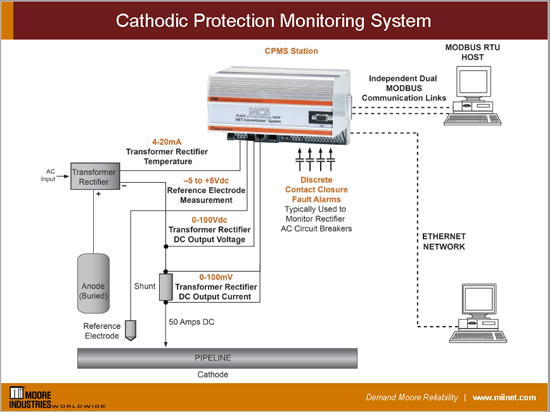
Monitoring Cathodic Protection Systems with Moore’s CPMS: Reliable Corrosion Control Introduction to CPMS The CPMS (Cathodic Protection Monitoring System) from Moore Industries is designed to vigilantly monitor both above-ground and buried impressed current cathodic protection systems. Its role is critical: ensuring that pipelines, tanks, and structures receive the proper electrical protection to prevent corrosion and maintain durability. How It Works Installed at rectifier stations, the CPMS tracks voltage and current values from one or two transformer-rectifiers. It has multiple analog input channels and discrete (contact closure) inputs to sense critical parameters. The system consolidates this data and sends it to host control systems — like a PLC, DCS, or PC — over communication links. Should any readings exceed preset thresholds or if a power supply is lost, CPMS can issue alarms to notify operators immediately. It also supports integration with Moore’s NET Concentrator I/O modules for expanding monitoring capacity. Key Features That Stand Out Robust Communication: Dual MODBUS RTU ports (RS-485) and Ethernet (MODBUS/TCP) for simultaneous connections Built for Harsh Environments: Metal enclosure with strong RFI/EMI protection, operating from –40 °C to +85 °C Data Logging & Backup: Stores up to 64,000 timestamped data points, with internal battery backup Advanced Logic & Math: Embedded control engine (ISaGRAF) allows PID loops, calculation functions, and custom logic Expansion & GPS Time Sync: Works with expansion I/O modules; optional GPS time feature ensures accurate timing even without network time sources Technical Highlights Input channels allow ranges like 0-100 Vdc, 0-100 mV, –5 to +5 V, 4-20 mA Discrete inputs handle contact closures (e.g., circuit breaker status) Accuracy: around ±0.1% full span typical Isolation: 1,000 V rms between case, input, output, and data ports Power: supports 24 Vdc or 90–260 Vac (user selectable) Interface: browser-based web UI for configuration and monitoring Why This Matters for You (via General Tech Services) For organizations operating pipelines, steel structures, or buried infrastructure, corrosion is a silent threat. Deploying CPMS ensures you: Detect system failures or anomalies before they cause damage Reduce maintenance costs by targeting actual problem points Enable remote monitoring, reducing the need for frequent manual checks Maintain compliance with industry standards and safety requirements At General Tech Services, we provide full support for CPMS in the UAE and region — from supply and installation to programming, integration, and ongoing calibration. Our local engineers can help you choose the right I/O expansion, configure your system logic, and integrate CPMS into existing SCADA or control systems.

16
Aug

Power Quality Analysis: A Practical Guide for UAE Facilities — with HIOKI Solutions from General Tech Services

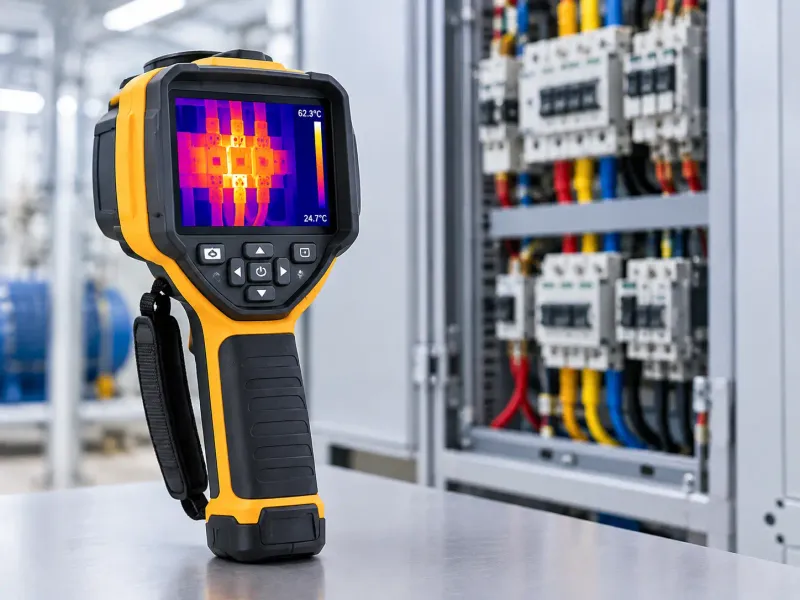
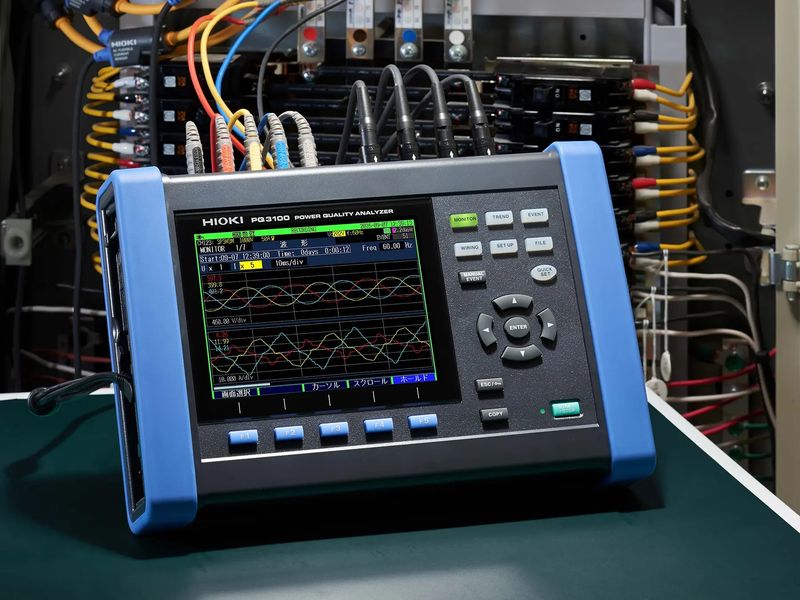
1) What Is Power Quality Analysis? Power quality (PQ) analysis is the systematic measurement and evaluation of how closely your electrical system aligns with an ideal sinusoidal supply at a stable voltage and frequency. A professional PQ survey quantifies: Steady-state parameters: voltage, current, demand, power factor (PF), frequency Waveform health: harmonics and THD (Total Harmonic Distortion) Events: sags, swells, interruptions, transients, and flicker System symmetry: phase unbalance and neutral loading By monitoring these indicators over time (typically 7–30 days) and across strategic points (utility incomer, main LV board, MCCs, critical feeders), you correlate electrical behavior with operations and identify root causes of trips, overheating, or penalties. 2) Why It Matters: Technical Risks and Business Impact? Unmanaged PQ issues rarely stay “electrical problems”—they become production, uptime, and cost problems. Avoid unplanned downtime: Find the true cause behind drives tripping, UPS transfers, or PLC resets. Reduce energy waste: High THD and low PF increase losses; correcting them lowers kWh and heat. Prevent utility penalties: Improving PF and mitigating harmonic injection cuts recurring surcharges. Extend equipment life: Cleaner waveforms mean cooler transformers, quieter motors, and fewer nuisance trips. Support compliance & claims: Evidence from Class-A instruments strengthens utility discussions and warranty cases. 3) Harmonics Explained—In Engineer’s Terms Modern non-linear loads—VFDs, LED drivers, servers/rectifiers, UPS—draw current in pulses. These pulses add higher-frequency components (3rd, 5th, 7th, 11th…), collectively called harmonics, which distort waveforms and raise THD (Total Harmonic Distortion).  Consequences include: Transformer and cable heating (especially from triplen harmonics returning on the neutral) Nuisance protection trips and resonance with capacitor banks Torque pulsations and additional motor losses Misoperation of sensitive electronics Effective mitigation starts with measurement by harmonic order (not just THD). Results inform whether to deploy detuned PF correction, passive/active filters, configuration changes, or sequencing. 4) What to Measure—and How to Plan a Survey? Recommended scope: Baseline: PF, demand trend, THD (V/I), voltage unbalance, and frequency stability. Events: Sags, swells, interruptions, transients, and flicker. Harmonic spectrum: Individual orders and total distortion at incomer and critical feeders. Context: Production schedules, major motor starts, chiller/UPS/VFD operations. Logging duration: Minimum one operating cycle (e.g., one week); ideally a month if loads vary seasonally or shift-wise. Safety: Use suitable current sensors and safe connection practices for live panels. Always verify phase rotation and wiring before starting the survey. 5) HIOKI Measurement Portfolio—Mapped to Real-World Use Cases General Tech Services supplies and supports a comprehensive HIOKI toolkit. The right instrument depends on depth of analysis, accuracy class, and number of points to cover. A) Advanced Troubleshooting & Compliance HIOKI PQ3198 – Power Quality Analyzer (Class-A) High-confidence capture of events (sags, swells, transients), harmonics, flicker, and unbalance Ideal for root-cause analysis and post-mitigation verification Pairs with flexible current sensors for fast, safe installation PC software (e.g., PQOne) streamlines reporting and event correlation Use when: you need defensible evidence for utility discussions, mystery trips, or commissioning/sign-off. B) Long-Term Energy & PQ Logging Across Many Panels HIOKI PQ3100 – Power Quality/Power Logger Multi-channel logging for PF trends, demand peaks, THD profiles, and load balance Well-suited for before/after studies (e.g., after PF correction or filter installation) HIOKI PW3360 Series – Compact Power Loggers Lightweight, rapid-deploy loggers for plant-wide screening and multi-point audits Excellent for energy optimization programs and tariff penalty reduction C) Efficiency and Powertrain Testing HIOKI PW3390 – Precision Power Analyzer High-accuracy measurement of inverters, motors, drives, and UPS Quantifies input/output power, conversion efficiency, and harmonic content Favored by engineering teams validating drive settings and motor loading D) Fast Screening & Maintenance HIOKI CM3286 – Power & Harmonics Clamp Meter Quick spot checks of voltage, current, PF, and basic harmonics Ideal for maintenance teams to triage panels before deeper logging E) Sensors, Accessories & Reporting Flexible current sensors and AC/DC probes: wide ranges, easy on busbars and tight cabinets Software (e.g., PQOne / GENNECT): automated event lists, harmonic charts, summary dashboards, and export to PDF/Excel 6) How General Tech Services Delivers Results ? As a UAE-based engineering and calibration company, we couple HIOKI hardware with practical field expertise. Our end-to-end approach: Discovery: Define risks (trips, penalties, heating) and set measurement objectives/KPIs. Measurement plan: Select points, sensors, safety method statements, and logging duration. On-site setup: Safe installation on live systems, phase verification, baseline checks. Monitoring & handover: Remote/periodic reviews to ensure data integrity. Analysis & reporting: Clear findings with harmonic order plots, event timelines, PF/demand trends, and quantified impacts. Action plan: Prioritized mitigations (filtering, detuning, wiring/grounding changes, sequencing). Verification logging: Post-fix measurement to demonstrate improvement. Calibration you can trust: We provide ISO-traceable calibration for analyzers, loggers, and sensors—essential for audits, compliance submissions, and repeatability across annual surveys. Commercial options: Purchase, rental, and rent-to-own programs—plus operator training and report templates for internal stakeholders. 7) Examples of some case studies executed: Case Study 1 — VFD Packaging Line (Dubai): High Current Distortion and Neutral Loading What happenedA food & beverage facility reported repeated VFD trips and elevated motor temperatures on two automated packaging lines shortly after an LED lighting retrofit. Operations staff also noted that trips clustered around shift changes when multiple conveyors restarted. How it was measured Instrumentation & placement: HIOKI PQ3198 (Class-A) connected at the MCC incomer to capture system-wide events and waveforms. HIOKI PW3360 loggers installed on two downstream subpanels feeding the packaging lines. HIOKI CM3286 clamp meter used for spot verification of PF, load balance, and basic harmonics. HIOKI CT9667 flexible current sensors applied around busbars and feeders to measure phase and neutral currents. Setup assurance: Phase rotation verified; wiring diagrams recorded; screenshots taken of scaling factors and connection schemes (3P4W). Logging window: 7 consecutive days to include normal production, shift changes, and cleaning cycles. Parameters recorded: Voltage/current waveforms, harmonic spectrum by order, THD (V & I), event capture (sags/swells), neutral current, PF, and demand. What the instruments recorded Current THD (THDi) peaks of ~37–41% on two feeders during shift-change restarts. Persistent low-order content with dominant 3rd, 5th, and 7th harmonics. Neutral current measured at ~95–110% of phase current during periods when LED lighting ramped up alongside conveyor starts. Voltage THD (THDv) at the MCC remained ≤4% during the study. Multiple short voltage sags were time-aligned with the simultaneous starting of several drives. Documented outputs to the clientEvent ledger (time-stamped sags/swells), harmonic order plots per feeder and neutral, 7-day THD and PF trend charts, instrument setup records, and calibration certificates. Case Study 2 — Hospital Imaging Wing (Abu Dhabi): Short-Duration Sags and UPS Transfers What happenedA private hospital experienced nuisance UPS transfers and visible flicker in sensitive areas during imaging cycles. Transfers were sporadic, more common during peak outpatient hours, and occasionally coincided with HVAC step changes. How it was measured Instrumentation & placement: HIOKI PQ3198 on the UPS input and output to capture upstream events and downstream ride-through behavior with synchronized waveforms. HIOKI PW3360 loggers on key imaging feeders to trend load profiles and harmonics close to the equipment. CM3286 used for on-floor spot checks of PF and basic harmonic indicators. Setup assurance: Time bases synchronized across instruments; UPS event log timestamps collected for correlation; connection schemes verified. Logging window: 10 days, covering daytime peaks, night shifts, and scheduled generator tests. Parameters recorded: Sags/swells with waveforms, harmonics/THD, flicker indices (Pst/Plt), frequency stability, and time correlation to UPS logs. What the instruments recorded Repeated voltage sags to ~84–87% Un lasting 120–180 ms during imaging load ramp-up and some HVAC steps. Flicker indices elevated in short windows coinciding with imaging sequences. Current harmonics present on imaging feeders; UPS output remained within commonly referenced steady-state distortion levels during observation. No transient overvoltage events exceeded PQ3198’s configured trigger thresholds. Documented outputs to the clientA synchronized event timeline aligning PQ3198 waveforms with UPS log entries, flicker trend graphs, harmonic trend summaries per feeder, instrument photos/connection notes, and calibration documentation. Case Study 3 — Commercial Tower (Sharjah): Low PF Windows and Neutral Heating Patterns What happenedA mixed-use commercial tower reported recurring power factor penalties and elevated temperatures on some neutral conductors. Issues tended to emerge in the evenings when IT tenant areas were busiest. How it was measured Instrumentation & placement: HIOKI PQ3100 installed at the main LV incomer to obtain building-level PF, demand, THD/TDD, and voltage symmetry trends. HIOKI PW3360 loggers deployed on three IT risers/floors to capture local load behavior and harmonic content. CM3286 used for rapid verification of load balance and spot harmonic checks at tenant panels. Setup assurance: Connection scheme (3P4W) confirmed; phase labeling and CT orientation verified; logging synchronized to building BMS timestamps. Logging window: 30 days to span weekday/weekend patterns and occupancy variability. Parameters recorded: PF/demand profiles, THD/TDD, harmonic orders (phase and neutral), neutral current trends, voltage unbalance. What the instruments recorded PF dips to ~0.82–0.86 during evening peaks on multiple days. Pronounced 3rd-order current on IT feeders; neutral currents reaching ~80–100% of phase current on selected risers. THDv at the incomer remained within typical planning levels over the study period. Temperature alerts from facility sensors aligned with periods of higher triplen components and neutral current. Documented outputs to the clientA 30-day PF and demand dashboard, floor-wise harmonic order distributions with neutral overlays, riser comparison summaries, instrument setup records (photos/diagrams), and calibration certificates.   8) Selecting the Right HIOKI Instrument—Quick Guide Need Class-A event capture & compliance evidence? → PQ3198 Plant-wide PF/THD/demand trends and before/after studies? → PQ3100 or PW3360 Series R&D or efficiency on drives/UPS/motors? → PW3390 Rapid screening and maintenance checks? → CM3286 Unsure? Start with a PW3360 screen; escalate to PQ3198 for deep diagnostics. 9) What You Receive from a General Tech Services PQ Engagement ? Scope & safety plan for measurement points and CT selection Calibrated HIOKI instrumentation setup and verification screenshots Event ledger (sags, swells, transients) with timestamps and severities Harmonic order plots (V & I), THD/TDD summaries, neutral currents PF & demand trendlines with tariff impact estimates Root-cause analysis and ranked mitigation actions (+ expected effect) Post-mitigation verification to confirm improvements 10) Frequently Asked Questions How long should we log?At least one complete operating cycle (≥7 days). Extend to 30 days if loads vary significantly. Do we always need a Class-A analyzer?Use PQ3198 for compliance evidence and transient/event capture. For broad screening and PF/THD/demand, PW3360/PQ3100 are efficient. Why is calibration important?Accurate, traceable data prevents misdiagnosis and supports utility or warranty negotiations. General Tech Services provides ISO-traceable calibration and annual service plans. Can you support rental and turnkey studies?Yes—short-term rentals, turnkey installation, data analysis, recommendations, and verification logging.


27
May

Introducing the Mitutoyo SJ-220: Redefining Portable Surface Roughness Measurement

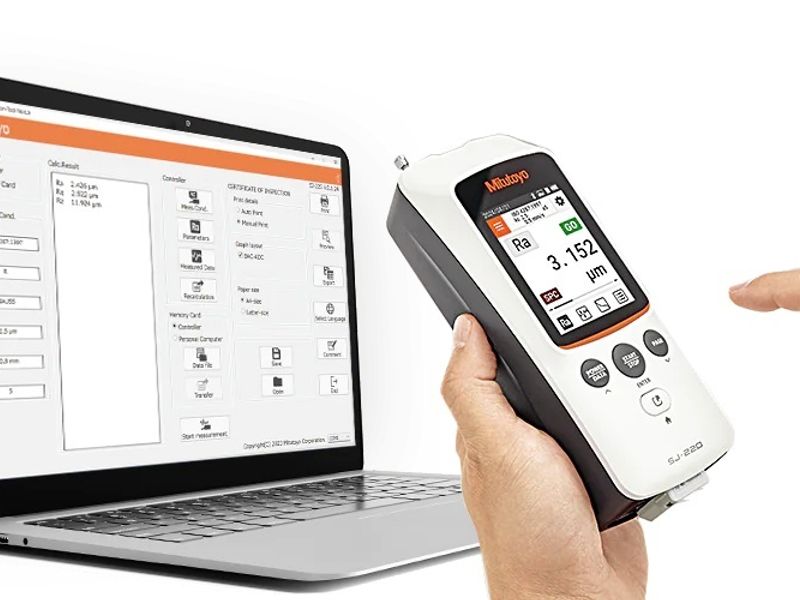
In the world of precision measurement, reliability and evolution go hand in hand. That’s why the release of the Mitutoyo SJ-220 Surface Roughness Tester marks a significant leap forward in portable surface profiling technology. At General Tech Services, your trusted distributor of Mitutoyo instruments in the UAE, we’re excited to present the SJ-220—the advanced successor to the widely trusted SJ-210, now offering improved usability, enhanced display, and smarter data handling for today’s demanding inspection needs.   What Is the SJ-220 Surface Roughness Tester? The SJ-220 is a portable surface roughness tester designed to measure surface irregularities with high precision in both field and workshop environments. Ideal for use in machining, automotive, aerospace, and tool manufacturing, this instrument is compact, user-friendly, and packed with intelligent features to streamline surface quality inspection.   SJ-220 vs. SJ-210 – Key Upgrades & Differences Feature SJ-210 (Previous Gen) SJ-220 (New) Display Type LCD (Monochrome) Color LCD with better resolution Measurement Speed Standard Improved scanning and return speed Storage Internal memory USB Type-C + MicroSD card support Battery Life ~1500 measurements Extended battery performance Navigation/UI Button-based menu Simplified UI with modern controls Data Export Options USB, RS-232 USB-C, SD card, wireless printer option Unit Body Design Basic plastic casing Rugged, ergonomic housing Software Compatibility Limited Supports Mitutoyo MeasurLink + SPC As the authorized Mitutoyo partner in the UAE, General Tech Services offers: Immediate stock availability of SJ-220 and accessories Training, calibration, and local technical support Trade-in options for customers with SJ-210 or older testers ISO/IEC 17025 calibration certificate included on request

10
Jan

Revolutionize Quality Control with Mitutoyo's MeasureLink: Powered by General Tech Services

Maximize Precision and Efficiency with Mitutoyo's MeasureLink Software In today’s fast-paced industries, precision and efficiency are paramount. With the increasing reliance on data-driven decision-making, having robust measurement software is no longer a luxury but a necessity. Mitutoyo’s MeasureLink software stands out as a revolutionary tool designed to enhance quality control processes and deliver measurable value to customers. As Mitutoyo’s trusted partner in the UAE, General Tech Services is here to ensure businesses reap the full benefits of this cutting-edge technology. What is Mitutoyo’s MeasureLink Software? MeasureLink is an advanced data management and statistical process control (SPC) software developed by Mitutoyo. It integrates seamlessly with Mitutoyo’s measurement tools, enabling real-time data collection, analysis, and visualization. By consolidating measurement data from multiple devices into one centralized system, MeasureLink simplifies complex quality control processes, ensures data accuracy, and provides actionable insights. Key Benefits of MeasureLink Software Real-Time Data Collection: MeasureLink allows for instant data acquisition from Mitutoyo instruments, reducing manual entry errors and saving time. Enhanced Quality Control: The software’s SPC capabilities enable users to monitor and control production processes effectively, ensuring consistent quality. Improved Decision-Making: MeasureLink’s intuitive interface provides comprehensive reports and visualizations, empowering businesses to identify trends, detect anomalies, and implement corrective actions promptly. Seamless Integration: Compatible with a wide range of Mitutoyo instruments, MeasureLink adapts to diverse industry needs, from automotive manufacturing to aerospace and healthcare. Cost Savings: By reducing waste, minimizing rework, and ensuring compliance with quality standards, MeasureLink delivers significant cost savings over time. Why Choose MeasureLink? Mitutoyo’s MeasureLink software is a game-changer for businesses aiming to optimize their measurement workflows. Its ability to connect multiple devices and provide a holistic view of operations makes it a valuable asset in achieving operational excellence. Whether you’re conducting inspections, managing production, or ensuring compliance, MeasureLink ensures you stay ahead of the curve. The Role of General Tech Services As the authorized distributor of Mitutoyo products in the UAE, General Tech Services is committed to delivering unparalleled support to customers. Here’s how we bring value: Expert Guidance: Our team of specialists provides in-depth training on MeasureLink, ensuring customers fully understand its capabilities and applications. Seamless Implementation: We assist in integrating MeasureLink into your existing workflows, minimizing disruptions and maximizing efficiency. After-Sales Support: From troubleshooting to updates, General Tech Services offers comprehensive after-sales support to ensure your investment in MeasureLink continues to deliver value. Localized Solutions: With years of experience serving UAE businesses, we understand the unique challenges of the region and tailor our services accordingly. Conclusion Mitutoyo’s MeasureLink software is a powerful tool that transforms quality control processes, enhances efficiency, and drives cost savings. Paired with the expertise and support of General Tech Services, businesses in the UAE can unlock the full potential of this innovative software. Whether you’re looking to improve accuracy, streamline operations, or stay competitive, MeasureLink and General Tech Services have got you covered. Ready to elevate your quality control? Contact General Tech Services today and discover how Mitutoyo’s MeasureLink software can revolutionize your operations.

15
Jun

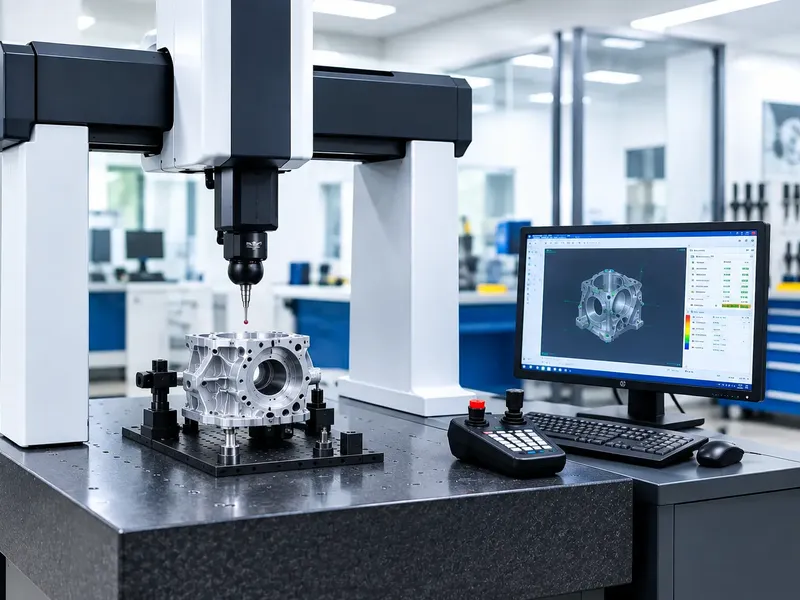
Faster and More Efficient CMM Calibration Solution

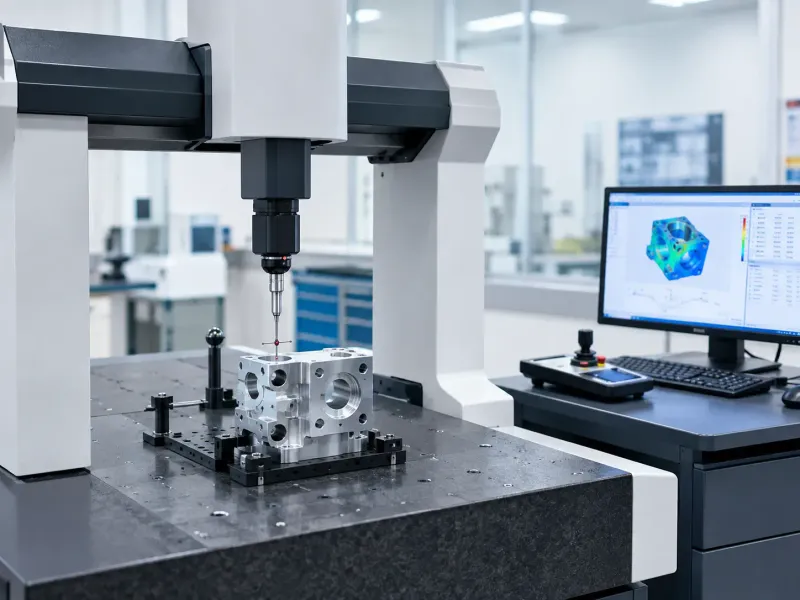
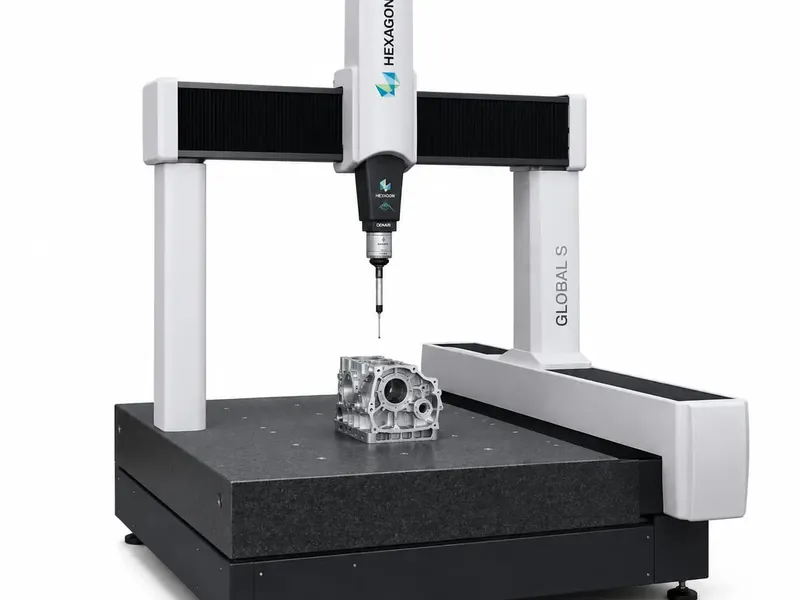
Keeping your CMM machine calibrated regularly will ensure that the measurement data that you create is accurate. The definitive procedure for calibration of CMMs which is used by all CMM manufacturers is the ISO 10360 series. Most CMM machine calibration will be accomplished with the use of an artifact, but for more demanding calibration, a laser interferometer can be employed. Ultimately CMM machine calibration comes down to one thing: precision. A CMM measuring machine can have errors along 21 different measurement axes. This means that your company needs to use accurate calibration data to make sure that any misalignment is found so that it can be either fixed or integrated into the data. There are different levels of CMM machine calibration ranging from a weekly check to precise calibration that is performed once or twice a year. Many modern CMM machines use advanced software to account for small misalignments, though the risk is that an error will not stay constant. Companies need advanced measurement solutions that enable them to guarantee the reliability of key processes such as validating the quality of manufactured parts and obtaining data for analysis and critical decision making. Thus, manufacturers usually employ quality control equipment such as a Coordinate Measuring Machine (CMM) which is high technological value equipment designed to calculate the geometric characteristics of an object. Despite their precision, these machines require exhaustive and costly periodic calibration to work correctly. In this scenario, General Tech Services LLC has the facilities for calibrating medium and large by using a laser interferometer as a measurement standard. The General Tech Services is therefore the only entity in UAE to offer a calibration service using this laser tracker technology, which replaces traditional physical calibration standards and significantly improves the calibration time required compared to the use of physical standards. Our skilled, detailed-oriented CMM Service Engineers apply those approved methods and processes to guarantee that your CMM is calibrated to ISO 10360 standards. During the process, we utilize an extremely precise step gauge artifact with NIST traceability, ensuring that your CMM is performing optimally and providing accurate and repeatable measurements. Compensation files can be accessed and adjusted just as the OEM would at a reduced cost to complete the CMM Calibration and certification error compensation map files in the PC or Controller. The use of this technology offers a more efficient calibration solution for a large number of CMMs, which are being currently calibrated using manual methods. The main problem of traditional calibration systems lies in the complexity of quickly and reliably using very long physical patterns. These lengthy processes can in turn result in more wastage of time and efficiency. Compared to manual methods, this system offers an automated solution that combines the most advanced laser interferometry technology, reducing human interference and hence the possibility of errors as well. This solution consists of following a reflector located near the machine probe and measuring linear displacements. On the one hand, interferometric accuracy is maintained throughout the calibration process and, on the other, machine downtime (typically up to 6-8 hours) is considerably reduced. The software is connected via a computer to the CMM and the laser tracer AG measurement system and records the data obtained during calibration. Once all the checks have been carried out, the application generates reports that are compared with the performance data of the machine to detect possible mismatches.


30
Apr

DEBEM – Internationally renowned Pumps and accessories

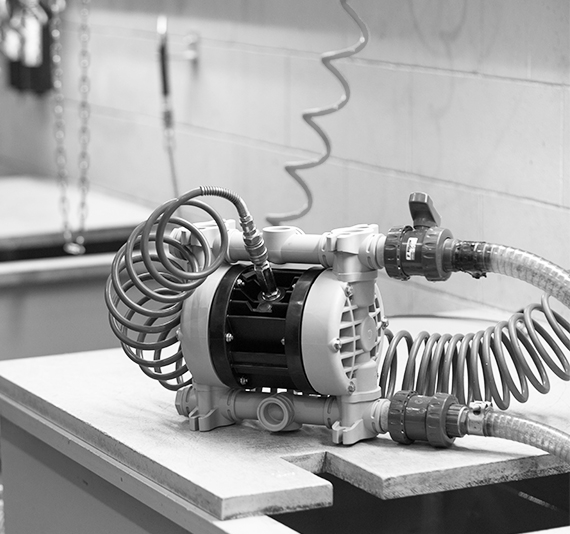
Debem  traces its roots to 1975, has developed pumps for the chemical, textile, food, graphic, leather, ceramic, electronic, galvanic, paint, oil and sanitary industry. They have innovative and technologically advanced pumps built with materials and components resistant to aggressive conditions. The main product range includes: Air-operated double diaphragm pumps Pulsation dampers Electric centrifugal pumps Drum transfer pumps Their major application sectors are AUTOMOTIVE CERAMIC, STONE, MARBLE, GLASS, AND MINING INDUSTRY GALVANIC AND ELECTRONIC INDUSTRY GRAPHIC INDUSTRY TEXTILE AND LEATHER INDUSTRY PRODUCTION AND STORAGE OF BIODIESEL CHEMICAL INDUSTRY PACKING, GLUE, PAPER, AND PAPER MILLS MECHANICAL AND METALLURGIC INDUSTRY WATER AND SLUDGE TREATMENT PAINT INDUSTRY OIL & GAS GOLD PROCESSING INDUSTRY All the pumps have ATEX and IECEx conformity. The CUBIC diaphragm mini pumps and the BOXER diaphragm pumps feature high levels of performance. Their considerable power and sturdiness render them ideal for pumping highly viscous liquids, even with suspended solids The pneumatic stall-prevention circuit guarantees a safe operation, without requiring lubricated air. These pumps have achieved unprecedented levels of versatility due to their dry self-priming capacity with a considerable suction head, the ability to fine-tune the speed without losses of pressure as well as the possibility of empty-running without suffering damage. The vast range of construction materials allows us to select the best chemical compatibility with the fluid and/or the environment, without neglecting the operating temperature range. Their construction principle makes them ideally suited for demanding applications with high levels of humidity or in potentially explosive atmospheres (ATEX and IECEx certification).  Features include: Constructed in PP, PP+CF, PVDF, ECTFE, PTFE, ALUMINIUM, AISI 316 STAINLESS STEEL, AISI 316 L STAINLESS STEEL Use in explosive atmospheres (ATEX certification zone 1 – 2, IECEx certification) Suitable for demanding applications and in atmospheres with high levels of humidity Dry-running Dry self-priming Supply with non-lubricated air Patented stall-prevention pneumatic circuit Adjustable flow rate and head Fine adjustment of the speed at constant pressure Possibility of split manifolds (two suctions and two deliveries) Bench or ceiling installation Customisable positions Easy maintenance and parts replacement Excellent ratio between performance and costs The diaphragms are the parts subjected to the greatest stresses during suction and pumping, whilst also having to resist the chemical attack and temperature of the liquid and the mechanical fatigue. Their correct assessment and selection is therefore of fundamental importance for the life of the diaphragm, as well as for the investment decisions and maintenance costs. A modern design process, destructing testing, as well as an in-depth analysis of the results have allowed Debem to develop the new generation LONG LIFE diaphragms. Thanks to their profile and construction shape, these products offer a larger working surface and improved redistribution of the load, reducing the stress and yield of the material to a minimum. The ATEX - IECEx certified air-operated double diaphragm pumps, with their unique design and limited size, are ideally suited to be installed directly on industrial equipment for the chemical sector, to pump ink and paint, on printing machines, in oil circulation and in applications where moderate quantities of fluid must be pumped in small spaces. The CUBIC range includes the MIDGETBOX pump which is currently the smallest and highest performing pump on the market for the chemical sector. Product designed and constructed in Italy AIR-OPERATED DOUBLE DIAPHRAGM PUMPS PATENTED stall-prevention pneumatic circuit Operates with non-lubricated air Self-priming Dry operation ATEX certification for ZONE 1 - ZONE 2 IECEx certification Adjustable operating speed Extremely versatile Suitable for pumping fluids in demanding applications Suitable for continuous use Boxer type - Air-operated double diaphragm volumetric pumps, ATEX – IECEx certified, constructed in polypropylene or PVDF in the plastic version or in aluminium or AISI 316 L for the metal versions. BOXER pumps are ideal for pumping liquids with high apparent viscosity, even if containing suspended solids. The vast range of materials available for the parts in contact with the fluid, such as pump casings and manifolds, diaphragms, balls, ball seats and o-rings, makes them compatible with any type of fluid present on the market. They can be used in numerous applications such as the following industries: chemical, graphic, paint, galvanic, ceramic, naval, textile, leather, mechanical, oil and many more. Product designed and constructed in Italy PATENTED stall-prevention pneumatic circuit Operates with non-lubricated air Self-priming Dry operation ATEX certification for ZONE 1 - ZONE 2 IECEx certification Adjustable operating speed Extremely versatile Suitable for pumping liquids with high viscosity and demanding applications Possibility of pumping fluids containing suspended solids Possibility of suspended installation Manifolds can be supplied with stainless steel reinforcement rings for pumps in PP – PP+CF – PVDF Nozzles available with clamp connections and DIN 11851 (only pumps in AISI 316) LONG LIFE profile diaphragms (available in different elastomers) for greater resistance and longer life Suitable for continuous use The new FULL FLOW 502 pump is fitted with flaps instead of balls, which allow the passage of large-sized solids, reducing at the same time the crushing normally associated with the passage through balls and cages. Even though the maximum diameter for the passage of solids of 45 mm is not exclusive, the uniqueness for this type of pump lies in the maximum length of the solids: 600 mm. Similarly, the pump features an exclusive patented flap circuit positioned below, perpendicularly to the fluid chambers instead of being on axis. The fluid dynamics of this choice ensure that the solids transit outside the pump casing, following a linear path at a lower level to the pump. The maximum flow rate of the pump is about 530 liters per minute. Polypropylene casing Flap in EPDM and NBR, core in AISI 316 steel, always in contact with the fluid Can be split in suction and delivery Fittings: G 2”1/2 f or DN 65 Air fitting: ½” Supply: min. 2 bar – max 4 bar Max. flow rate: 530 l/min Max. head: 40 m Max. dry suction: 3.5 m Max. flooded negative suction: 8 m Max. solids diameter: 45 mm Max. solid filaments length: 600 mm* The EQUAFLUX dampers are used with fluids with a high apparent viscosity, also with large suspended solids.. They adapt automatically to the system conditions, without any manual adjustments or calibrations. The high capacity of minimizing pulsations, vibrations and water hammer renders this component ideal for protecting the system, providing a regular outlet flow. The vast range of construction materials allows us to select the best chemical compatibility with the fluid and/or the environment, without neglecting the correct temperature range. The dampers are also available for use in potentially explosive atmospheres (ATEX certification). The EQUAFLUX is operated by the same compressed air that drives the pump. The compressed air, introduced in the counter-pressure chamber (behind the diaphragm), creates a self-adjusting pneumatic damping cushion based on the pressure exerted by the pump. Debem's magnetic drive centrifugal pumps are the ideal solution for numerous applications: laboratory machines, medical equipment, photographic developing machines, X-ray processes, silver recovery systems, graphics industry, heat exchangers, aquariums, water treatment, filtering systems, galvanic and chemical industry, and the transfer of acids and corrosive fluids. The DM pumps must be installed exclusively with the axis horizontal under the head. Suitable devices must be included to avoid the dry operation and the formation of vortexes and the possible suction of air. The horizontal centrifugal pumps with a resin casing, are driven by a direct drive electric motor (max 3000 RPM) to transfer and/or empty liquids quickly, with flow rates from 6 to 75 m3/hour. Their unique open impeller design allows them to pump even very dirty fluids with an apparent viscosity up to 500 cps (at 20°C) and small-sized suspended solids. They are available in two versions with different internal mechanical seals, based on their use, TL (lip seal) and TS (bellows seal). They are driven by the impeller that, integrated with the shaft and the electric motor (direct drive), is rotated creating, due to centrifugal effect, suction on the central duct and delivery on the peripheral duct. General Tech Services is the one and only distributor of Debem Products in the UAE. We are capable of providing Debem’s world-renowned products as well as services with the aid of our highly experienced staff base. Feel free to contact us for more info on Debem.

19
Apr

AVENTICS by Emerson - A look into product range

Cylinders and actuators for practically any application The proven, industry-standard AVENTICS pneumatic cylinders and actuators from Emerson are among the essential components of today's automated systems. No matter how compact or demanding your application is, AVENTICS has a solution that exceeds your performance standards and fits into your available space. Standard Cylinder - ISO-compliant and lightweight cylinders offer a variety of options that meet special requirements. NFPA Cylinders - AVENTICS interchangeable NFPA cylinders have a long service life in the most demanding applications, allow easy installation, and offer outstanding performance characteristics. Round Cylinders - Cylinders in a compact, robust design that meets even the strictest requirements of various areas of application. Short stroke and compact cylinders - Simple, weight-optimized design with an almost universal connection, these extremely popular cylinders can function in tight spaces Cylinder/valve unites - Ideal for decentralized use in applications with simple assembly and connection as well as an increased temperature range. Rodless cylinders -  AVENTICS rodless cylinders with and without a guide offer high performance for demanding applications. Guide cylinders -  AVENTICS products guide the materials precisely into their exact position in automated applications and set the standards for handling technology. Double Piston Cylinder - Compact design in tight, stackable bodies, these cylinders are suitable for a wide variety of automated applications Rotary actuators - The wide range of angles of rotation and torque values enables these rotary actuators to be used in most applications •    Bellow actuators -  Available in single, double and triple bellows. Designed to hold in a wide range of temperatures and conditions. Special cylinders and assemblies - Cylinders, piston rod clamps, and drives for special applications. Grapple - Large selection of grippers for handling materials with maximum precision and reliability. Cylinder accessories - Fittings, sensors, electrical and other cylinders and actuator accessories that complete your application solution Pneumatic valves and valve systems valves and valve Emerson leads the way in providing efficient valves and valve systems for the most demanding automation tasks. Our modular technology can adapt to your changing business needs and increasing performance requirements. Our portfolio, supported by a wide range of connectivity options as well as functional accessories, offers the right solution for automated applications in the automotive, food/beverage and packaging industries as well as in many other industries. Directional control valves - High flow in a compact package with a wide range of actuation and connectivity options. Valve systems - Valve systems with the adaptability and quality to meet the most demanding requirements for functionality and connectivity. Standardized valves - Robust and with a wide range of options, our standard valves are adapted to ISO standards for many environments. Proportional flow control valves - Extremely precise and dynamic flow control for a wide range of applications and environmental conditions. Proportional pressure regulating valves - Extremely precise and dynamic pressure control for a wide range of applications and environmental conditions. Safety valves - Valve technology that ensures safe operations and process control in many applications and industries. Flow valves and shut-off valves - Effective flow control and reliable shut-off with multiple mounting options to customize the application. Field bus and I/O - Direct integration of valve systems into the control structure of your machine with numerous I / O and sensor options. Compressed air treatment Untreated compressed air creates many problems in automated systems. Dirt, oil, and other contaminants can disrupt sensitive applications and reduce the life and efficiency of automated equipment. Emerson's compressed air treatment products make air quality standards a “safe bet”. Our products for compressed air preparation, series of filters, regulators and lubricators (FRL), special valves, and replacement filters support the smooth and safe operation of numerous industrial applications. Devices for the preparation of compressed air - The modular versatility of our devices for compressed air preparation can be expanded or retrofitted according to the changing requirements of your application. Equipment - Hoses, gauges, sensors, and other mounting hardware and products that complete numerous configurable applications. Intelligent technologies At Emerson, we recognize that smart technology starts with smart choices. With the rapidly expanding IIoT (Industrial Internet of Things) ecosystem, it becomes important for companies to modernize that improves business results and justifies investments. Their intelligent, innovative solutions adapt to your production methods and serve new communication and data strategies. Together with you, we make sure that it works for you where your need is greatest. Electronically enhanced valves - Solenoid valves that reduce complexity for customers and offer flexible voltage ranges for demanding applications. Smart pneumatics monitor - Monitor the condition and energy efficiency of your pneumatic systems without having to involve the machine's control system. Smart pneumatics analyzer - A “starter kit” for Edge Computing, with which the IIoT capability can be started and which offers the overall insights. Vacuum technologies Few automated processes require as much energy, sensitivity, and versatility as vacuum-operated handling. Variations in force, workpiece material, and shape require many configurations and adjustments. Their ejectors, grippers and non-contact options work with the most delicate and difficult materials. Ejectors - Single-stage, multi-stage and compact ejectors allow a wide variety of different materials to be handled and adapted to numerous applications. Vacuum suction cups - Universal and specialized products for use in difficult handling, with irregular parts, and when lifting heavy loads. Contact-free transport systems - Hygienically designed grippers are ideally suited for the difficult handling tasks involved in the packaging of food.  Accessories for vacuum - Filters, flow valves, and other necessary accessories that are required to protect against contamination, to provide the shut-off function, and for other tasks. Sensors and controls Emerson offers a wide variety of sensor and control technologies that are essential for dozens of applications including the most precise machinery in factories, industrial showers, wellheads on remote oil rigs, and many more. Products and solutions from ASCO, AVENTICS, and TopWorx measure and regulate proximity, pressure, temperature, and flow in electronically or pneumatically controlled processes and work with most communication protocols. VALVE display - Precise valve monitoring for all environments that is compatible with any bus system, valve system, or actuator. Proximity sensor - Compact sensors for universal applications, with variable cable length, connection capacity, and sensor mounting options. Pressure switch - Compact switches for measuring compressed air and non-aggressive gases, compatible with various process connections Temperature switch - Multiple setting options to meet the needs of industrial applications and provide highly accurate readings. Magnetic proximity sensor - Sensors that are suitable for high-precision and compact applications, with high reliability and easy assembly. Distance measurement sensor - Analog sensors for precise motion measurement, including distance, gap, thickness tolerance, and counting applications Electric pressure sensor - Pressure and vacuum sensors with a wide range of electrical connection options suitable for a wide variety of applications. Flow sensor - Sensors for monitoring air flow, pressure and temperature in supply lines with the option of expanding the IIoT functionality. Speed time measuring device - Monitoring of cylinders and magnetic pistons with a choice of electrical connections and support of position sensors Pneumatic position monitoring - A robust workpiece position sensor with high resistance to mechanical impacts and contamination. Sensor mounts - Numerous mounting and bracket kits, both rotatable and linear, to suit your specific application. Control of cooker hood - Pressure switches and sensors for optimizing applications in bulk material handling, powder conveying, and air filtration. Mechanical pressure switches - Robust adjustable and non-adjustable pressure switches Pneumatic proximity sensor - For reliable control of pneumatic valves and cylinders, including end stroke sensors for very harsh environments. Inductive proximity sensor - Non-tactile sensors that detect metal objects in a confined space, suitable for sensitive or robust applications. Equipment Outstanding valve and valve system technology require excellent connection technology and accessory components. Emerson understands that when it comes to optimizing applications and making customizations easy, the finer details and accessories are critical to the final steps. They have developed fittings, flow regulators, meters, switches, assemblies, and other accessories with the same precision and expertise that characterize our core offering in order to provide the most reliable, comprehensive application solutions. Controller and sequencer - For controlling up to 48 solenoid valves, including integrated microprocessors with high immunity to interference. Electrical connection technologies - Numerous plugs and electrical connections that connect valve systems with active process components and Fieldbus systems. Fittings and pipes - Versatile selection of fittings and tubes with easy installation in numerous pneumatic applications and systems. Collection tanks - With steel housing and welded end covers for use in dust extraction systems with high flow capacity. Manometer - Durable products such as mechanical pressure switches, regulators with pressure gauges and holders for filters, pressure regulators, and oilers that enable reliable measurements. Silencer - Robust, speed-controlled silencers and silencers that keep contaminants away from demanding applications. Magnetic heads and valves - A wide variety of electrically and mechanically operated designs that can be used to tailor the valves to your application. Filter screens - Filter inserts and sieves for applications in which the process medium must not contain any foreign bodies. Connection technology for pneumatic applications - Union nuts, couplings, pipelines, and plug-in connections for a wide range of applications with numerous connection types Auxillary valves for actuator control - Spring-loaded, compact, multi-purpose valves with free flow in one direction and adjustable flow in the other General Tech services are the authorized distributor of Aventic products in the UAE. Feel free to contact us for more details. Mathews John    :  00971501082323 mathews@generaltecuae.com

13
Mar

WHY IS VFD REQUIRED? HOW DOES IT AID MY BUSINESS? HOW TO CHOOSE YOUR VFD??

An AC induction motor is constructed with a rotor that has windings which intersect the rotating magnetic field generated by the stator windings. At full load speed, the rotor turns slightly slower than the synchronous speed of the motor. This is because the magnetic field causes currents to flow in the rotor windings and produces a torque which turns the rotor; so if the rotor turns at the same speed as the magnetic field, there would be no relative motion between the rotor and the magnetic field, and no torque would be produced. The amount of speed by which the rotor lags the rotating magnetic field is known as the slip of the motor. The higher the slip, the more torque is produced by the motor. The speed at which the magnetic field rotates depends on the number of poles or coils distributed around the stator and the frequency of the supply current. This is called the synchronous speed. Synchronous Speed = 120 x Frequency Number of poles Typical AC induction motor speeds are 3600, 1800, 1200, and 900 RPM. Successful application and maintenance of VFD drives requires an understanding of their impact on the motor and electrical distribution system. The application of VFDs to induction motors can cause effects which must be considered for successful operation. Examples include: The ability of a motor to cool itself effectively is reduced as the motor is slowed down. Over-sizing the motor or providing external forced air ventilation may be required with extended operation at low speeds and high loads. Operation at different speeds can cause mechanical resonances in driven equipment. These speeds should be identified and programmed out of the motor’s operating range. VFDs generate harmonic voltages and currents which can, in some cases, cause undesirable effects on the electrical distribution system and affect equipment operation. If a power quality problem is suspected, the electrical system should be examined by a qualified person. Sometimes isolation transformers, line reactors or filtering devices will be required to minimize these effects. Installation of filtering devices should be considered at the time of purchase of VFDs to minimize power quality issues in the electrical system. A practitioner trained in this area should be used to evaluate and determine this requirement. General Tech Services has experienced technicians for designing and determining the apt VFD drive base for your systems. We are capable of timely installation and panel designing and supply as well. General Tech Services is the most reliable VFD supplier and service providers in UAE. Electrical Supply to Drives AC drives require an acceptable electrical supply for safe, successful and reliable operation. Single phase drives have standardized voltages of 120 and 240 volts. Three phase motors have standardized voltages of 200, 230, 460 and 575 volts. The nominal supply voltage of the distribution system is normally higher than the drive nameplate voltage to allow for voltage drops from the distribution transformer to the point of utilization. How to choose a VFD? It may be tempting to size a variable frequency drive (VFD) based on horsepower alone. Did you know there are six other factors you should take into consideration to ensure that you specify the correct AC drive for your application? Read below to learn more about the six factors you should be considering when choosing a VFD. Full Load Amperage The first step in this process is making sure the drive can handle the motors current demands. Check the motor nameplate for the Full Load Current requirement, then find a drive that’s rated for at least that much current.  If you are feeding the drive with single-phase power, be sure to use the drive ratings for single-phase.  Variable frequency drives are significantly derated for single-phase operation. Overload Be sure the drive can handle any overload conditions you may expect during startup or intermittent extra loading. You may need to upsize the drive until you find one that can handle it. Many applications experience temporary overload conditions due to starting requirements or impact loading. Most AC drives are designed to operate at 150% overload for 60 seconds. If the application requires an overload greater than 150% or longer than 60 seconds, the AC drive must be oversized. Application Type There are two application types: variable torque (VT) and constant torque (CT) and separate ratings for each. Use VT ratings for fans and pumps or consult the CT ratings for conveyors and general machine control. It is important to know the application type because the drive specifications are organized accordingly. If you aren’t sure which one to use it’s recommended to go with CT. Altitude The altitude at which you’re using your VFD also has an effect on cooling. As the altitude increases, the air becomes less dense. This decrease in air density decreases the cooling properties of the air. Most VFDs are designed to operate at 100% capacity at altitudes of up to 1000m. If you’re at a higher altitude, the drive must be oversized to compensate for the decrease in cooling. Temperature AC drives generate a significant amount of heat and can cause the internal temperature of an enclosure to exceed the temperature rating of the drive. Enclosure ventilation and/or cooling may be required. Make measurements/calculations for the maximum expected ambient temperature. Carrier Frequency Generally, you want to look for the lowest carrier frequency your motor can handle. Most of the time the default carrier frequency will work fine, but if you need to reduce the audible noise, the heat dissipation or the power consumption, then make sure you are able to modify the carrier frequency for the drive. Feel free to contact us for products and services. Mathews John    :  00971501082323 mathews@generaltecuae.com


06
Feb

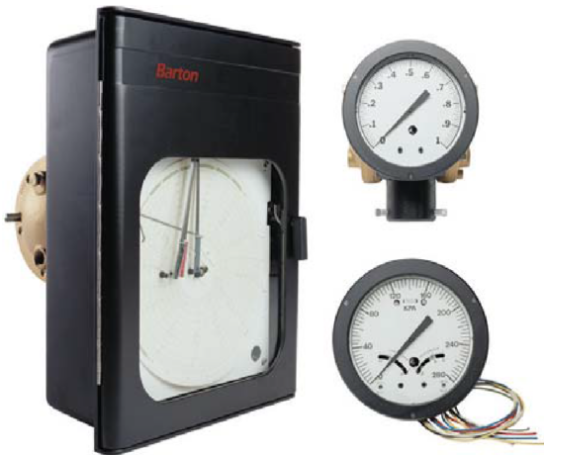
Chart Recorders and General Tech services

Chart recorders have long been used at manufacturing plants to keep records of process factors such as pressure, flow, humidity and temperature. In laboratories, chart recorders have been used to keep graphic records of scientific data compiled through testing and diagnostics. Today, as the technology competes with data loggers, traditional chart recorders are still the preferred option for uses in remote, powerless settings and within working arsenals that lack complex computing systems. General Tech Services have partnered with Barton, Cameron to provide the best Chart recorders in the industry to our customers worldwide. BARTON provides a variety range of chart recorders that are renowned for accuracy, reliability measurement and recording of pressure, differential pressure (DP), and temperature. Their fully mechanical operation is independent of external utilities that facilitates a low installation cost or portability. BARTON Chart Recorders 202N The 202N is a 12 “chart recorder intended to measure flow, static pressure, and temperature in applications for gas. The 202N reaches all NACE criteria for H2S settings up to 2000 psi (138 bar) BARTON’s M199 NACE DPU actuates the 202N. Static pressure readings are given by helical-type components of the accuracy patient K-model. The Barton Model 202N Differential Pressure Recorder tests and registers scheme operating parameters including gas and liquid flow rate, ship liquid concentration, and other process factors that can be evaluated using differential stress and static pressure techniques. BARTON Chart Recorders 242E The Barton Model 242E Temperature and Pressure Recorder is a flexible and tough tool intended for overall temperature and pressure purposes. It registers the temperature and pressure measured on a graph of 12 inches in diameter. Up to four elements can be used in any mixture to function up to four-person tracking pads. The static pressure scheme comprises a helical bourdon tube linked to the piping of the structure. The static pressure component monitors the static pressure in a tube scheme. Elements are accessible for evaluating pressure varying from 30 in. From void (mercury) to 30,000 psi. The thermal systems are a spiral bourdon tube, a capillary, and a bulb. All sections are produced from stainless steel. The bulb is equipped with a bendable expansion and the capillary is shielded by the armor of stainless steel. Model 242E (Temperature/Pressure) The 242E is a 12” chart recorder with pressure and/or temperature elements. Configurations can be any combination of pressure and temperature elements, up to 4 pens. Calibration, inspection, cleaning, and/or repair of Chart recorders of any brand is available at General tech services LLC. Chart Recorder Rental Services – Kindly contact us for Daily, Weekly, and Monthly rates. The standard temperature system in all Barton Chart Recorders comprises a factory sealed sensing system that uses a non-toxic fill fluid that converts temperature to mechanical motion. Each temperature recording pen includes a built-in correction for ambient temperature influences. The sensing system is offered in various lengths to support the remote mounting of the recorder. Specifications Differential Pressure: 0 to 10 inches of water (2.5 kPa) through 0-100 PSI (0.69 MPa) differential (higher ranges with model 224 DPU) Safe working pressure: Up to 6000 PSI (41.3 MPa) •    Optional alloys; Inconel bellows, Stainless steel bodies Pressure Ranges: 0 to 25 PSI (0.17 MPa) through 0 to 30,000 PSI (207 MPa), maybe calibrated as a gauge or absolute pressure Temperature Ranges: 0 to 500F (-18 to 260 C) in 5 ranges Cameron’s BARTON  chart recorders are the industry standard for accurate, reliable measurement and recording of pressure, differential pressure, and temperature in a variety of applications. Differential pressure models, like the 202E and 202N, utilize the BARTON rupture-proof bellows DPU as the actuating unit, featuring over-range protection and pulsation dampening. Chart Drive – Chart drives are available in battery and spring-wound versions with a wide variety of rotation speeds. All chart drives have a simple, positive chart lock hub and are interchangeable. NUFLO Charts – The charts are made from wood-free paper – a special, low-shrinkage, high-quality product that eliminates eccentric and elliptical errors. Charts are shrink-wrapped to help maintain the factory default size until the package is opened by the user. Once a box of charts is opened, it can be stored in the supplied, plastic, resealable storage bag. How to Select a Chart Recorder? Many applications are suitable and require the installation of chart recorders. Before choosing one, make sure you consider the following questions: How many inputs need to be recorded? What types of inputs need to be recorded? Do different input types need to be recorded in the same unit? What type of recording is required? Multiplex scanning (what minimum scan cycle is required?) Is a communication interface required? Is the recorder to be bench style or panel mounting? What type of instrument power is available? Is log-type recording desirable instead of/in addition to trend recording? Is color differentiation available for trend lines? Is message printing required? Is the recorder to perform alarm functions? How many setpoints per channel? What types of alarms: threshold, rate delta? Are physical relay contacts available for external alarm output? Chart Recorder Vs Data Logger Chart recorders allow users to view recorded data quickly and easily along with sheets of paper. The marking components of a chart recorder are easy to replace and the charts are available in various sizes. Basically, a chart recorder is ideal for any B2B application in which physical paper is necessary for the documentation of process studies. However, chart recorders limit studies by the length of the paper feed. The portability of a chart recorder is inverse to the data resolution, which is better in larger units. The pros and cons of a chart recorder can be summarized as follows: Pros: Instantly viewable data recordings. Easy-to-replace charts and makers. Data recorded onto physical paper. A range of chart sizes, such as 4″, 6″ and 8″. Cons: Paper and marking devices must be refilled. Recording time restricted to the given length of a chart roll. Data resolution limited in smaller units. Less portability with larger, high-resolution units. Data Loggers Data loggers have supplanted chart recorders in most of today’s B2B and laboratory applications. A data logger is a device equipped with digital sensors that read the conditions of any given environment put to study. The data is held in the unit’s digital memory and then transferred to a computer system for storage and subsequent study. As such, data loggers require a more modernized computer arsenal. The pros and cons of a data logger can be summarized as follows: Pros: Compact design can fit into almost any working environment. Recorded data can be viewed at any level of resolution on a computer system. Data can be imported into software programs and studied in different formats. Data are available for instant viewing on display devices. Does not require paper charts or marking devices. Cons: Data must be transferred from the logger memory to a computer via USB or Ethernet cable. Requires working knowledge of computers. In the industrial sector, chart recorders allow manufacturers to capture vital info about the environmental factors of working processes. With trend recordings on paper logs or digital files, a company can determine how to most efficiently generate and assemble products and yield the highest levels of productivity. Chart recorders are also important in B2B applications that take place between companies on a local, national and international scale. All things considered, chart recorders are complex pieces of equipment that sometimes require servicing and repair work. The next time your company needs chart recorder repairs, look no further than General Tech Services LLC. Contact or call us to request a quote. Mathews John    :  00971501082323 mathews@generaltecuae.com

30
Jan

MITUTOYO and GENERAL TECH SERVICES

Mitutoyo was founded by Japanese entrepreneur Yehan Numata in 1934. Mitutoyo is one of the world's leading manufacturer of precision measuring equipment, offering a huge range of products from micrometers, callipers, and dial gauges to hardness testers, vision measuring systems, and 3D coordinate measuring machines. Mitutoyo led the world in the development of output gages, interfaces, data collectors, and analysis software to take advantage of new metrological science. When the computer made its way into the field of metrology, Mitutoyo again shifted its focus to include this technology into its product offering and push measuring accuracies into the sub-micrometer range. Today, Mitutoyo presents its 6,000+ products as integrated, computer-based metrology systems, where they can be interconnected to form closed-loop-measuring networks. Mitutoyo Europe GmbH is certified according to ISO 9001:2015 for the scope of Sales, Distribution, Service, Calibration, Training, and Related Services for Machines, Instruments, Processors, and Software in the Field of Metrology. The main Product categories of Mitutoyo products are: Coordinate Measuring Machines Mitutoyo Coordinate Measuring Machines are available in a wide range of sizes and accuracy classes to cover practically all precision 3D measuring applications, with every machine representing an excellent investment in terms of productivity, versatility, quality of construction, training, and service support. Each machine component is designed using the latest CAD techniques to ensure maximum performance and manufactured from materials best suited to the purpose for guaranteed longevity, drawing on the unparalleled technological expertise of a world leader in metrology. A wide range of contact and non-contact probes enables numerous kinds of measurement to be performed, all backed up by comprehensive analysis software for interpreting measurement results in a timely manner so essential for keeping up with today’s fast-paced production. Optical Measuring Systems Mitutoyo microscopes and profile projectors are available for assessing many types of workpieces where a non-contact measurement method is deemed the most effective. Every instrument represents an excellent investment in terms of productivity, versatility, quality of construction, and service support. Each instrument component is designed using the latest CAD techniques to ensure maximum performance and manufactured from materials best suited to the purpose for guaranteed longevity, drawing on the unparalleled technological expertise of a world leader in metrology. Vision Measuring Systems Mitutoyo Vision Measuring Systems are available in a wide range of sizes and accuracy classes to cover practically all precision 2D and 3D measuring applications, with every system representing an excellent investment in terms of productivity, versatility, quality of construction, training, and service support. Form Measurement Mitutoyo Form Measuring Systems are available for efficiently assessing complex shapes, from radiused to cylindrical, from flat to compound curved, including the vital factor of surface roughness. Every system represents an excellent investment in terms of productivity, versatility, quality of construction, training, and service support. Sensor Systems Mitutoyo offers Laser Scan Micrometer systems suitable for many precision measuring applications. Every product represents an excellent investment in terms of productivity, versatility, quality of construction and service support. Hardness Testing Machines Mitutoyo Hardness Testers are available in a wide range for testing hardness according to the methods in general use, either on the workbench or in situ. Every tester represents an excellent investment in terms of productivity, versatility, quality of construction, training, and service support. Digital Scale and DRO Systems Mitutoyo Digital Scales are available as standalone units with built-in Digimatic display, convenient for retrofitting to equipment where moderate measuring accuracy is sufficient, or in the highly accurate Linear Scale form designed for machine tool and measuring machine applications. Every scale represents an excellent investment in terms of productivity, versatility, quality of construction, and service support. Small Tool Instruments and Data Management Mitutoyo handheld measuring devices are of outstanding quality. Over 75 years of experience in the development and production of measuring devices have led to an amazing performance in terms of their accuracy, durability, and handling. Mitutoyo’s variety of products is unmatched. Mitutoyo is not only a vendor of top quality measuring products but one that also offers guaranteed support for the lifetime of the equipment, backed up by comprehensive services that ensure your staff can make the very best use of the investment. Apart from the basics of calibration and repair, Mitutoyo offers product and metrology training, as well as IT support for the sophisticated software used in modern measuring technology. We can also design, build, test, and deliver bespoke measuring solutions and even if deemed cost-effective, take your critical measurement challenges in-house on a sub-contract basis. Mitutoyo is aware of an increasing number of counterfeit/fake Mitutoyo products coming onto the markets. Apart from being illegal, the use of such items can bring serious consequences when quality, safety, and performance criteria fail to meet that of a genuine Mitutoyo original. Selling counterfeit products is strictly illegal and punishable by civil and criminal courts according to the trademark, copyright, and intellectual property laws and regulations. It is advised that buyers should ensure they only buy genuine Mitutoyo products through a reputable and recognized Mitutoyo Distributor. General Tech Services is the authorized distributor of Mitutoyo in the Middle East since 1989. We are the sole distributors of Mitutoyo products through our offices located in Sharjah, Abu Dhabi, and Saudi Arabia. All other so-called suppliers of Mitutoyo products in the UAE are selling either counterfeit/fake Mitutoyo products or sourcing them illegally. The authorized distributor list of Mitutoyo distributors is available on their official website. Feel free to contact us for products and services. Mathews John    :  00971501082323 mathews@generaltecuae.com

28
Dec

Accuracy, Error, Tolerance and Uncertainity

Calibration involves so many terms that we always use or read during the measurement process. Knowledge in these terms is the key to proper understanding and execution of measurement results which is an important part of calibration awareness training. In this blog, we will be discussing accuracy, error, tolerance, and uncertainty and their relationships. As per JCGM 200 and 106: 2012, below are the actual definitions: 1.    Accuracy = closeness of agreement between a measured quantity value and a true quantity value of a measurand 2.    Error or measurement error = measured quantity value minus a reference quantity value 3.    Tolerance =difference between upper and lower tolerance limits 4.    Uncertainty or measurement uncertainty = non-negative parameter characterizing the dispersion of the quantity values being attributed to a measurand, based on the information used- make more meaningful Accuracy It is the closeness of UUC results to the STD (true) value. This ‘closeness’ is usually represented in percentage value (%) and can be shown in the same unit by converting it into an error value ( %error). The more close the percentage value to ZERO (0%), the more accurate. Accuracy is more on a qualitative description which means that it does not present an exact value. It is equivalent to a percent error (%error). This is where the value of error will be used. Error It is simply the difference between the UUC and STD results after calibration. It has the same unit as the measured parameter. Tolerance It is the maximum error or deviation that is allowed or accepted in the design of the user for its manufactured product or components. Tolerance is a range of values that is acceptable or permitted by the user from the result of the process or product measurement. It is the permitted error that is: 1.    Calculated from the process design by the user 2.    Prescribed by regulatory bodies (based on Accuracy Class) 3.    Manufacturer specifications (based on Accuracy) The formula is Upper limit – lower limit (UTL-LTL). UTL or LTL is the value based on tolerance limits. Tolerance limits = Tolerance/2. Tolerance Limits are provided either by manufacturer or process requirements. If we perform a measurement, the value of the tolerance limit will tell us if the measurement we have is acceptable or not. If you know the calibration tolerance limits, it will help you answer the questions like: 1.How do you know that your measurement result is within the acceptable range? 2. Is the final product specification pass or fail? 3. Do we need to perform adjustments? “The wider the tolerance Interval, the more product or measurement results will pass or accepted.” Uncertainty Uncertainty or Measurement Uncertainty is defined as the quantification of the doubt. There is always a doubt that exists, an error included in the final result that we do not know, therefore, there are no perfectly exact measurement results, Why do we have uncertainty or doubt in our measurement? Some of the main reasons why we have doubt or uncertainty in measurements are: 1.    Inadequate knowledge of the effects of the environmental conditions on the measurement 2.    Personal bias in reading analog instruments, an example is the resolution or smallest value that you can read 3.    Inexact values of measurement standards and reference materials 4.    Approximations and assumptions incorporated in the measurement method and procedure 5.    Variations in repeated observations of the measurand under apparently identical conditions – Repeatability “The smaller the measurement uncertainty, the more accurate or exact our measurement results.” Accuracy Versus Error Accuracy is for gauging how small/large the error is (a qualitative description),  while the Error is the actual representation of accuracy in the same units as the measured parameter (measurand). In other words, the error shows the quantity of accuracy in the unit of measurement used. Accuracy and error have opposite relationships (indirectly proportional) but they are directly related to each other. An accuracy is a qualitative form, meaning no exact value or measurement result is presented, only a presentation (usually in percentage form) of how good or bad or how far and near but no exact value, while error shows the absolute value or actual value. In order to show the exact or absolute value, we need to use the error. The error shows the exact distance of the measurement result from the true value. Accuracy Class and MPE A Manufacturer Tolerance Value At this point, accuracy can be used as a Tolerance based on manufacturer specifications. We call this type of accuracy the Accuracy Class or Grade. Then from the accuracy class, it is calculated to its equivalent error which is called the MPE (maximum permissible error) as required by standards like ASTM and  ISO or manufacturer’s specifications. This is then used as the tolerance limits, and afterward, the tolerance value. Error vs Uncertainty As we know now, Error is the difference between UUC – STD reading. The smaller the error, the more accurate the measurement results. UUC -STD = error Any error that we know can be corrected. From calibration certificate results, where a standard value is given, we can now determine the error. And since the error is determined, we can correct it by either adding or subtracting the correction factor which is the opposite of the error. Correction = STD-UUC. Uncertainty is the ‘range of values’ where the true value or actual location of the measurement results (UUC) lie, while the Error is the ‘exact result’ of the difference between the UUC and STD which shows how accurate the measurement result is by showing the actual distance to the true (STD) value. Uncertainty is a boundary within the measurement results to show the range of its actual location based on a given confidence level (95%, k=2)). See the below photo. The Difference  Between Tolerance, Error, and Uncertainty 1.    The Tolerance is the permissible value of errors that are limited by the upper and lower tolerance limits 2.    The Uncertainty shows the boundary or limits of an estimated error where the exact measurement result’s location. Tolerance and Uncertainty As a Basis for Decision Rule as per ISO 17025:2017 Uncertainty is used or included when determining compliance with specifications as per the requirement of ISO 17025:2017. One way to tell if a product has passed or failed based on a given tolerance, a decision rule. What is a Decision Rule? As per ISO 17025:2017, clause 3.7, it is a rule that describes how measurement uncertainty is accounted for when stating conformity with a specified requirement. One way to account for measurement uncertainty is to include it in the measurement results. We will use it as if it is a tolerance limit within the measured value. Below are the decision rules 1.    If the results of our measurements are within the tolerance indicated including the uncertainty results, then it is a ‘pass’. 2.    If the results of our measurements are outside the tolerance including the uncertainty results, then it is considered  ‘fail’ or ‘out of tolerance’. 3.    If one of the uncertainty limits is outside the tolerance while the other limits are inside the tolerance limit, then it is not a pass or a fail, we call it ‘Indeterminate’. The decision now is based on the user. The use of tolerance and uncertainty results to come up with a decision rule. The UUC results including the uncertainty are within tolerance and therefore, it is ‘Passed’ The Relationships Between Accuracy, Error, Tolerance, and Uncertainty – The Interpretation from a Calibration Result Accuracy shows the degree of closeness of a measurement result to the true or reference value. The degree of closeness from the reference value is presented in the actual value (not a percentage (%) of) through the calculated Error (UUC-STD). The error shows how the measurement results have deviated from the true value. While accuracy is calculated based on error and true value, Uncertainty is calculated based on the combined errors or inaccuracy of reference standards (STD) and the measurand (UUC). Uncertainty shows the range where the measurement results (UUC) actually located. An estimated location of true UUC value which is limited by the confidence interval (usually @ 95%, k=2). In order for the result to be acceptable, uncertainty results should stay within the tolerance limit. Tolerance shows the permissible error of measurement results and it is the difference between the UTL and LTL (UTL-LTL). These are the most used terms when it comes to reporting calibration results, understanding and creating a calibration procedure, or just simply understanding a calibration process. Their understanding is of utmost importance for understanding the process we are doing. We at General Tech Services provide calibration services in UAE and Saudi Arabia. Our aim is to ensure calibration with high accuracy, low errors, and uncertainty enabling an equipment’s highest performance and thus an efficient industry. We have the widest scope for Calibration in the Middle East. Contact : Mathews@generaltechuae.com                 0097165436933


23
Nov

How Portable Appliance Testing saves lives and money?

WHAT IS PAT(Portable Appliance Testing) TESTING? Any electrical equipment that is in an installation that is portable (whether permanently connected or not by plug and to a socket outlet) should be inspected and tested to be in accordance with the regulations set by governing bodies. But what exactly deems a piece of electrical equipment as ‘portable?’ In the IET code of practice, they define a portable appliance as: “An appliance of not more than 18kg in mass that is intended to be moved while in operation or an appliance that can easily be moved from one place to another, e.g. toaster, food mixer, kettle”. A portable appliance, therefore, is generally the common day to day items you might see in an office. Everything from microwaves to computer monitors should be tested using PAT testing, and it is important that nothing is glossed over in the test and each and every appliance within an environment that is ‘portable’ is checked over thoroughly. This means, in a scenario where a live wire has broken and come into contact with a conductive extraneous part, the earth wire resistance will be low (good) enough to trip an RCD in the fuse board and prevent a person from receiving a potentially fatal electric shock. But in other cases, we can’t be sure. Various tests can be performed including earth leakage and touch current (which are useful soft tests for sensitive equipment, so that damage doesn't occur), as well as polarity tests for leads and visual/ functional tests or inspections for ALL items. Some items such as AC adapters, which charge mobile phones or power switches and routers, only need visual tests; the protection from electric shock depends only on the outer shell which provides double insulation. If these items have visible damage they fail immediately without the need for an electrical test. HOW PAT TESTING SAVES LIVES AND MONEY Any business owner or employer has a duty of care to their employees, customers, and workplace users, and through their duty are required to have a stringent health and safety policy in place. Many owners/employers look at health and safety as a burden and rather than implement its recommendations, look at ways to save money. Portable Appliance Testing is a process you can put into place either in-house or by using an external contractor, which is cheaper than hiring a full-time maintenance team, causes less disruption than regular maintenance, and can find faults quicker than a maintenance team. We at General Tech Services do PAT testing for all equipment. The process of PAT involves inspecting and testing all the electrical appliances on the site to ensure they function correctly and are safe to use. If not, general repairs are carried out or instructions are provided as the best course of action to take. General Tech Services is capable of doing PAT testing along with repair works if needed. As a last resort, an item may be failed; but if so, it’s in the best interest of potential users to take this out of service. Remember though, failing an appliance test is actually beneficial because once that appliance is taken away, it is no longer a threat; thus lives are being protected. If you run a busy factory and year on year everything passes the tests, you should be asking if that's right. When carrying out the PAT, the engineer may come across a faulty appliance that just needs repairing rather than removing it from service. What repairs they end up conducting depends on the appliance and the skills of the engineer. All PAT engineers should be able to replace a faulty or damaged plug for a new one, replace fuses and conduct basic repairs on the flexible cable. That is often enough to ensure an appliance passes. Perhaps the appliance needs opening up in order to repair it; a PAT engineer isn’t necessarily an appliance technician or specialist for that product, so it shouldn’t always be expected that the engineer will conduct the repair. It is for these reasons that you should carefully choose a good PAT testing company. A good PAT tester will Find the faults and remove them, thus “saving lives”. Recommends what appliances need repair, so you are only repairing what needs repairing, rather than everything, subsequently removing the need for a full-time maintenance team. Save you time, because, from his skills and experience, they will be able to do their job at a high working standard, without cutting corners, in a shorter time period than it would take the maintenance team to do it or to maintain every appliance. Manage the logistics of the contract with you so that disruption to your team is kept to a minimum, ensuring production isn’t affected and therefore saving you any potential lost revenue.  Finally, we must look at insurance – PAT has a benefit where your insurance is concerned. There is a chance at some point you will need to make a claim on your insurance, be it for a fire or someone taking legal action against you. If the claim is due to a faulty electrical appliance, your insurer will want to know if you have had it checked recently; was it safe to use? Had it been maintained regularly, or PAT tested? Every year, there are 350,000 serious injuries as a direct result of electrical accidents. The insurance firms know that many of these injuries can be avoided through regular appliance testing, so it is no surprise that it’s one of the first questions they ask. Failing to find faults, or replace faulty equipment contributes to 24% of the thousands of electrical fires in non-residential buildings every year - these are statistics no business owner should ignore. Who Is Responsible for PAT testing? Technically, anyone who is going to use, or those around portable appliances have a duty of care to ensure the equipment they’re working with is in satisfactory condition. This doesn’t mean they should be responsible for carrying out the PAT testing itself, but rather refers to the users and people around it regularly making sure that electrical equipment isn’t obviously damaged, and flagging damaged goods up with management as soon as they are found. In the IET code of practice, they define the people responsible for electrical equipment maintenance as: The actual user of the electrical equipment Administrators with responsibility for electrical maintenance (even those without detailed technical knowledge) The ‘competent person’ carrying out the formal visual inspection and the inspections and tests Other duty holders such as company directors, managers, or building services managers    General Tech Services LLC does on-site and in-house PAT testing services. Our team of experienced technicians can detect faults and rectify them irrespective of the make and model of your equipment. Our Customer management software has been modified to host soft copies of the testing certificates along with hard copies for the customers, even if they lose their copy after years. Our team does PAT testing in Dubai, Sharjah, Saudi Arabia, Abu Dhabi. We are the calibration experts in the UAE with experience of 22 years. Contact us for a quotation for the best PAT testing services in the UAE. Email                :            mathews@generaltechuae.com Phone:                :            0097165436933

13
Oct

The Importance of Choosing An Accredited Calibration Laboratory

Accreditation provides the underlying assurance that organizations are adhering to internationally recognized standards. For calibration and testing laboratories, that standard is ISO/IEC 17025. Accrediting bodies use ISO 17025 standard to specifically assess factors such as, staff competence, validity of test methods, traceability of measurements and calibrations to national standards, appropriateness and conditions of testing environment, sampling and handling of test items, maintenance of equipment and quality assurance of data. The Standard ensures that when an assessment is conducted, laboratories can show that they have appropriate protocols in place; they have the appropriate personnel; the right equipment; their environmental conditions are stable; and they have supporting data for the tests and calibrations that they are performing. ISO 17025 Standard is a competency standard – it is a way for customers and regulators to know that they are using a competent laboratory. When choosing a laboratory for maintenance of your equipment and instrumentation, it is essential to look for a lab that can meet your needs and also give you accurate results. Under ISO/IEC 17025, a laboratory's competence is assured via an on-site assessment process and participation in applicable Proficiency Testing programs. The on-site assessment process is a thorough examination of the laboratory’s Management System and Quality System. All the quality system elements addressed in ISO 9001 certification are covered. All the technical factors necessary for producing quality data are also examined, including: technical competence of staff validity and appropriateness of test methods suitability, calibration and maintenance of test equipment quality assurance of test and calibration data records and documents When you receive a calibration certificate from a laboratory, it is important to look for the logo of the body that accredited it. The logo, as well as the certificate of accreditation number, provided on the certificate of calibration gives you peace of mind that the laboratory is a trusted supplier of calibration services. Benefits of using an Accredited calibration lab  1) Technically competent personnel - Accrediting bodies closely observe laboratory personnel to ensure that they understand how to operate the equipment and how the equipment affects the calibration results  2) Confidence in calibration results - Accredited laboratories are required to meet the highest industry standard, ISO 17025  3) Minimal risk factors - When equipment and instrumentation is properly maintained, risks of calibration inaccuracy are minimal  4) Equipment traceability through NIST - Accreditation requires that all the equipment used to calibrate items must be traceable through an unbroken chain of calibrations.  5) Monitored Lab Enviornment - The assessment process ensures that the labs environment does not invalidate the results of calibrations or adversely affect the required quality of a measurement  6) Required measurement uncertainty - Accredited labs are required to calculate measurement uncertainty for each parameter. This is required to be listed on the labs scope of accreditation.     General Tech Services LLC offers accredited calibration services for dimensional calibration, temperature calibration, humidity calibration, electrical calibration, pressure calibration, volume calibration, torque calibration, force calibration and mass calibration. As customers you’ll be able to trust that the services you receive are accurate, repeatable, and traceable. The entire scope of General Tech Services is under IEC 17025 is appended in our website www.generaltech.ae. So if you are considering accreditation to ISO 17025, please get in contact with us on 0097165436933 or email us at mathews@generaltechuae.com . Visit our website for more details at www.generaltech.ae and for product info visit our webstore www.generaltechshop.com.  

21
Sep

What is ISO 17025 standard and how is it similar and different from ISO 9001?

Laboratory sampling, testing, and conformity assessment are crucial enabling factors for technology and trade. ISO/IEC 17025 assists in the harmonization of procedures and standard methods, facilitates cooperation between laboratories and other bodies, and promotes the acceptance of results between countries. ISO/IEC 17025:2017 is the international standard that sets out the general requirements for the competent, impartial, and consistent operation of laboratories. It specifies the activities that must be included in laboratory operations to promote confidence in its ability to produce valid and consistently reliable testing, calibration, and sampling results. The standard was published with collaboration between the International Organization for Standardization (ISO) and the International Electrotechnical Commission (IEC).The requirements of the standard include  General requirements regarding impartiality and confidentiality (clause 4) Structural requirements (clause 5) Requirements for resources needed such as personnel and facilities, as well as technical resources such as equipment Environmental conditions (clause 6). Process requirements (clause 7). These include:  Reviewing requests, tenders and contracts – How do you ensure that you can do exactly what the customer wants done?  Method suitability – How do you select, verify, and validate the methods you intend to use?  Sampling – When you perform the sampling before testing, what planning and documentation are required? Handling items – What procedures need to be followed for handling the testing and calibration items that you are going to report on? Records – What technical records should be kept, and what should they contain? Measurement uncertainty – How do you evaluate and report the measurement uncertainty of your calibration? Result validity – How do you ensure that your results are valid? Result reporting – How do you report on your results to customers, including both general and specific requirements, as well as updating reports? Complaints and nonconforming work – How do you need to handle complaints and work you have done that is found to be nonconforming? Data and information management – How do you manage your data and laboratory information system to ensure it is valid and that you have access to what you need? Management requirements (clause 8) Why is ISO/IEC 17025:2017 accreditation a good idea for your organization? Assuring your laboratory’s creditability Creating an environment of professionalism and pride Creating a proactive risk-based business and quality culture, not reactive Increasing customer confidence General Tech Services adhere to all the requirements of ISO 17025. How is this similar and different from ISO 9001:2015?      Certification according to ISO 9001 is recognition that an effective management system is in place. ISO 9001 is applicable to all types of companies in all industries, whereas ISO 17025 is only applicable to testing and calibration laboratories. Similarities are found in clause 8 of ISO 17025:2017 regarding management system requirements. General Tech Services is ISO 9001 certified as well. So, what will be missing in Quality Management System of the organization if they just have ISO 17025:2017 rather than the requirements of ISO 9001?  Context of the organization – ISO 17025:2017 does not talk about identifying your internal and external issues or interested parties, or about establishing a QMS scope. Leadership – Although some leadership commitment is implied, the listing of leadership commitments, including the quality policy, are not included in ISO 17025:2017. Quality objectives – in ISO 9001:2015, these are important improvement goals for the QMS, but they are not included in ISO 17025:2017. Some support processes – While ISO 17025:2017 includes many resource and support requirements as they apply to calibration laboratories, it does not include all the requirements from ISO 9001:2015. For instance, ISO 17025:2017 does not include requirements about organizational knowledge. Monitoring and measurement – While there are requirements about monitoring and measurement in ISO 17025:2017, these do not necessarily address all of the ISO 9001:2015 requirements. Aside from that, there are ISO 17025 management requirements that are similar to ISO 9001: Internal audits Management reviews Actions to address risks and opportunities Improvements and corrective actions Management system documentation Control of management system document Control of records In short, ISO 17025 doesn’t specify identifying internal and external issues or interested parties. Hence, you still need to determine the context of the organization and develop a QMS scope. ISO 9001 includes the formulation of quality objectives, unlike in ISO 17025. ISO 17025 doesn’t include leadership commitments nor quality policy. ISO 17025 has monitoring and measuring requirements, but these don’t inescapably address all of the requirements from ISO 9001. ISO 17025 has resource and support requirements, but it does not cover all ISO 9001 requirements.   General Tech Services is accredited under both ISO 9001 and ISO 17025 to meet all QMS requirements for assuring the best quality services to all customers. We have the widest IEC 17025 accreditation scope in UAE.  Contact us for industry best calibration services in the Middle East.  Contact info: Phone : 0097165436933                    |          Email : mathews@generaltechuae.com Website: www.generaltech.ae            |          Webstore: www.generaltechshop.com


05
Sep

CALIBRATION GLOSSARY - Short glossary of calibration related terminologies

  A – Z of Calibration   The field of calibration has a huge vocabulary describing the methods, parameters, equipment, and processes used to verify the measurement accuracy of masters, gages, and other measuring instruments. The following glossary of definitions includes the most commonly used terms.   Absolute Pressure: Actual pressure relative to a perfect vacuum. Absolute Temperature: The temperature measured from absolute zero as in the Kelvin and Rankine scales. Absolute viscosity: The measure of resistance to the shear, unit is dyne-second per square centimeter, or more commonly known as centipoise (cP). Accreditation: The process used by a qualified independent agency to verify the quality system and technical capability of a calibration laboratory to a recognized standard such as ISO 17025. Accuracy: It defines how close a measured value is to the true value of the dimension. The conformity of measurement to an accepted standard value. Accuracy includes traceability to NIST or some appropriate national or international standards organization Adjustment of an instrument: The operation of bringing a measuring instrument into a state of performance suitable for its use. Adjustment to Nominal: The maximum allowable difference between the actual value supplied with the standard and the nominal value. Air Velocity: The velocity of air at a measurement point or plane, measured using an anemometer laser Doppler or pitot tube. Altimeter: An instrument that measures the height above the ground. Ambient Temperature: The local temperature of the air in the immediate vicinity. Atmospheric Pressure: The local air pressure in the immediate vicinity. Anemometer: A device for measuring wind speed or air velocity. Readings indicated from the device are generally at actual test conditions. ASTM G93: ASTM Standard Practice for cleaning methods and cleanliness levels for materials and equipment used in oxygen-enriched environments. Barometer: An instrument that measures atmospheric pressure. Bell Prover: A gas calibrator that immerses a "bell" of known dimensions into a bath of liquid over a specified time. This is generally used a primary source for gas flow meter calibrations. Blowby Meter: A flowmeter used in the automotive industry for the measurement of engine blow-by gases, often utilizing vortex or orifice type flowmeters. Bubble Flowmeter: An instrument that uses a soap film across a known bore and times it passages of movement. Care must be taken with soap film meters due to issues with vapor pressure, the permeability of the soap film, changing the shape of the film, and the build-up of the solution on the walls. Calibration: The set of operations which establish, under specified conditions, the relationship between values of quantities indicated by a measuring instrument or measuring system, or values represented by a material measure or a reference material and the corresponding values realized by standards. Calibration Accuracy: The sum of the uncertainties in the calibration procedure, including the uncertainties in the references, test instruments, transfers, etc. Calibration accuracy must be better than the stated accuracy or initial accuracy. Calibration Certificate or Report: The document that presents calibration results and other information relevant to a calibration. Calibration Frequency: The time intervals at which instruments, gages, and masters are calibrated. These intervals are determined by their user based on the conditions of their use to ensure their performance or size remains within acceptable limits. Calibration Limits: The tolerance applied to gages and instruments beyond which they are not considered suitable for use. Clamp-on Flowmeter: An ultra-sonic type flowmeter that is positioned on the outside of a pipe to measure the flow in the pipe using time of flight or doppler techniques. Clinometer: An instrument to measure an angle of inclination or elevation. Comparator: An instrument for comparing some measurements with a fixed standard. Critical Flow Nozzle: A flow nozzle where the gas in the throat of the nozzle is kept above sonic velocity whilst in use, sometimes known as a sonic nozzle. Cup Anemometer: A type of wind speed indicator used mainly in weather stations. Density: The mass per unit volume. Differential pressure: The difference between the two measurements of pressure in a system. Electromagnetic Flowmeter: A non-intrusive style flowmeter for use on conductive liquids, mainly water. Often referred to as a Magmeter. Error of measurement: The result of a measurement minus the true value of the measurand. Flow Straightener: A device for conditioning flow profile mainly used upstream of flowmeters. Gauge Pressure (g): A measurement of the force/area exerted by a gas or fluid, relative to atmospheric pressure. Gas Meter: A generic term for a gas flow meter. Gear Meter: A flowmeter that uses the meshing of gears to meter small volumes of a liquid. Most meters will be supplied with a Meter Factor calibration constant. Gravimetric Calibration Rig: A measurement system that utilizes fluid mass and time for the calculation of flow rate. Hertz: The unit of frequency. Hot Wire Anemometer: An anemometer type for measuring wind speed or air velocity meter. These meter types often state the velocity reading to standard conditions. These are also referred to as Thermal Anemometers. Hydrometer: A measuring instrument for determining the specific gravity of a liquid or solid. Hygrometer: Measuring instrument for measuring the relative humidity of the atmosphere. Initial Accuracy: Accuracy at the time of shipment. International (Measurement) Standard: The standard recognized by an international agreement to serve internationally as the basis for fixing the value of all other standard of the quantity concerned. ISO: International Organisation for Standardisation. ISO/IEC 17025:2017: International standard for the General requirements for the competence of testing and calibration laboratories. K factor: A calibration constant for a flowmeter, defined as; the number of pulses per unit volume. Often referred to as Meter Factor. Kinematic Viscosity: The ratio of absolute viscosity to density, usually expressed as centistokes cSt. Laminar Flow: Type of flow where the fluid moves in a parallel manner along the conduit and has Reynolds numbers below 2000. Laminar Flowmeter: A type of flowmeter that generate laminar flow through its core, and so generates a linear output in terms of pressure drop across the meter. Laser Doppler Anemometry: A high-performance measurement system that provides gas or fluid velocity at the laser intersection. Reference devices often used for the calibration of wind tunnels and anemometers. Linearity: Is the deviation from a nominal calibration 'K' factor normally expressed as a percentage. Limits of Permissible Error (of a measuring instrument): The extreme values of an error permitted by specifications, regulations, etc. for a given measuring instrument. Load Cell: An instrument for the measurement of load or weight. Master Meter: Typically a highly accurate flowmeter used as a reference device for calibrating other meters. Measurement Uncertainty: The estimated amount by which the measured quantity may depart from the true value. Measuring and Test Equipment: includes all of the measuring instruments, measurement standards, reference materials, and auxiliary apparatus that are necessary to perform a measurement. This term includes measuring equipment used in the course of testing and inspection, as well as that used in calibration. Meter Factor: Defined as the number of pulses per unit volume. Also referred to as a 'K' factor. Newton: A unit of force equal to the force that imparts an acceleration of 1 m/sec/sec to a mass of 1 kilogram. Newtonian Fluid: A fluid whose absolute viscosity is the same for all values of shear stress. Non-Newtonian Fluid: A fluid whose absolute viscosity varies with the rate of shear stress. Nutating Disc Flowmeter: A type of positive displacement flowmeter that uses a disc with a slot in that "wobbles" rather than rotates. Often referred to as a Wobble Plate Meter. Orifice Plate: A differential pressure type device consisting of a plate with a smaller hole in the center. Flow-through the hole causes a pressure drop. Orifice plates are often made to International standards and can be theoretically predicted for flow and pressure drop. Peak Flowmeter: A meter used to measure the maximum flow rate for measuring the lung efficiency of asthmatics. Pelton Wheel Flowmeter: A type of radial flow turbine meter. Pick-up: A sensor used on a flowmeter to detect pulse measurements. Pitot Tube Static: A differential pressure device for measuring point velocity. Positive Displacement Flowmeter: A type of flowmeter that fills small volumes of space, i.e. in between gears as the fluid flows from the inlet to outlet, whilst turning the gears and generally providing a signal proportional to the flow rate. Precision: The degree of exactness with which a measurement or quantity is stated. Pressure: Force exerted per unit area. Primary Standard: A unit directly defined and established against which all secondary standards are calibrated. Probability: A measure of how likely it is that some event will occur. Psychrometer: An instrument for measuring relative humidity. Pyrometer: An instrument for measuring high temperatures. Quality System: The organizational structure, responsibilities, procedures, processes and resources for implementing quality management. Repeatability: The closeness of agreement among a number of consecutive measurements performed under the same operating conditions. Long-term and short-term repeatability are both important. Resolution: It represents the smallest reading unit provided by an instrument. In other words, the digital value represented by one bit in a display in a digital measure. Reynolds Number: A dimensionless number defining the ratio of dynamic and viscous forces of fluids in any condition. Rotameter: A trade name associated with Variable Area Flowmeters that uses gravity to balance the force on a float in a tapered tube. The height of the float in the tube is indicative of the flow rate. Sensitivity: Full-scale output divided by the rated capacity of a given transducer/load cell. Short-Term Accuracy: The limit that errors will not exceed during a 24-hour period of continuous operation. Unless specified, no zeroing or adjustments of any kind are permitted. The transfer accuracy obtained with IET's transfer standards is a short term accuracy. Slippage: A term referring to the passing of fluid through a flowmeter without registration. High slippage rates often occur on low viscosity fluids and can cause large errors Stability or Long-Term Accuracy: The measurement that will predict the worst-case error for the period indicated, typically a year. To determine the worst-case error after one year, the initial accuracy is added to the one-year stability. Standard Temperature & Pressure (STP): Standard conditions for experimental measurements, to allow comparisons to be made between different sets of data Standard Uncertainty: Uncertainty of the result of a measurement expressed as a standard deviation. Test Conditions: These comprise the assumptions and facts describing the environment, instrument, and sample to be measured. These will include temperature, relative humidity, power, frequency, etc Thermistor: A semiconductor device made of materials whose resistance varies as a function of temperature. Turbine Flowmeter: A type of flowmeter used in gas or fluid streams, where the movement of the fluid causes a turbine wheel to rotate. The rotation is sensed from a suitable pickup. These meters will be supplied with a calibration K Factor. Turndown Ratio: Also referred to as rangeability. It is the ratio between the maximum and minimum flow rate of the meter, across its specified operating range. Turndown can often be increased at the expense of meter accuracy. Turbulent Flow: A condition where the fluid is traveling in an apparently uniform stream but the individual particles within the fluid are traveling in a random manner in all directions. Time: Measurement of duration. Torque: Cause of rotary motion. It is equal to the applied force multiplied by the distance from the center of rotation. Torr: 1/760 of an atmosphere. Traceability: It is the path by which a measurement can be traced back to the source from which it is derived. Direct traceability implies that the laboratory has its primary masters calibrated directly by such an agency for reduced measurement uncertainty. Transducer: An instrument that provides a voltage output. Transfer: Standard used as in intermediary to compare standards. Transfer Accuracy: A comparison of two nearly equal measurements over a limited time and temperature. Transmitter: An instrument that provides a current output. UKAS: United Kingdom Accreditation Service Ultrasonic Flowmeter: A type of flowmeter that uses high-frequency sound waves to measure flow by either time of flight or Doppler methods. Uncertainty of Measurement: It is a parameter associated with the result of a measurement that characterizes the dispersion of the values that could reasonably be attributed to the measurand. Universal Viscosity Correction (UVC): A method of correcting a turbine meter performance when being used on oil at varying temperatures. The changing temperature and viscosity can be corrected for utilizing Strouhal-Roshko equations. Vacuum: Any pressure below atmospheric. Vane Anemometer: A type of wind speed measuring device, where a vane rotates in a housing, and the rotational speed is converted into an airspeed. Variable Area Flowmeter: A type of flowmeter often referred to as a Rotameter (which is a trade name). The meter uses gravity to balance the force on a float in a tapered tube. The height of the float in the tube is indicative of the flow rate. Velocity meters: A type of flowmeter that simply measures the velocity of the fluid usually at a single point, i.e. a pitot tube. Viscometer: An instrument for measuring fluid viscosity. Viscous Flowmeter: A type of flowmeter often referred to as a laminar flow meter, where the flow through the meter is under laminar conditions. Viscosity: Resistance of a liquid to sheer forces. Viscosity Correction (Air): Utilised when operating laminar flow meters away from standard calibration conditions. Weight: The force of gravity acting on an object. Wilson Flow Grid: A type of multiport differential measurement system for ducts and tunnels.  

23
Jun

WHAT IS CALIBRATION AND WHY CALIBRATION OF YOUR INSTRUMENT IS IMPORTANT

In the world of measurement technology, calibration is the documented comparison of the measurement device to be calibrated against a traceable reference device. The reference standard may be also referred to as a “calibrator.” Logically, the reference is more accurate than the device to be calibrated. The reference device should be also calibrated traceably. Calibration of your measuring instruments has two objectives It checks the accuracy of the instrument it determines the traceability of the measurement.  In practice, calibration also includes repair of the device if it is out of calibration. A report is provided by the calibration expert, which shows the error in measurements with the measuring device before and after the calibration. When you make calibration and compare two devices, you may find out there is some difference between the two. So, it is pretty logical that you may want to adjust the device under test to measure correctly. This process is often called adjustment or trimming. Formally, calibration does not include adjustment but is a separate process. HOW OFTEN SHOULD A MEASUREMENT DEVICE BE CALIBRATED? Some of the things you should consider when setting the calibration interval are, but not limited to: Criticality of the measurement in question Manufacturer’s recommendation After any mechanical or electrical shock Stability history of the instrument Regulatory requirements and quality systems Consequences and costs of a failed calibration Other considerations For most industries, the calibration frequency is to calibrate annually. As you gain results from calibration tests, you will be in a position to potentially adjust the frequency of calibrations, and/or upgrade to more robust measuring instruments if needed. Most calibration laboratories supply a printed calibration certificate for the customer to retain as proof of quality standards. A calibration certificate includes the result of the comparison and all other relevant information of the calibration, such as equipment used, environmental conditions, signatories, date of calibration, certificate number, the uncertainty of the calibration, etc. At General Tech Services, we keep track of all the instruments and their calibration requirements customer wise. Our systems are capable of proactively reminding customers regarding the due dates of all their instruments. The cost of calibration is an investment and the potential result would be an incorrect reading as the cost of not making the investment. The hidden costs and risks associated with the un-calibrated measuring device could be much higher than the cost of calibration. Therefore, it is recommended that the measuring instruments are calibrated regularly by a reputable company to ensure that errors associated with the measurements are in the acceptable range. WHY CALIBRATION IS IMPORTANT? The accuracy of all measuring devices degrades over time. This is typically caused by normal wear and tear. However, changes in accuracy can also be caused by electric or mechanical shock or a hazardous manufacturing environment (oils, metal chips, etc.) The goal of calibration is to minimize any measurement uncertainty by ensuring the accuracy of test equipment. Calibration quantifies and controls errors or uncertainties within measurement processes to an acceptable level. The bottom line is that calibration improves the accuracy of the measuring device. Accurate measuring devices improve product quality and your business. ISO/IEC 17025 is the International Standard for the accreditation of Testing and Calibration Laboratories. It includes quality management system requirements along with technical requirements. In the UK, ISO/IEC 17025 accreditation is provided by UKAS. So, often calibration performed by an ISO/IEC 17025 accredited laboratory is referred to as ‘UKAS Calibration’. General Tech Services has the widest EIAC accreditated 17025 scope in UAE. You don't need to send your instruments to many laboratories for 17025 calibration, just 1 laboratory. In summary, calibration is vitally important wherever measurements are important; it enables users and businesses to have confidence in the results that they monitor record and subsequently control. Measurement validity is important for many reasons, including safety and quality. For best results and reliability, make sure the uncertainty of the calibration is small enough. Or use a calibrator that has accuracy specification several times better than the device under test. Finally, setting calibration tolerances and frequency should be determined by several factors, including instrument criticality. General Tech Services has the capability to cater to all the calibration, testing, measurement, and repair needs of all industries and businesses. We offer onsite calibration services in all of UAE and Saudi Arabia. General Tech Services is the Authorised Service and Calibration center for Mitutoyo, Gagemaker, WIKA DH Budenberg, Snap On Torque tools & Mark 10. Our experienced technicians take utmost care of your instruments for best calibration and repair results within a small turnaround time. We do pickup and drop of instruments also.

14
Apr

WORLDSKILLS ABU DHABI 2017

Mitutoyo is the sole Dimensional metrology partner for Worldskills 2017. To know more, please visit: http://www.mitutoyo.co.uk/worldskills:


14
Apr

SNAP ON Authorised Service Center

We are now the AUTHORISED Snap ON service center for torque wrenches and tranducers. Please contact us to know more.

17
Oct

ADIPEC 2016 with Mitutoyo

We're back again this year to exhibit at ADIPEC 2016. Please visit our stall #8652 for exciting Mitutoyo offers

19
May

Dubai Municipality appreciates General tech

Dubai Municipality appreciates General tech on the eve of World Metrology Day. General tech services was one of the few calibration laboratories awarded during this occassion.


17
Oct

AUTHORISED SERVICE PROVIDER-HIOKI

After a stringent quality check, we are proud to announce that we are the authorized service provider for HIOKI. General tech is now authorized to repair and calibrate HIOKI products on behalf of HIOKI themselves. Contact us to know more.

17
Oct

BIG 5

General tech will be participating at the Big 5 exhibition held from the 23rd to the 26th November, 2015. We will be participating with Cromwell tools an industrial supplies company. Ranging from simple screws to hand tools to tool boxes, Cromwell has it all. Visit our stall F20 to know more and to also avail special offers. Contact us to know more