Compressed air is often called the fourth utility, right alongside electricity, water, and gas, yet it is usually the one facility managers think about least. That inattention is expensive. Studies show that up to 30% of compressed air can be lost through leaks, quietly inflating energy bills, straining compressors, and shortening equipment life long before anyone notices a problem.
This is exactly the waste an air leakage survey UAE industrial facilities need identifies and eliminates. This guide covers how ultrasonic leak detection actually works, what a proper compressed air energy audit involves, and why this is consistently one of the fastest-paying-back efficiency investments a facility can make.
Why Compressed Air Leaks Cost More Than They Look
Compressed air is one of the most expensive forms of energy used in industrial facilities, since generating it requires substantial electrical input relative to the usable work it delivers. A leak that seems trivial in isolation compounds into real money once you account for how compressed air systems actually operate:
- Leaks run continuously, 24 hours a day, even during periods when production equipment is idle
- Compressors have to work harder and cycle more frequently to maintain system pressure, accelerating wear on the equipment itself
- A facility with multiple undetected leaks, which is the norm rather than the exception, sees these losses compound across the entire system
- The financial impact scales directly with operating hours and electricity rates, meaning facilities running extended shifts lose proportionally more
Because compressed air leaks are typically silent to the human ear at normal industrial noise levels, most facilities have no accurate picture of how much they are actually losing until a proper survey is conducted.
What a Compressed Air Energy Audit Actually Involves
A structured compressed air energy audit goes well beyond a quick walk-through listening for obvious hissing sounds. A thorough process typically includes:
- Ultrasonic leak detection across the full compressed air distribution system, including elevated pipework, valves, fittings, and hard-to-access areas
- Documentation and quantification of each identified leak, estimating the airflow and associated energy cost individually
- Prioritization of findings based on severity and cost impact, giving facility managers a clear basis for targeted repair decisions
- A final report detailing findings, estimated annual savings potential, and recommended next steps
This structured approach turns compressed air leak detection from a vague maintenance concern into a documented, financially quantified opportunity that facility managers can act on with confidence.
Ultrasonic Leak Detection UAE Facilities Rely On
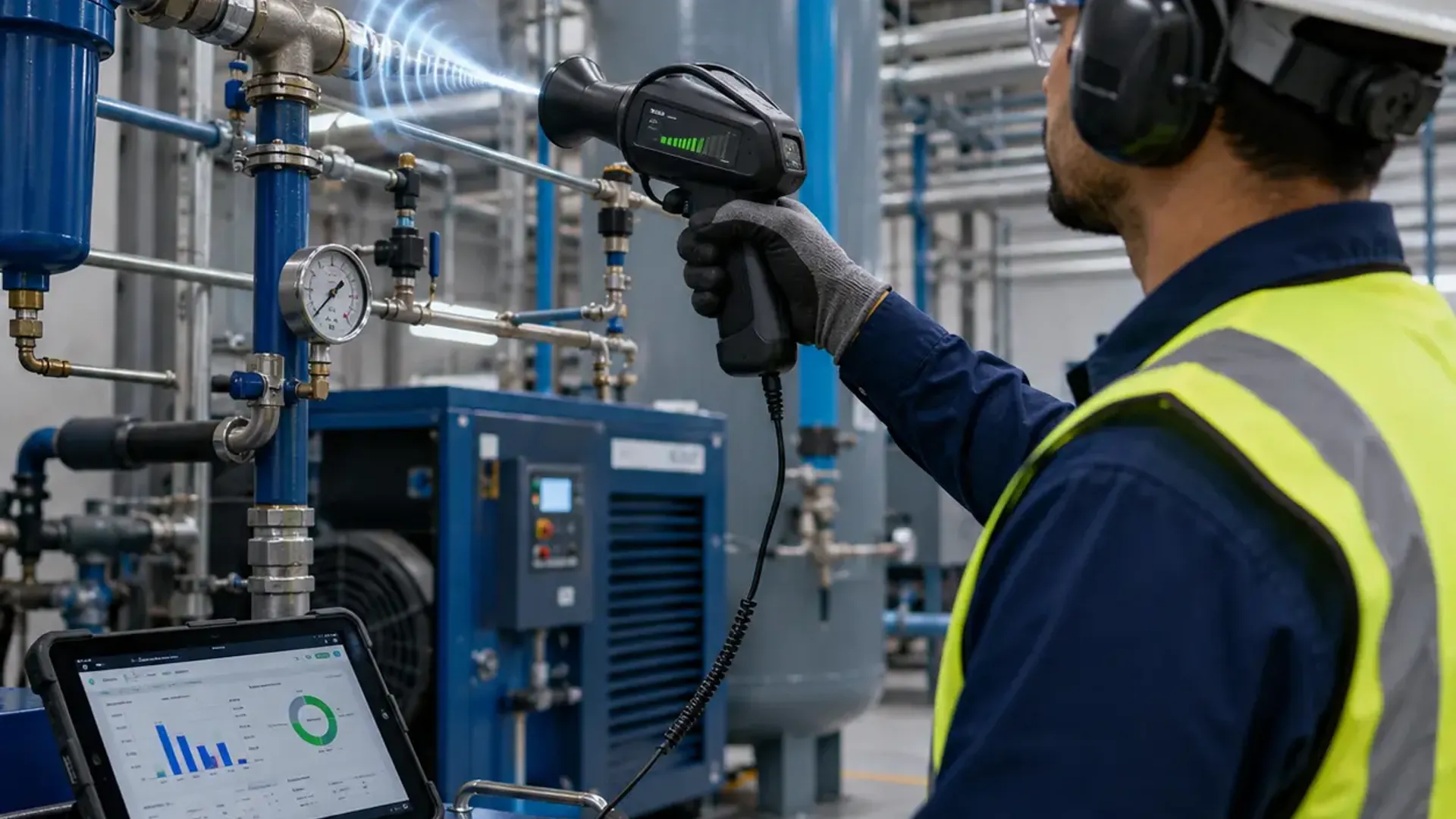
Ultrasonic leak detection UAE compressed air surveys depend on works by identifying the high-frequency sound signatures generated as compressed air escapes through an orifice under pressure. These ultrasonic frequencies, well above the range of normal human hearing, are picked up by specialized detection equipment and converted into audible tones or visual signals technicians can interpret.
This method offers several practical advantages over traditional leak-hunting approaches:
- Leaks can be located accurately even in noisy industrial environments where audible detection is impractical
- Detection works effectively in elevated pipework, enclosed spaces, and hard-to-reach areas without requiring system shutdown
- Surveys can be conducted while the facility remains in full production, avoiding costly downtime
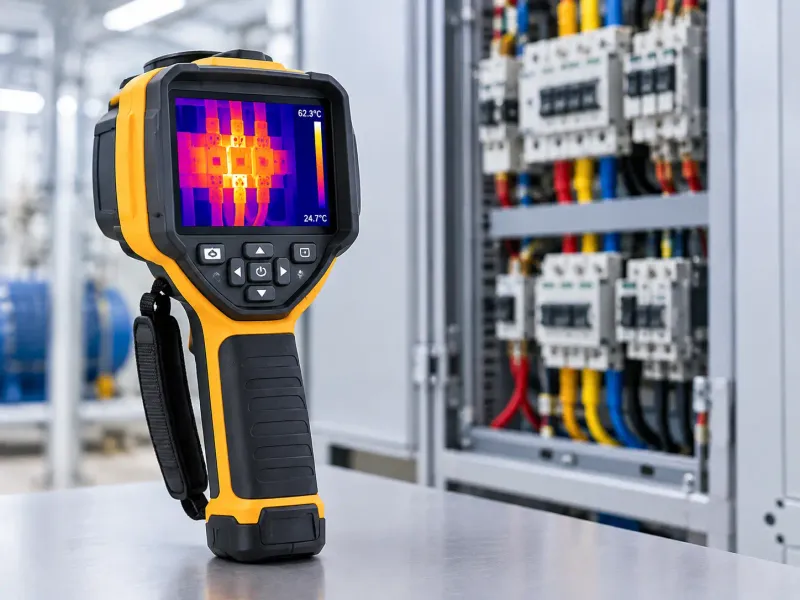
- Advanced equipment, including thermal cameras alongside ultrasonic detectors, adds precision to locating and confirming leak sources
Compressed Air System Efficiency Beyond Just Fixing Leaks
While leak detection is the core of an air leakage survey, compressed air system efficiency improvements often extend to broader system health once a survey is underway. Technicians conducting a thorough audit frequently identify related issues alongside leaks themselves, including inefficient pressure settings, worn seals contributing to gradual air loss, and opportunities to right-size compressor output against actual system demand. Addressing these findings alongside leak repairs compounds the efficiency gains beyond what leak repair alone would achieve.
Industrial Energy Audit UAE Standards and Compliance
An industrial energy audit UAE businesses conduct for compressed air systems increasingly needs to align with recognized international standards, particularly for organizations pursuing formal sustainability or energy management certification. Systematic leak detection is recognized internationally as a core component of compressed air energy efficiency assessment, and survey reporting that aligns with standards like ISO 50001 gives organizations documented evidence supporting both internal sustainability goals and external energy audit compliance requirements.
For facilities operating under broader environmental or energy management frameworks, this documentation can be just as valuable as the direct cost savings, since it provides defensible evidence of proactive energy efficiency management.
Compressed Air Cost Savings: What Facilities Actually Recover
Compressed air cost savings from a well-executed leak detection and repair program tend to be substantial and fast to materialize. Facilities typically see returns driven by:
- Immediate reduction in electricity consumption once identified leaks are repaired
- Reduced compressor run hours and cycling frequency, extending equipment lifespan and lowering maintenance costs
- Fewer unexpected equipment failures tied to compressors working harder than necessary to compensate for system losses
- A payback period most clients recover within three to six months, given how directly leak repair translates into reduced operating costs
Because compressed air leaks tend to develop continuously as fittings age and seals wear, this is not a one-time exercise. Facilities that treat leak detection as a recurring program, rather than a single event, capture ongoing savings rather than watching losses gradually creep back over time.
Why This Should Be a Recurring Program, Not a One-Time Survey
A single leak detection survey delivers meaningful short-term savings, but compressed air systems continue developing new leaks as fittings loosen, seals degrade, and connections age under normal operating stress. Facilities that get the most sustained value from air leakage surveys typically:
- Schedule follow-up surveys on a regular cadence, commonly every six to twelve months
- Assign internal ownership for tracking leak repair status between formal surveys
- Train operators and maintenance staff to recognize obvious leak indicators, such as audible hissing or unexplained pressure drops, between scheduled audits
- Treat compressed air efficiency as an ongoing operational discipline, similar to how facilities approach lubrication schedules or vibration monitoring programs
What to Expect From a Professional Air Leakage Survey Provider
A properly delivered air leakage survey service should include:
- Certified technicians trained in internationally recognized leak detection methods and safety standards
- Advanced equipment, including high-sensitivity ultrasonic leak detectors and thermal cameras, for precise leak location
- End-to-end support spanning detection, documented findings, repair consultation, and follow-up verification once repairs are completed
- Experience across a range of facility types and compressed air system sizes throughout the UAE
General Tech Services provides air leakage survey services across Dubai, Abu Dhabi, Sharjah, and the wider UAE, combining certified technicians, advanced ultrasonic and thermal detection equipment, and full support from initial detection through repair verification.
Frequently Asked Questions
How much compressed air is typically lost to leaks in an industrial facility? Studies commonly cite that up to 30% of compressed air generated in a typical industrial system can be lost through leaks, though the exact figure varies significantly depending on system age, maintenance history, and facility size.
Does an air leakage survey require shutting down production? No. Ultrasonic leak detection is designed to work while a facility remains in full operation, allowing technicians to identify leaks without disrupting production schedules or requiring system downtime.
How quickly do compressed air leak repairs typically pay for themselves? Most clients recover the cost of the survey and subsequent repairs within three to six months, driven by the immediate reduction in energy consumption once identified leaks are fixed.
How often should a compressed air system be surveyed for leaks? While a single survey delivers meaningful short-term savings, leaks continue developing as fittings and seals age, so many facilities schedule follow-up surveys every six to twelve months to sustain ongoing efficiency gains.
Can an air leakage survey help with formal energy audit or sustainability compliance? Yes. Survey documentation that aligns with recognized standards such as ISO 50001 can support both internal sustainability goals and external energy audit or compliance requirements, giving organizations defensible evidence of proactive energy management.
Closing Thoughts
An air leakage survey UAE industrial facilities invest in is one of the rare efficiency measures that pays for itself quickly while also extending equipment life and supporting broader sustainability goals. Given how silently compressed air losses accumulate, a structured ultrasonic detection program, backed by clear documentation and follow-up verification, is what turns an invisible cost into a measurable, manageable one.
To schedule an air leakage survey or discuss a recurring compressed air efficiency program for your facility, reach out through the General Tech Services contact page, or explore the full range of services covering calibration, energy audits, and engineering solutions across the UAE.