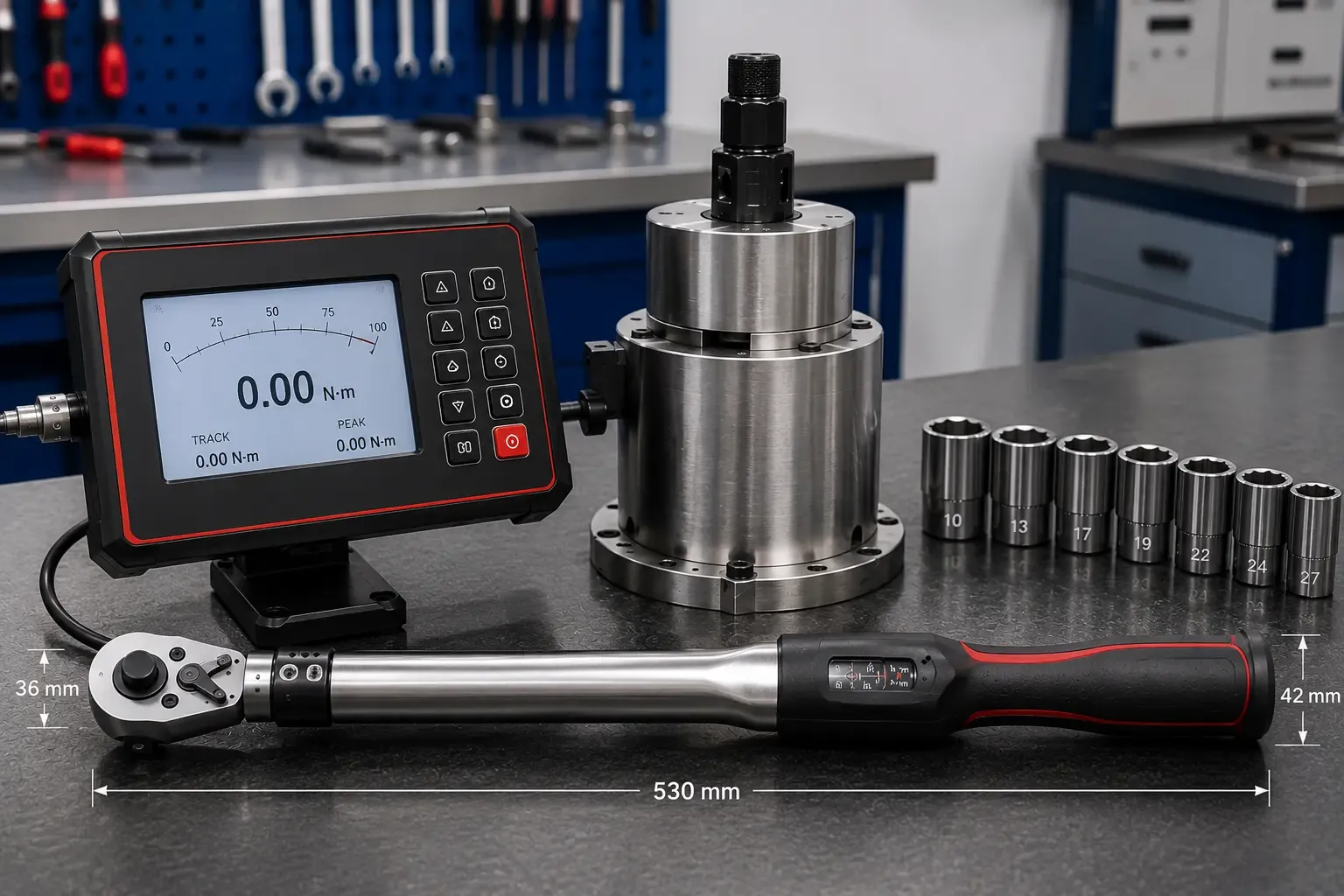
Torque tools carry a specific kind of risk that most calibration disciplines don't: get a torque wrench even slightly wrong, and every bolted joint tightened with it inherits that error, silently, across an entire assembly, structure, or pressure boundary. For a brand as widely trusted as Norbar, with a product range covering everything from precision torque screwdrivers to multipliers rated at 300,000 N·m, keeping that accuracy verified is not optional.
This is exactly the service Norbar torque tool calibration UAE facilities need, and it matters who performs it. This guide covers what sets authorized Norbar calibration apart, how torque tool calibration actually works, and what to expect from a properly accredited service.
Why Authorized Norbar Calibration Matters
Norbar Torque Tools Ltd, now part of the Snap-on family of companies, is one of the world's largest specialists in torque control, manufacturing tools for tightening, measurement, and calibration across a range spanning 0.3 to 300,000 N·m, the widest torque range available anywhere. That breadth of range and precision is exactly why calibration needs to come from a partner with genuine manufacturer backing, not just general familiarity with torque tools.
General Tech Services is the authorized distributor and partner for Norbar in the UAE, providing genuine products, technical support, and accredited calibration since 1998. This relationship matters for a few practical reasons:
- Access to genuine Norbar reference standards and setting equipment, rather than generic third-party torque testers
- Direct technical familiarity with Norbar's specific product lines, from click wrenches to electronic torque multipliers
- Manufacturer-aligned service and repair support alongside calibration, rather than calibration alone with no path for tool servicing
- Confidence that calibration methodology matches what Norbar itself expects for its equipment
The Norbar Product Range and What Calibration Covers
Norbar's product line spans several distinct tool categories, each with its own calibration considerations:
Torque Wrenches
A comprehensive range of click, dial, and adjustable torque wrenches used for controlled, repeatable bolt tightening across a wide capacity range. Calibration verifies accuracy at multiple points across the wrench's rated scale, checking that the break or click point corresponds accurately to the indicated torque value.
Torque Screwdrivers
Precision tools designed for accurate, repeatable tightening of small fasteners at the low end of the torque range. Because these tools operate at such fine torque values, calibration demands proportionally tighter reference accuracy than higher-capacity tools require.
Torque Multipliers
Geared, hand-operated tools that deliver high torque output with low input effort, using a reaction arm for safe, accurate tightening of large bolted joints. Calibration for multipliers needs to account for the mechanical advantage the gearing provides, verifying accuracy at the actual output torque rather than just the input effort applied.
Pneumatic Torque Multipliers
Air-driven, continuous-rotation tools for fast, controlled tightening and loosening of large bolted joints, common in heavy industrial and structural applications. These require calibration equipment capable of handling both the higher torque capacities and the dynamic nature of powered tightening.
How Torque Tool Calibration Actually Works
Regardless of tool type, torque calibration generally follows a defined structure:
- Visual inspection of the tool for damage, wear, or mechanical issues affecting its function
- Mounting the tool on a calibrated torque testing device or transducer system capable of accurately measuring applied torque
- Testing at multiple points across the tool's rated range, typically including low, mid, and high percentages of full scale
- Recording deviation at each point compared against the manufacturer's stated tolerance
- Adjustment where the tool design allows, or documentation of "as found" and "as left" results
Norbar's entire product range is backed by an electronic torque measurement programme, and transducers up to 100,000 N·m can be supplied with accredited ISO 17025 certification, giving customers the traceability their quality systems demand.
Standards Governing Torque Calibration
Torque calibration in industrial applications is typically performed against recognized standards including ISO 6789, which governs hand torque tools, BS EN 26789, and ASME B107.14M for the North American market. These standards define testing methodology, tolerance classes, and how calibration results should be reported, giving both calibration providers and tool users a consistent technical reference regardless of brand.
Torque calibration is essential across industries including automotive, aerospace, manufacturing, and oil and gas, where accurate, repeatable fastening directly affects safety and regulatory compliance.
What Gets Tested Beyond Torque Wrenches
While torque wrenches are the most common tool needing calibration, a full torque calibration program typically extends to:
- Torque multipliers and torque screwdrivers, calibrated using the same underlying principles adapted to their specific mechanical designs
- Torque transducers and torque sensors, used both as reference standards and as measurement devices in automated tightening systems
- Torque analyzers and torque testers, the equipment used to verify other torque tools
- Cable tensiometers and pull or push-pull testers, related force measurement tools often managed under the same calibration program in industrial facilities
Keeping all of these under a single coordinated calibration schedule, rather than treating torque wrenches separately from multipliers and transducers, simplifies audit tracking and reduces the risk of an overlooked instrument.
ISO 17025 Accreditation and Traceability
Working with an ISO 17025-accredited laboratory for torque calibration ensures:
- Reference standards used for calibration are themselves traceable to national or international measurement standards
- A documented measurement uncertainty is reported alongside every result
- The laboratory's technical competence has been independently assessed, not self-declared
- Certificates hold up under audit scrutiny for quality systems requiring documented traceability
Our torque calibration services cover torque wrenches up to 3000 N·m, along with torque screwdrivers, torque multipliers, torque analyzers, torque transducers, and related force measurement equipment, calibrated to all major torque tool brands under full EIAC ISO 17025 accreditation.
Norbar Product Support Beyond Calibration
Because General Tech Services operates as an authorized Norbar partner, support extends beyond calibration alone to include genuine Norbar products across the full range, from torque wrenches and screwdrivers through manual and pneumatic torque multipliers to electronic torque measurement systems. This means facilities can source replacement tools, get technical guidance on selecting the right torque tool for a specific application, and have that same equipment calibrated by a team with direct manufacturer-level familiarity with the product line.
How Often Should Torque Tools Be Calibrated
General guidance for torque tool calibration frequency includes:
- Annual calibration as a standard baseline for tools used in general industrial applications
- More frequent calibration, often every six months, for tools used heavily in production environments or safety-critical fastening applications such as aerospace or structural work
- Immediate recalibration after any drop, overload event, or suspected inaccuracy
- Calibration before and after major projects where fastening accuracy is particularly critical, such as pressure vessel assembly or structural steel work
What a Torque Calibration Certificate Should Include
A properly issued torque calibration certificate should clearly document:
- The specific tool make, model, and serial number
- Measurement results at each tested point across the tool's rated range
- Stated tolerance class and pass or fail status at each point
- The measurement uncertainty for the calibration
- Traceability details for the reference standards used
- The accreditation body and standard the issuing laboratory operates under
Frequently Asked Questions
Why does it matter if a calibration provider is an authorized Norbar partner? An authorized partner has direct manufacturer backing, genuine reference standards, and technical familiarity with Norbar's specific product lines, giving calibration results and service support a level of confidence that general third-party calibration cannot fully match.
How often should a Norbar torque wrench be calibrated? Most torque wrenches used in general industrial applications should be calibrated annually, with more frequent calibration for tools used in safety-critical or high-volume production environments.
Can torque multipliers be calibrated using the same equipment as torque wrenches? Torque multipliers require calibration equipment capable of handling their higher output torque and accounting for their mechanical gearing, which differs from standard torque wrench calibration setups, particularly for pneumatic multipliers used in heavy industrial applications.
What standards govern torque wrench calibration? Common standards include ISO 6789 for hand torque tools, BS EN 26789, and ASME B107.14M, which define testing methodology, tolerance classes, and calibration reporting requirements.
Does Norbar equipment come with calibration certification from the manufacturer? Norbar's electronic torque measurement programme supports transducers up to 100,000 N·m with accredited ISO 17025 certification, giving customers documented traceability that supports their own quality system requirements.
Closing Thoughts
Norbar torque tool calibration UAE industrial, aerospace, and manufacturing facilities depend on benefits directly from working with a partner that holds genuine authorized status with the manufacturer, not just general torque calibration capability. From torque wrenches and screwdrivers through multipliers and transducers, accurate calibration is what keeps every bolted joint tightened with that tool trustworthy.
To arrange Norbar torque tool calibration, service, or genuine product support, reach out through the General Tech Services contact page, or explore the full range of ISO 17025 accredited calibration disciplines covering torque, pressure, temperature, and dimensional measurement.