Walk through almost any modern factory, water treatment plant, or building plant room in the UAE, and you'll find a variable frequency drive quietly doing one of the most impactful jobs in industrial energy efficiency: controlling exactly how fast a motor spins, rather than letting it run at full speed regardless of what's actually needed. It's a deceptively simple idea with an outsized effect on energy bills, equipment lifespan, and process control precision.
This guide explains what a VFD (variable frequency drive) actually is, how it works, and where it shows up across UAE manufacturing, HVAC, water treatment, and oil and gas operations, along with what happens when one fails and whether repair or replacement makes more sense.
What a Variable Frequency Drive Actually Does
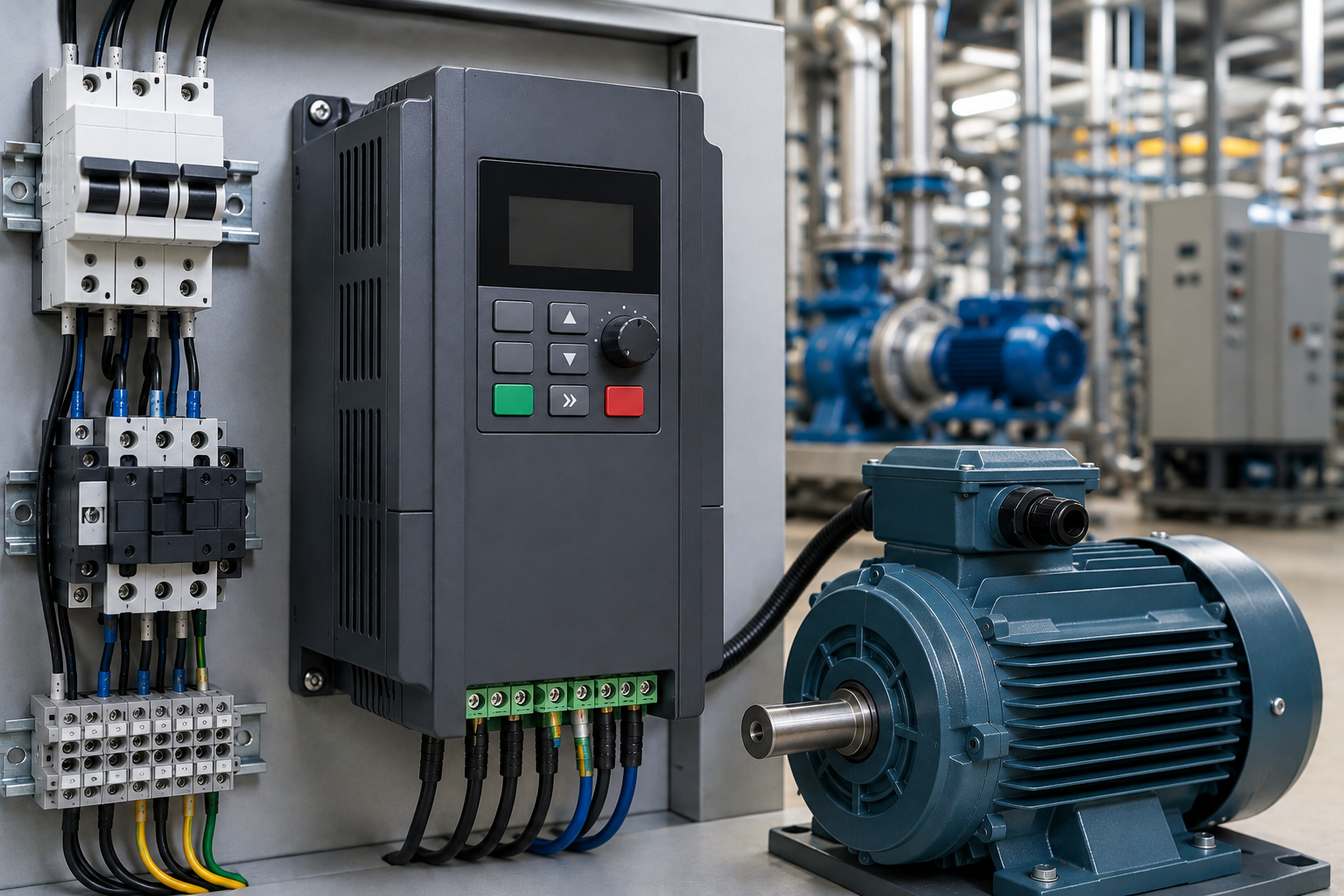
A variable frequency drive controls an electric motor's speed by adjusting the frequency and voltage of the incoming power supplied to it. Standard AC induction motors, left connected directly to fixed-frequency mains power, run at essentially one speed determined by that fixed frequency. A VFD sits between the power supply and the motor, converting incoming AC power to DC, then inverting it back to AC at a controlled, adjustable frequency, allowing the motor to run faster or slower on demand rather than only at its fixed rated speed.
This capability might sound like a narrow technical feature, but it fundamentally changes how motor-driven equipment can be controlled and how efficiently it operates.
Why Speed Control Matters More Than It Sounds
Before variable frequency drives became standard, controlling motor-driven equipment output, whether a pump, fan, or conveyor, often meant running the motor at full speed and then physically throttling the output with valves, dampers, or mechanical restrictions. This approach wastes significant energy, since the motor is drawing full power the entire time regardless of how much output is actually needed.
By changing the frequency and voltage supplied to the motor, VFDs can make motors run faster or slower, allowing precise control over components like pumps, fans, or conveyors, matching motor speed directly to the system's actual demand rather than running at a fixed rate and wasting the difference. This is the core mechanism behind the substantial energy savings VFDs deliver in real-world applications.
Real Uses in UAE Industry
Variable frequency drives are commonly used in manufacturing, HVAC systems, and energy-saving applications to optimize motor performance and energy consumption. Across the UAE's industrial and commercial landscape, this translates into several concrete applications:
Manufacturing and Process Industries
Conveyor systems, mixers, extruders, and production line equipment all benefit from precise speed control, allowing manufacturers to match equipment output directly to production rate requirements rather than running everything at a fixed maximum speed regardless of actual throughput needs.
HVAC Systems
Air handling units, chillers, and fan systems across commercial buildings and industrial facilities use VFDs to modulate airflow and cooling output based on real-time demand, rather than cycling equipment fully on and off or running fans at constant full speed regardless of occupancy or load conditions. Given the scale of HVAC cooling demand across the UAE's climate, this represents one of the largest cumulative energy efficiency opportunities VFDs offer.
Water and Wastewater Treatment
Pumps controlling water distribution, wastewater processing, and irrigation systems rely on VFDs to match flow rates to actual demand, reducing energy consumption compared to constant-speed pumping and reducing mechanical stress from constant full-speed operation.
Oil and Gas Operations
Pumps, compressors, and other rotating equipment across upstream, midstream, and downstream oil and gas facilities use VFDs for precise process control, where matching equipment speed to actual process requirements affects both energy costs and product quality consistency.
The Energy Efficiency Case for VFDs
The efficiency gains from proper VFD implementation are substantial enough that regulatory and energy efficiency frameworks increasingly treat variable speed drives as a standard expectation rather than an optional upgrade. The core efficiency principle comes down to a straightforward physical relationship: for many types of equipment, particularly centrifugal pumps and fans, the power required to drive them scales disproportionately with speed, meaning even modest speed reductions can deliver meaningful energy savings compared to running at full speed and throttling output mechanically.
Beyond direct energy savings, VFDs reduce mechanical stress on connected equipment by enabling controlled acceleration and deceleration rather than the abrupt starts and stops associated with direct-on-line motor starting, which extends the working life of motors, bearings, and connected mechanical components.
Common Signs a VFD Needs Attention
Like any piece of industrial electrical equipment, VFDs eventually develop faults, and catching early warning signs before a complete failure helps avoid unplanned production stoppages. Common indicators include:
- Unusual noises such as humming, buzzing, or clicking, often pointing to loose components, electrical faults, or cooling system issues
- Overheating, where the unit feels excessively hot or shuts down frequently due to thermal protection triggering
- Fault codes or error displays indicating internal component issues
- Inconsistent motor speed control or unexpected fluctuations in output
- Dust, oil, or moisture contamination visible around ventilation and cooling components
Addressing minor problems early, rather than waiting for a complete failure, is genuinely important, since VFD issues tend to compound: a cooling system problem left unaddressed can accelerate component degradation elsewhere in the unit.
VFD Repair vs Replacement: What Actually Makes Sense
When a VFD fails, the instinctive response is often to simply order a replacement unit, but this isn't always the most sensible or cost-effective path. A unit that has been properly repaired and well-maintained can often deliver many more years of useful life, at a fraction of full replacement cost.
Proper VFD repair typically involves:
- A thorough diagnostic evaluation to isolate the actual root cause of failure, rather than replacing components speculatively
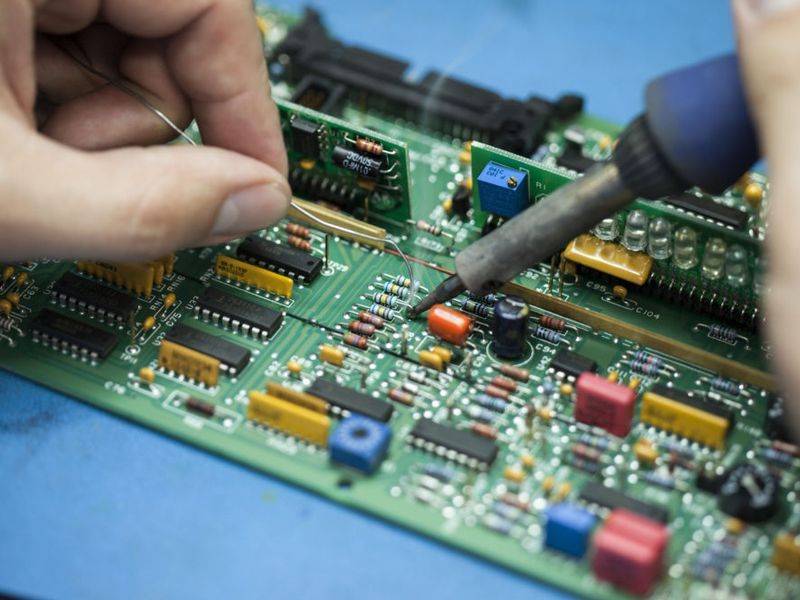
- Repair or replacement of failed power components, control boards, and age-sensitive parts likely to fail in the near future alongside the primary fault
- Testing under load conditions to confirm the repaired unit performs correctly before it's returned to service
- Documentation of the failure analysis and repair work performed, useful for tracking recurring issues across a facility's broader equipment fleet
For facilities weighing this decision, a qualified repair provider can typically diagnose the specific failure and provide a clear cost comparison against full replacement, allowing an informed decision rather than a default assumption that replacement is always necessary.
Why Proper Repair Requires Real Technical Depth
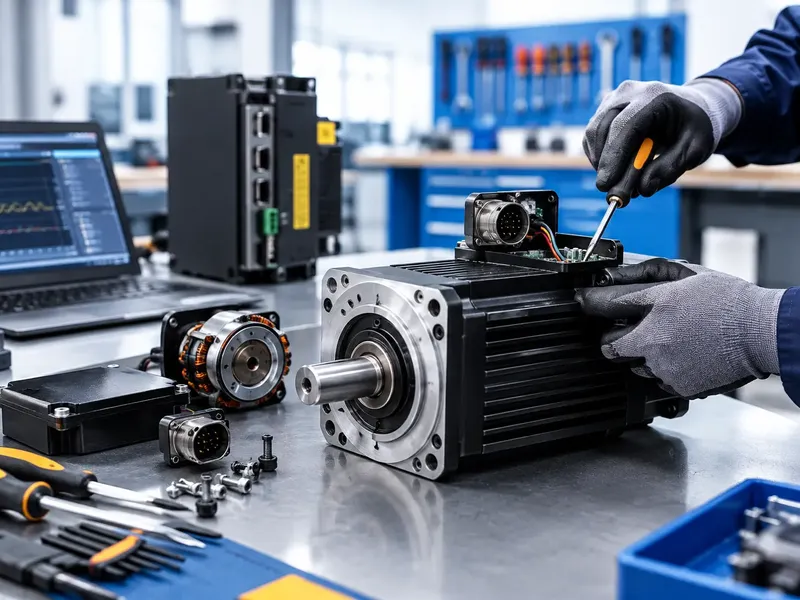
Variable frequency drives are considerably more complex than the motor control technology they replaced, incorporating power electronics, control boards, and firmware that require specific diagnostic expertise to service correctly. General Tech Services is capable of servicing, repairing, and refurbishing AC, DC, and VFD drives and other electrical control systems across the UAE, with the tools, experience, and technical resources including manuals, guides, and schematics needed to accurately diagnose problems with drives, controls, and circuit systems.
Explore VFD repair services available across Dubai, Abu Dhabi, Sharjah, and the wider UAE, covering diagnosis, repair, and refurbishment for a wide range of drive brands and control system configurations.
VFDs and the Broader Electrical Maintenance Picture
VFDs rarely operate in isolation within a facility's electrical infrastructure. Facilities running VFD-controlled equipment typically benefit from coordinating drive maintenance alongside broader electrical thermography inspection services, which can identify overheating connections or components in electrical panels feeding VFD installations before they cause a failure, and general electrical test equipment calibration ensuring the diagnostic tools used to troubleshoot drive issues are themselves accurate.
Frequently Asked Questions
What is the main benefit of installing a VFD on a motor? The primary benefit is energy savings achieved by matching motor speed to actual system demand rather than running at fixed full speed and throttling output mechanically, though VFDs also reduce mechanical stress on connected equipment and improve process control precision.
Can any electric motor be retrofitted with a VFD? Most standard AC induction motors can be paired with a VFD, though compatibility depends on the specific motor type, its insulation rating, and the application's control requirements. A qualified technician should assess compatibility before installation.
How long does a typical VFD repair take? Standard VFD repairs are commonly completed within about a week, though turnaround depends on the complexity of the fault, parts availability, and whether extensive component-level diagnostics are required.
Is VFD repair usually cheaper than buying a new unit? In many cases, yes. Repair and refurbishment can cost significantly less than full replacement, particularly for units where the core structure is sound and the failure is isolated to specific components rather than widespread damage.
Which industries in the UAE rely most heavily on VFDs? Manufacturing, HVAC, water and wastewater treatment, and oil and gas operations are among the heaviest users of VFDs across the UAE, given the scale of pump, fan, and motor-driven equipment across these sectors.
Closing Thoughts
A variable frequency drive does something simple in concept, controlling motor speed precisely, but the cumulative impact across UAE manufacturing, HVAC, water treatment, and oil and gas operations is substantial, in energy savings, equipment longevity, and process control precision. When one fails, understanding whether repair or replacement makes more sense can meaningfully affect both downtime and cost.
To discuss VFD repair, diagnosis, or broader electrical control system support for your facility, reach out through the General Tech Services contact page, or explore the full range of services covering drives, calibration, and electrical engineering solutions across the UAE.