When a servo motor fails on an active CNC line or a robotic assembly cell, production doesn't slow down, it stops completely. Unlike general induction motors that tolerate some imprecision, servo motors exist specifically because a process demands precise, controlled motion, which means a failure here rarely has a simple workaround while a replacement gets sourced. The decision that follows, repair or replace, has to be made fast, and made correctly.
This guide covers what servo motor repair UAE manufacturing, robotics, and automation facilities depend on actually involves, why repair frequently makes more sense than blanket replacement, and what separates a properly executed servo repair from a stopgap fix.
Why Servo Motor Failure Is a Different Category of Problem
Servo motors combine precision mechanical components with sensitive feedback electronics, encoders, resolvers, or similar position-sensing devices, that together enable the closed-loop control these motors are built for. This combination creates specific failure modes that don't affect simpler motor types:
- Bearing wear that introduces even minor mechanical play, which a general-purpose motor might tolerate but a servo application, built around precise positioning, cannot
- Winding insulation breakdown, whether in the stator windings of an AC servo or the armature and field windings of an older DC design
- Encoder or feedback device failure, where the motor itself may be mechanically sound but the position feedback the control system relies on has become inaccurate or has failed entirely
- Magnet degradation in permanent magnet servo designs, affecting the back electromotive force characteristics the motor depends on for accurate torque and speed control
Because servo motors sit inside a closed feedback loop with a drive and controller, a fault can sometimes look like a drive problem when it's actually the motor, or vice versa, making accurate diagnosis the genuinely critical first step before any repair work begins.
Repair vs Replacement: Why the Calculation Usually Favors Repair
Professional repair typically extends a servo motor's service life by 3 to 5 years or more compared to immediate replacement, maximizing the return on the original equipment investment. This isn't simply a cost-saving shortcut, it reflects a genuine engineering reality: a servo motor's housing, shaft, and overall mechanical structure often remain perfectly sound long after the windings, bearings, or feedback components have failed, meaning a full replacement discards a mechanically fine housing along with the failed components.
Replacement makes more sense in specific situations, when the motor has suffered catastrophic mechanical damage, when the specific model is being phased out and parts availability is genuinely becoming a long-term concern, or when a facility is deliberately upgrading to a different motor specification as part of a broader equipment modernization. Outside of these situations, repair generally delivers better value, provided it's performed by technicians with genuine servo-specific expertise rather than general motor repair experience applied to a fundamentally different type of equipment.
What a Proper Servo Motor Repair Actually Involves
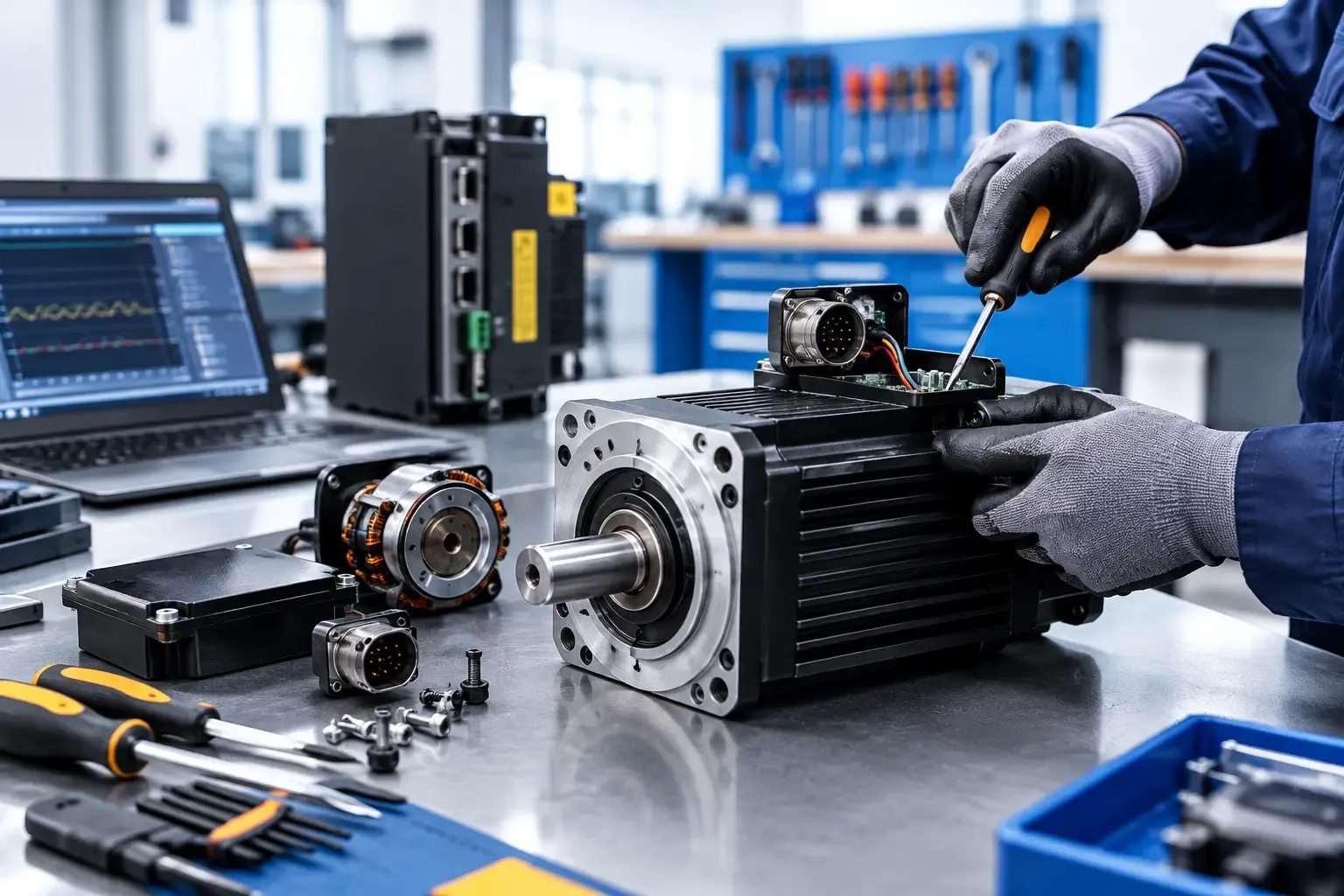
A thorough servo motor repair process generally includes:
- Complete disassembly and inspection of windings, bearings, feedback components, and, for older DC designs, the commutator and brush assembly
- Diagnostic testing to identify the specific root cause of failure, rather than replacing components speculatively
- Rewinding of stator or armature windings where insulation breakdown or winding damage is identified
- Bearing replacement, addressing one of the most common sources of servo motor performance degradation over time
- Encoder or feedback device repair or replacement, restoring the accurate position feedback the control system depends on
- Reassembly using correct hardware and components, followed by thorough electrical testing, insulation verification, and operational run testing confirming proper torque output and stable feedback signals before the motor is returned to service
This level of testing before return to service matters considerably, since a servo motor that appears mechanically repaired but hasn't been verified for stable feedback and correct torque output can fail again quickly, or worse, perform unpredictably in a way that affects the precision the entire application depends on.
Authorized Certification Across Major Servo Brands
Servo motor repair carries real technical depth requirements that vary meaningfully between manufacturers, given how differently various brands approach motor construction and feedback system design. General Tech Services holds authorized specialist certification for Siemens, ELAU, Bosch Rexroth, ABB, and Allen-Bradley servo platforms, with capability extending to most other industrial servo brands on request. This authorized status matters because it reflects genuine manufacturer-level training on the specific construction and diagnostic approach each platform requires, rather than generalized motor repair experience applied uniformly across brands with meaningfully different designs.
Servo Repair Across Different Industrial Applications
Servo motor repair needs vary considerably depending on the specific application and operating environment:
CNC Machines, Robotics, and Automated Production Lines
Applications demanding precise motion control and minimal downtime, where a servo failure directly halts production until resolved.
Harsh-Environment Applications
Subsea automation, refinery control, and offshore operations, where servo and drive equipment operates under conditions that accelerate wear and demand repair expertise suited to that specific operating environment.
Aerospace and Defence Equipment
Mission-critical applications requiring high-precision servo overhaul, where the accuracy and reliability standards for repaired equipment are correspondingly stringent.
Medical and Laboratory Equipment
Applications demanding accuracy and validation, where a repaired servo motor needs documented verification supporting the equipment's broader compliance and validation requirements.
Power Generation, Water Treatment, and Utility Infrastructure
Servo and drive restoration supporting critical infrastructure applications where equipment reliability ties directly into continuous service delivery.
Why Emergency Response Time Matters for Servo Repair
When a servo motor fails unexpectedly on an active production line, the cost of downtime typically accumulates far faster than most facilities initially budget for. Emergency dispatch capability, with professional engineer response within 2 hours for critical production situations across all seven Emirates, exists specifically to address this reality, since diagnosing and beginning repair or replacement planning quickly directly limits how much production time a single servo failure actually costs a facility.
Coordinating Servo Repair With Broader Automation Support
Servo motors rarely operate in isolation from the broader control system around them. A servo drive fault can sometimes present symptoms that look like a motor problem, and vice versa, which is why coordinating servo repair with broader industrial automation services covering PLC, HMI, and drive diagnostics tends to produce faster, more accurate root-cause identification than treating the servo motor as an isolated component separate from the control system driving it.
What to Expect From a Professional Servo Motor Repair Provider
A properly delivered servo motor repair service should include:
- Certified engineers with genuine servo-specific training, ideally including authorized certification for your specific motor brand
- Thorough diagnostic testing before any repair decision, rather than defaulting to component replacement speculatively
- Complete documentation of the repair performed, supporting both warranty coverage and future maintenance planning
- Warranty backing on the completed repair, giving confidence that the motor has genuinely been restored rather than temporarily patched
- Emergency response capability for critical production situations, given how directly servo downtime translates into cost
General Tech Services provides servo motor repair services across Dubai, Abu Dhabi, Sharjah, and the wider UAE, backed by 28+ years of experience, 60+ certified engineers, and 24/7 emergency response with full warranty and documentation on completed repairs.
Frequently Asked Questions
Is it usually better to repair a servo motor or replace it? Repair generally makes more financial and practical sense in most situations, often extending service life by 3 to 5 years or more, since the motor's mechanical housing and structure frequently remain sound long after specific components like windings or bearings have failed. Replacement makes more sense for catastrophic damage or deliberate equipment upgrades.
How quickly can an emergency servo motor failure be addressed? Professional emergency response typically targets engineer arrival within 2 hours for critical production situations, given how directly servo downtime affects production output on active manufacturing or automation lines.
Why does authorized certification for specific servo brands matter? Different manufacturers approach motor construction and feedback system design differently, so authorized, brand-specific certification reflects genuine manufacturer-level training on that particular platform's diagnostic and repair requirements, rather than generalized experience applied across meaningfully different designs.
What testing happens after a servo motor repair is completed? A properly repaired servo motor undergoes electrical testing, insulation verification, and operational run testing confirming correct torque output and stable feedback signals before it's returned to service, ensuring the repair genuinely restored full performance rather than just mechanical appearance.
Can servo drives and servo motors be diagnosed and repaired together? Yes, and this is often preferable, since a fault in one component can present symptoms resembling a problem in the other. Coordinating servo motor repair with broader drive and control system diagnostics tends to produce faster and more accurate root-cause identification.
Closing Thoughts
Servo motor repair UAE manufacturing, robotics, and automation facilities depend on protects a significant equipment investment while restoring the precision these applications are specifically built around. Whether addressing a CNC production line failure, a harsh-environment offshore application, or mission-critical aerospace equipment, working with engineers holding genuine authorized certification and fast emergency response capability keeps unplanned servo downtime from becoming a prolonged production crisis.
To arrange servo motor repair or discuss emergency response coverage for your facility, reach out through the General Tech Services contact page, or explore the full range of services covering automation, repair, and engineering solutions across the UAE.