In oil and gas operations, a miscalibrated instrument is never just a paperwork problem. A pressure gauge reading a few percent off, a temperature sensor drifting out of range, or a gas detector responding a second too slowly can mean the difference between a controlled process and a serious incident. This is why calibration services for oil & gas industry UAE operators rely on need to meet a higher bar than general industrial calibration.
Between hazardous area classifications, safety-critical instrumentation, and the sheer scale of onshore and offshore operations across the Emirates, oil and gas calibration is its own discipline within metrology. This article covers what makes it different, which instruments demand the most attention, and what to look for in a calibration partner qualified to work in this sector.
Why Oil & Gas Instrument Calibration Is Different
Oil and gas instrument calibration carries higher stakes than most other industrial applications for a few clear reasons:
- Measurement errors in pressure, temperature, or flow can directly trigger safety system responses, false shutdowns, or missed hazard conditions
- Instruments often operate in classified hazardous areas, requiring explosion-proof or intrinsically safe equipment and calibration methods that do not compromise that certification
- Many measurement points feed directly into custody transfer calculations, where inaccuracy has immediate financial consequences
- Environments involve extreme temperatures, high pressures, vibration, and corrosive atmospheres that accelerate instrument drift
A calibration provider working in this sector needs to understand not just how to calibrate an instrument, but how to do so without breaching hazardous area integrity or interrupting a live process.
Pressure Gauge Calibration UAE Oil and Gas Facilities Depend On
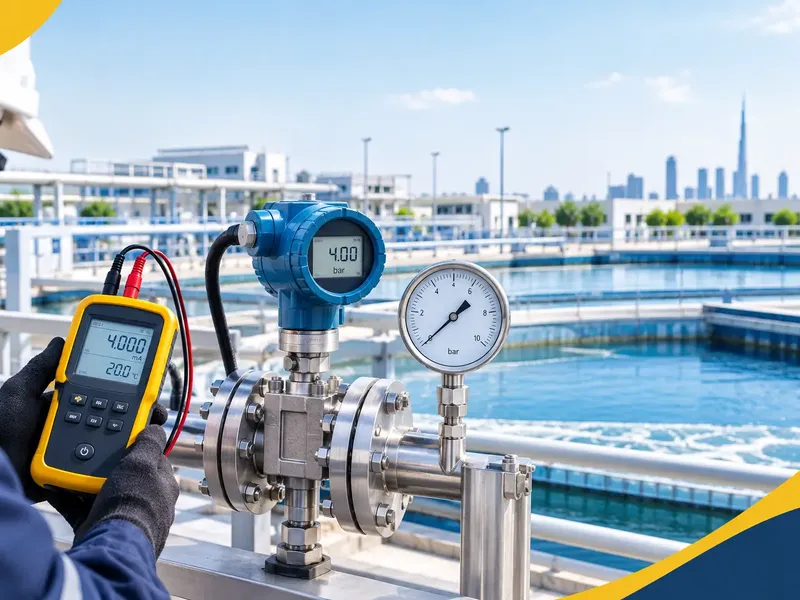
Pressure measurement sits at the center of nearly every oil and gas process, from wellhead monitoring to pipeline transport to refinery operations. Pressure gauge calibration UAE facilities require typically covers:
- Standard pressure gauges and digital pressure transducers
- Dead weight testers used as primary reference standards
- Barometers and manometers used in process monitoring
- High-pressure transducers rated up to tens of thousands of PSI, common in wellhead and pipeline applications
Most pressure instruments are calibrated across a five-point range at each 20 percent of capacity, with higher-accuracy transducers tested across ten points for tighter verification. Our dedicated pressure calibration services cover the full range from vacuum to 40,000 PSI, which is the range most relevant to upstream and midstream oil and gas equipment.
Temperature Calibration Oil and Gas Applications Require
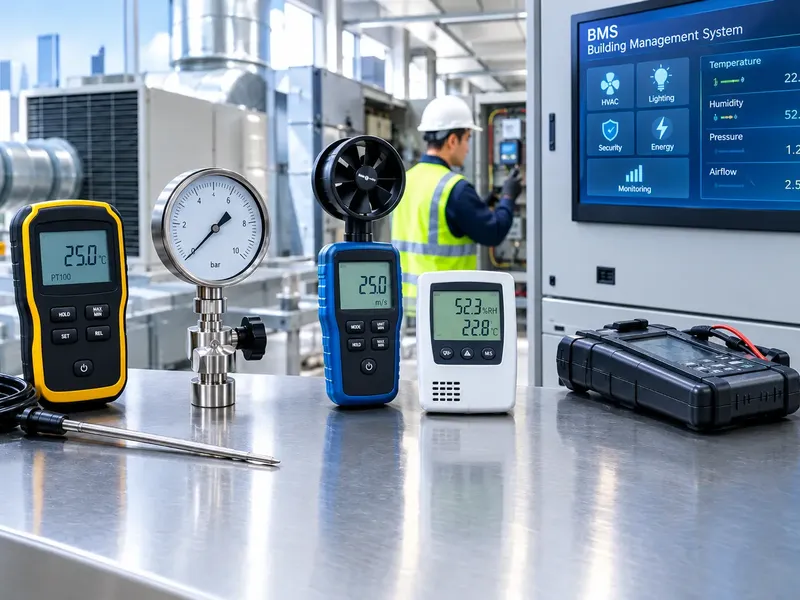
Temperature control affects everything from reservoir monitoring to refining processes to storage and transport safety. Temperature calibration oil and gas facilities rely on typically involves:
- RTDs and thermocouples used throughout process monitoring
- Infrared thermometers for non-contact temperature checks
- Dry block calibrators and fluidized baths used as reference standards
- Furnace and oven calibration for refining and processing equipment
Because oil and gas processes often operate at temperature extremes, calibration needs to account for how instrument accuracy behaves across the full operating range, not just at ambient conditions. Our temperature calibration services cover this full spectrum, from cryogenic ranges through high-temperature process equipment.
Flow Meter Calibration UAE Facilities Cannot Skip
Flow measurement accuracy has direct financial weight in oil and gas operations, particularly anywhere custody transfer, allocation metering, or production accounting depends on the reading. Flow meter calibration UAE operators need covers liquid, gas, and air flow across a wide range of meter types, ensuring mass and volumetric flow readings remain accurate and consistent.
Inaccurate flow data does not just cause billing disputes. It distorts production reporting, mass balance calculations, and regulatory submissions, all of which can trigger costly reconciliation work if discovered late. See our full flow meter calibration services for the complete scope of instruments covered.
Hazardous Area Instrument Calibration and Explosion Proof Instrument Calibration
Much of the instrumentation used in oil and gas facilities sits within classified hazardous areas, where flammable gases or vapors may be present. Hazardous area instrument calibration and explosion proof instrument calibration require specific precautions:
- Technicians must understand area classification zones and the certification requirements attached to instruments used within them
- Calibration procedures must avoid compromising an instrument's explosion-proof or intrinsically safe rating
- Gas detectors and analyzers used for hazard monitoring need calibration against certified reference gases, not just electronic signal checks
- Documentation must clearly note the hazardous area rating alongside standard calibration data, since this affects how the instrument can be redeployed after service
Our gas analyser and detector calibration services are built specifically around this requirement, ensuring detection equipment used for safety monitoring performs reliably when it matters most.
Onshore Offshore Calibration Services UAE
Oil and gas operations in the UAE span onshore fields, offshore platforms, and everything connecting them through pipelines and processing facilities. Onshore offshore calibration services UAE operators need to account for the practical realities of each environment:
- Onshore facilities generally allow more flexibility for in-lab calibration of removable instruments
- Offshore platforms and remote sites often require on-site or field calibration, since equipment cannot always be shipped out without disrupting operations
- Logistics, scheduling, and technician safety training all factor into how calibration programs are planned across dispersed sites
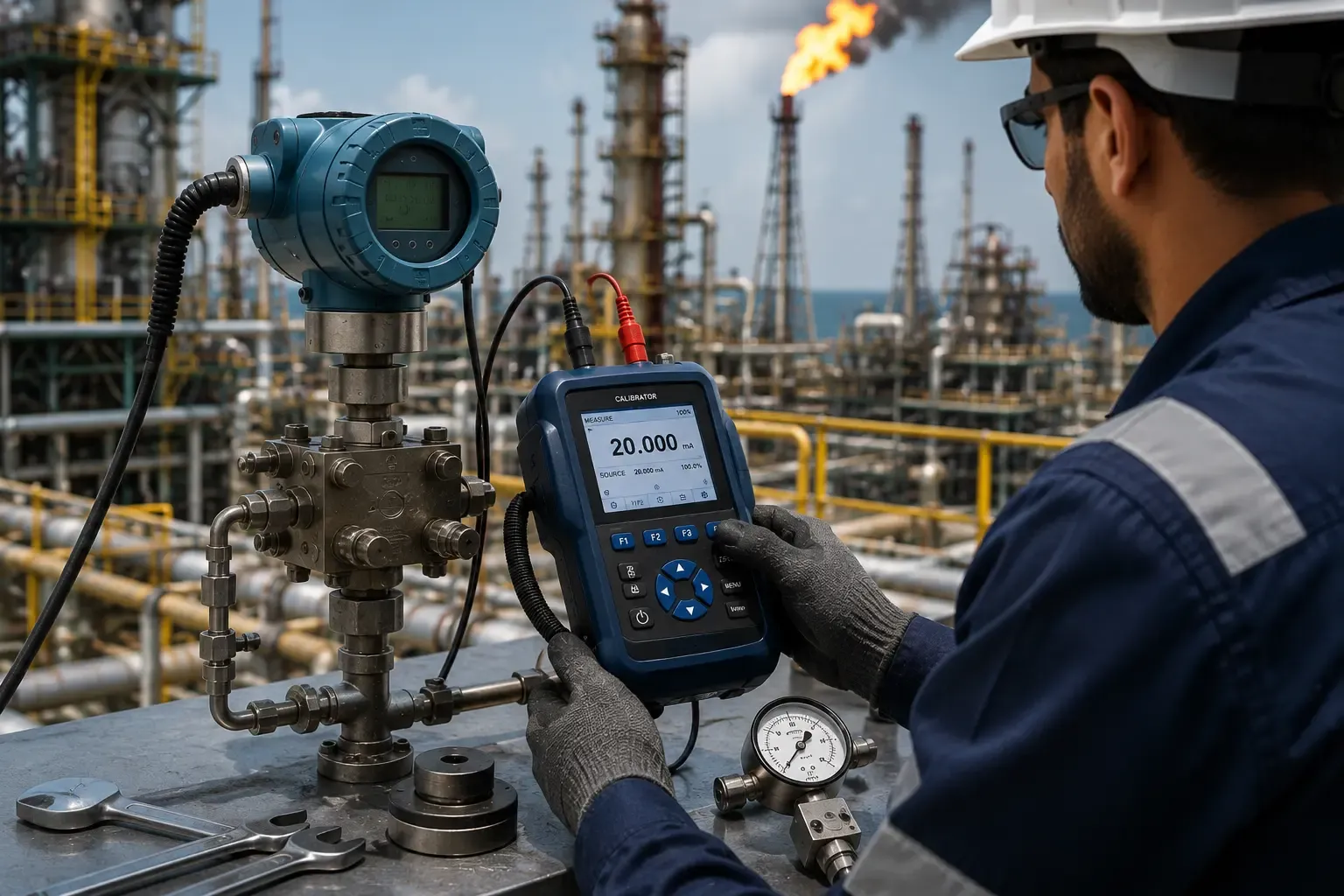
Our on-site calibration services are designed for exactly this scenario, bringing calibrated reference standards directly to your facility and issuing "as found" and "as left" certificates on the spot, minimizing downtime for equipment that cannot leave service.
ISO 17025 Calibration Oil and Gas Operators Can Rely On for Audits
Given the safety and regulatory weight attached to oil and gas measurement, ISO 17025 calibration oil and gas operators use needs to be fully traceable and audit-ready. This means:
- Full traceability of reference standards to national or international metrology standards
- Documented measurement uncertainty on every certificate, critical for pressure and flow instruments operating near safety thresholds
- EIAC accreditation covering the specific measurement disciplines your facility relies on, not just a general calibration claim
- Consistent, repeatable calibration intervals aligned with your quality management system
General Tech Services operates an EIAC and ENAS accredited ISO 17025 calibration laboratory from its Sharjah headquarters, performing more than 33,000 traceable calibrations annually across 15 disciplines including pressure, temperature, flow, and gas detection, the core measurement types oil and gas facilities depend on most.
Safety Critical Equipment Calibration UAE Cannot Treat as Routine
Not every instrument in a facility carries the same consequence if it drifts out of calibration. Safety critical equipment calibration UAE facilities operate under should be prioritized and scheduled separately from general-purpose instruments, with:
- Shorter calibration intervals for instruments feeding safety instrumented systems
- Immediate recalibration after any process upset, overpressure event, or suspected instrument fault
- Documented escalation procedures if a safety-critical instrument is found out of tolerance during calibration
- Redundant verification where a single point of failure would create unacceptable risk
Treating safety-critical instrumentation with the same calibration cadence as general process monitoring equipment is a common gap auditors flag during compliance reviews.
What to Look for in an Oil & Gas Calibration Partner in the UAE
Before selecting a calibration provider for oil and gas instrumentation, confirm:
- Experience specifically within oil, gas, and petrochemical environments, not just general industrial calibration
- Current EIAC accreditation to ISO/IEC 17025 covering pressure, temperature, flow, and gas detection disciplines
- Capability for both on-site field calibration and in-lab calibration depending on equipment criticality and location
- Familiarity with hazardous area classifications and explosion-proof equipment handling
- Documented uncertainty budgets, since many oil and gas measurements operate close to safety or custody transfer tolerances
Frequently Asked Questions
Why does oil and gas calibration require special certification compared to general industrial calibration? Oil and gas environments frequently involve hazardous area classifications, extreme operating conditions, and safety-critical measurement points where errors carry higher consequences, requiring calibration technicians with specific training in these conditions and instrument types.
Can calibration be performed on instruments inside hazardous areas without removing them? In many cases, yes, provided the technician follows area classification protocols and the calibration process does not compromise the instrument's explosion-proof or intrinsically safe rating. Some instruments may still require removal depending on the specific hazard zone and equipment type.
How often should safety-critical instruments in an oil and gas facility be calibrated? Intervals vary based on instrument type, criticality, and manufacturer guidance, but safety-critical instrumentation generally requires shorter intervals than general process monitoring equipment, along with immediate recalibration following any process upset or suspected fault.
What is the difference between on-site and in-lab calibration for offshore facilities? On-site calibration brings technicians and reference standards to the platform or facility, minimizing downtime for equipment that cannot be removed from service, while in-lab calibration offers tighter environmental control but requires shipping the instrument out, which is often impractical offshore.
Does gas detector calibration require special reference materials? Yes. Gas analyzers and detectors need calibration against certified reference gases matching the target gas type and concentration range, rather than a generic electronic signal check, to ensure accurate detection performance in real hazard conditions.
Closing Thoughts
Calibration services for oil & gas industry UAE operations depend on go well beyond routine instrument checks. Between hazardous area requirements, safety-critical tolerances, and the financial weight of accurate flow and pressure data, this sector demands a calibration partner with both the accreditation and the sector-specific experience to get it right.
To schedule calibration for pressure, temperature, flow, or gas detection instrumentation across onshore or offshore facilities in the UAE, you can request a quote through the General Tech Services contact page, or explore the full range of ISO 17025 accredited calibration disciplines available for oil, gas, and petrochemical operations.