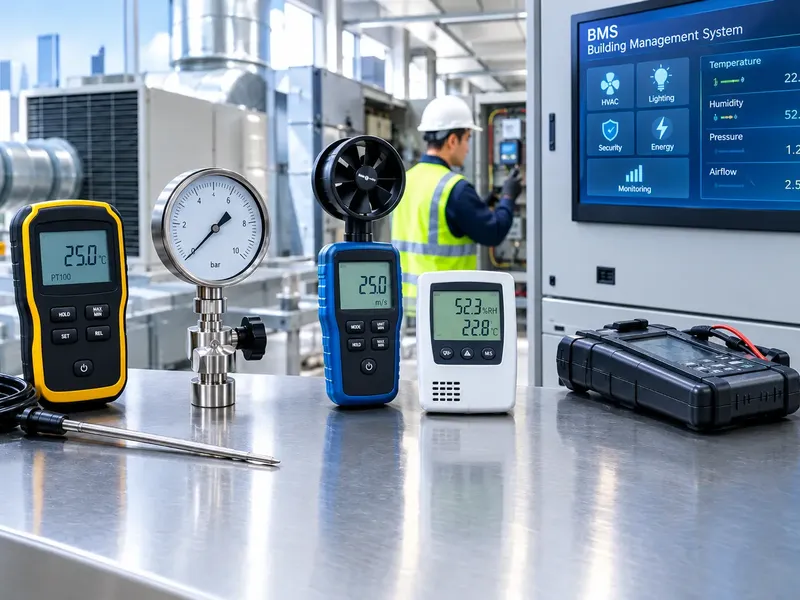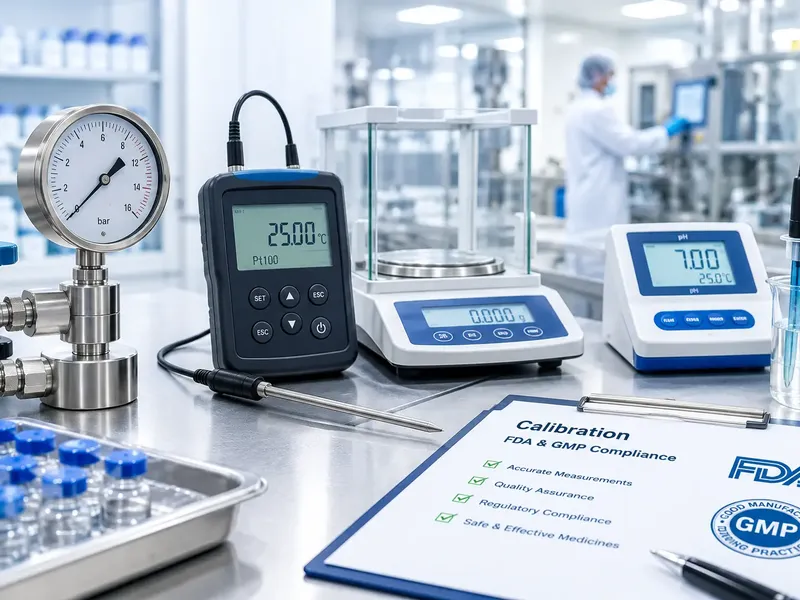
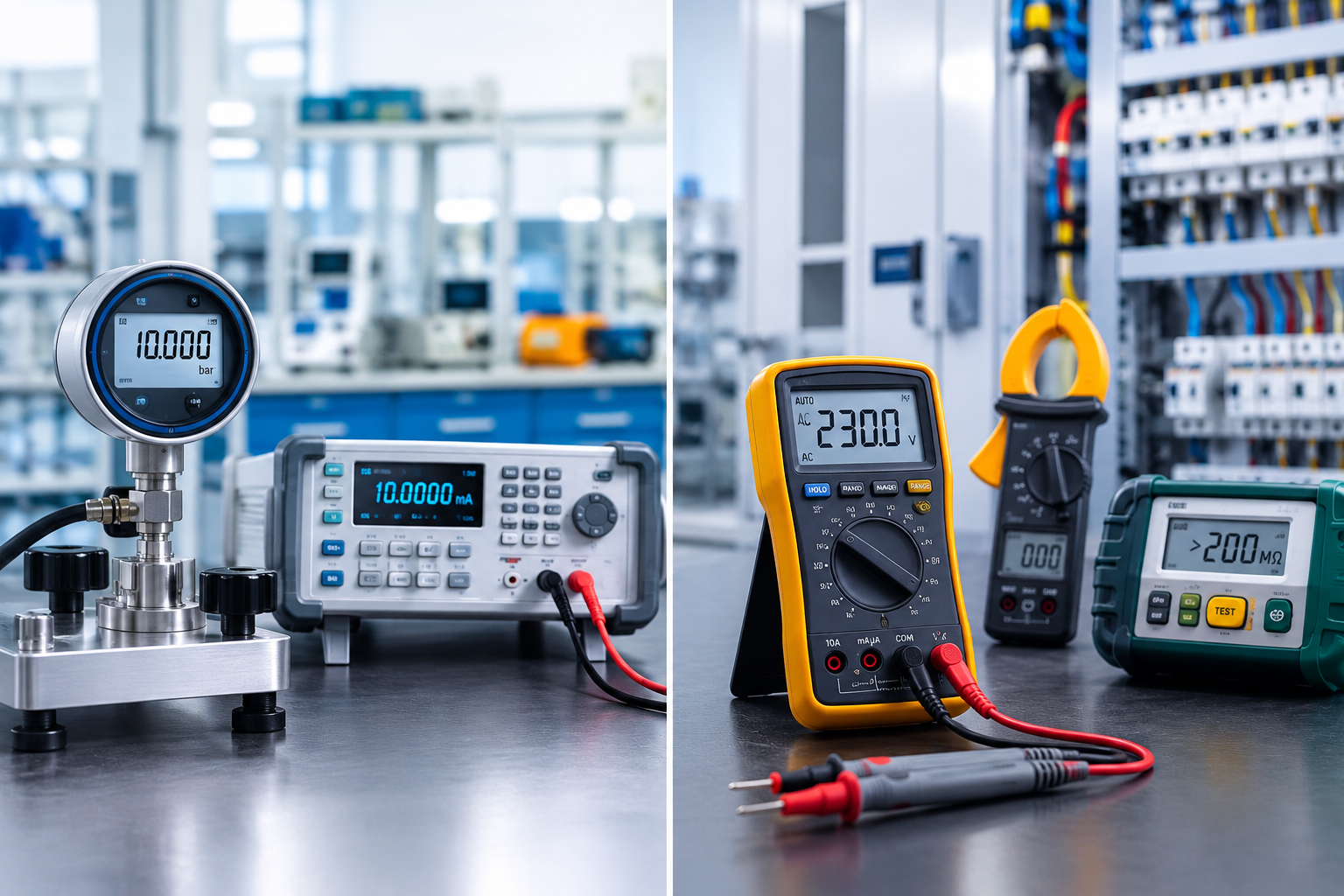
Can you calibrate this?" and "can you test this?" sound almost interchangeable in everyday conversation, but they describe two different processes that produce two different kinds of documents, answer two different questions, and often require different accreditation scopes entirely. Getting this distinction wrong is more than a semantic slip. It can mean a facility submits the wrong type of certificate during an audit, or budgets for the wrong service entirely.
Understanding the difference between calibration and testing UAE businesses need to account for is genuinely useful, not just academically interesting, because it determines what kind of document you actually need, what question that document answers, and which accreditation scope your provider needs to hold. This guide breaks down both processes clearly, shows where they overlap, and explains how ISO 17025 governs each.
What Is Calibration
What is calibration, at its core, comes down to a single question: how accurate is this instrument's reading compared to a known reference? Calibration is the process of comparing the output of a measuring instrument against a traceable reference standard, then documenting any deviation between the two.
Calibration answers questions like:
- Does this pressure gauge read 100 PSI when 100 PSI is actually applied?
- How far off is this thermocouple's reading at 500°C compared to a certified reference?
- What is the measurement uncertainty associated with this multimeter's voltage readings?
Critically, calibration does not issue a pass or fail verdict on its own. A calibration certificate reports the instrument's actual measured deviation at each tested point, along with the associated measurement uncertainty. Whether that deviation is "acceptable" depends entirely on the tolerance the end user applies for their specific application, a judgment calibration itself does not make.
What Is Testing
What is testing, by contrast, generally answers a different kind of question: does this item meet a defined specification, standard, or safety requirement? Testing typically produces a pass or fail result, or a set of results measured against explicit acceptance criteria defined in advance.
Testing covers a much broader category of activity than calibration, including things like:
- Electrical safety testing of portable appliances, confirming an item is safe to use
- Material testing, verifying a sample meets required strength, composition, or performance specifications
- Functional testing, confirming a device or system performs as intended under specified conditions
- Environmental or performance testing against a defined industry standard
Where calibration produces a measured deviation and lets the user decide what to do with it, testing is built around a defined pass or fail threshold baked into the test method itself.
Calibration vs Testing Explained: The Core Distinction
Calibration vs testing explained simply: calibration measures how accurate an instrument is, while testing determines whether an item meets a specification. This distinction plays out differently depending on what you're actually working with:
The core question differs: calibration asks how accurate a reading is, while testing asks whether something meets the requirement. The typical output differs too, calibration produces a measured deviation and uncertainty figure, while testing produces a pass or fail result. Calibration applies to measuring instruments specifically, while testing applies far more broadly, to products, materials, systems, and equipment of nearly any kind. And critically, calibration does not include a verdict, it reports deviation without judgment, while testing does include a verdict, measured against defined acceptance criteria.
A useful way to think about it: calibration is something performed on a measuring instrument to characterize its accuracy. Testing is something performed on almost anything, including a measuring instrument itself, to determine whether it satisfies a defined requirement.
Where the Two Overlap and Cause Confusion
The confusion between calibration and testing usually happens at exactly this overlap point: a calibrated instrument is often the tool used to perform a test. A calibrated pressure gauge, for example, might be used during a pressure relief valve test to confirm the valve opens at its specified set point. The gauge itself was calibrated. The valve, in that scenario, was tested.
This layered relationship explains why facilities sometimes conflate the two. In reality:
- The pressure gauge's calibration certificate documents the gauge's own accuracy
- The valve's test report documents whether the valve met its required opening pressure, using that calibrated gauge as the measurement tool
Both documents matter, and both trace back to accredited processes, but they answer entirely different questions about entirely different things.
ISO 17025 Calibration and Testing: One Standard, Two Scopes
ISO 17025 calibration and testing are both governed under the same overarching standard, ISO/IEC 17025, which sets requirements for the competence of both testing and calibration laboratories. This is a common source of confusion, since a laboratory can hold ISO 17025 accreditation for calibration, for testing, or for both, and the specific scope of accreditation matters enormously.
An EIAC-accredited laboratory's scope of accreditation will specify exactly which calibration disciplines (such as electrical, dimensional, pressure, or temperature) and which testing capabilities it is accredited to perform. A laboratory accredited for electrical calibration is not automatically accredited for, say, material testing, even though both fall under the same broader ISO 17025 standard. Always confirm a provider's specific accreditation scope covers the exact service you need, rather than assuming general ISO 17025 accreditation covers everything.
Traceable Calibration UAE Businesses Should Confirm
Traceable calibration UAE compliance frameworks require means the reference standard used during calibration can itself be traced, through a documented and unbroken chain, back to a national or international measurement standard. This traceability is what gives a calibration certificate real defensible weight, distinguishing it from an informal comparison against an unverified reference.
Testing, similarly, needs to be performed against a validated method with a clearly defined acceptance criterion, ideally referencing a recognized industry or international standard, for the resulting pass or fail determination to hold similar credibility.
Accredited Testing Laboratory UAE and Accredited Calibration Laboratory UAE: What to Confirm
Whether you need calibration, testing, or both, confirm the following before engaging a provider:
- Current EIAC accreditation specifically covering the discipline or test method you need, not just general ISO 17025 status
- For calibration: documented measurement uncertainty and traceable reference standards
- For testing: a validated test method referencing a recognized standard, with clearly defined pass or fail criteria
- Clear documentation distinguishing which service was performed, since a certificate should never blur calibration results with a testing verdict
General Tech Services operates an EIAC and ENAS accredited ISO 17025 laboratory from its Sharjah headquarters, covering calibration across 15 disciplines including electrical, dimensional, pressure, temperature, and force measurement, alongside testing and inspection services such as PAT testing for portable electrical appliances.
Calibration Certificate vs Test Report: Reading the Difference
A calibration certificate and a test report look similar at a glance, both are official documents from an accredited laboratory, but they contain fundamentally different information:
A calibration certificate typically includes the instrument's measured values at each tested point compared against a reference standard, the deviation found, the measurement uncertainty, and traceability details, without stating a pass or fail verdict.
A test report typically includes the specific test method used, the acceptance criteria applied, the actual result obtained, and a clear pass or fail conclusion against that criteria.
If you receive a document and aren't sure which one you're holding, check whether it states a definitive pass or fail conclusion against a named specification. If it does, it's a test report. If it instead reports numerical deviation and uncertainty without a verdict, it's a calibration certificate.
Verification vs Calibration: A Related Distinction Worth Knowing
Verification vs calibration introduces a third related concept worth understanding. Verification is a simpler, often faster process confirming an instrument still meets a specific tolerance requirement, typically performed between full calibration cycles as an interim check. Verification generally does produce a pass or fail outcome, unlike full calibration, but it is usually less comprehensive, checking fewer points across the instrument's range than a complete calibration would. Facilities sometimes use verification as a mid-interval sanity check on instruments known to be prone to drift, without triggering the cost and downtime of a full recalibration.
Frequently Asked Questions
Can a laboratory be accredited for calibration but not testing, or vice versa? Yes. ISO/IEC 17025 covers both testing and calibration laboratory competence, but accreditation scope is granted separately for specific disciplines and methods. A laboratory can hold calibration accreditation without testing accreditation, or the reverse, depending on what its scope document specifies.
Does a calibration certificate tell me if my instrument passed or failed? Not directly. A calibration certificate reports the measured deviation and associated uncertainty at each tested point. Whether that deviation is acceptable depends on the tolerance you apply for your specific application, which the certificate itself does not judge.
Is measurement uncertainty relevant to testing as well as calibration? Yes, though it's discussed differently. Calibration explicitly reports measurement uncertainty for each result. Testing also involves uncertainty in how confidently a pass or fail conclusion can be drawn, though this is typically addressed through the validated test method rather than stated as a standalone figure the way calibration uncertainty is.
Why does it matter which one I ask a provider for? Asking for the wrong service can mean paying for calibration when you actually need a pass or fail safety test, or vice versa. It can also mean submitting the wrong document type during an audit, since auditors specifically look for calibration certificates or test reports depending on what compliance requirement is being demonstrated.
Can the same instrument need both calibration and testing? Yes. An instrument can be calibrated to confirm its own measurement accuracy, and separately used to test another item against a defined specification. Both processes may even appear in the same facility's quality documentation for related but distinct purposes.
Closing Thoughts
The difference between calibration and testing UAE businesses rely on for compliance comes down to a simple but important distinction: calibration measures how accurate something is, while testing determines whether something meets a requirement. Both are essential, both need to be performed by accredited providers, and both produce documentation that plays a specific, defined role in your quality and compliance records, rather than interchangeable paperwork.
To confirm which service your equipment or compliance requirement actually needs, reach out through the General Tech Services contact page, or explore the full range of ISO 17025 accredited calibration and testing services available across the UAE.