A thermal camera does not just take a picture, it makes a temperature claim about everything in frame. Maintenance teams rely on that claim to catch an overheating breaker before it fails, an insulation gap before energy costs climb, or a bearing running hot before it seizes. If the camera itself has drifted out of calibration, every one of those temperature readings becomes a guess dressed up as data.
This is exactly the gap thermal camera calibration UAE predictive maintenance and electrical inspection programs depend on closing. This guide covers how thermal imaging cameras are actually calibrated, why the process is more involved than most people assume, and what to look for in a provider qualified to do it properly.
Why Thermal Camera Calibration Works Differently Than Other Instruments
Infrared camera calibration is fundamentally different from calibrating a single-point instrument like a thermocouple or pressure gauge, because a thermal camera is not measuring one value, it is producing a full image where every pixel represents an independent temperature reading. This introduces calibration challenges unique to imaging devices:
- Pixel-to-pixel variation across the detector array, known as non-uniformity, needs correction so every point in the image reports consistently
- The relationship between detected infrared radiation and actual temperature has to be established across the camera's full temperature range, not just at one reference point
- Lens and optical path characteristics affect how accurately radiation reaches the detector
- Environmental factors like ambient temperature and humidity during calibration can influence results if not properly controlled
Because of this complexity, thermal camera calibration is not something that can be approximated with a single-point check the way a simpler instrument might be.
How Blackbody Calibration Service Testing Works
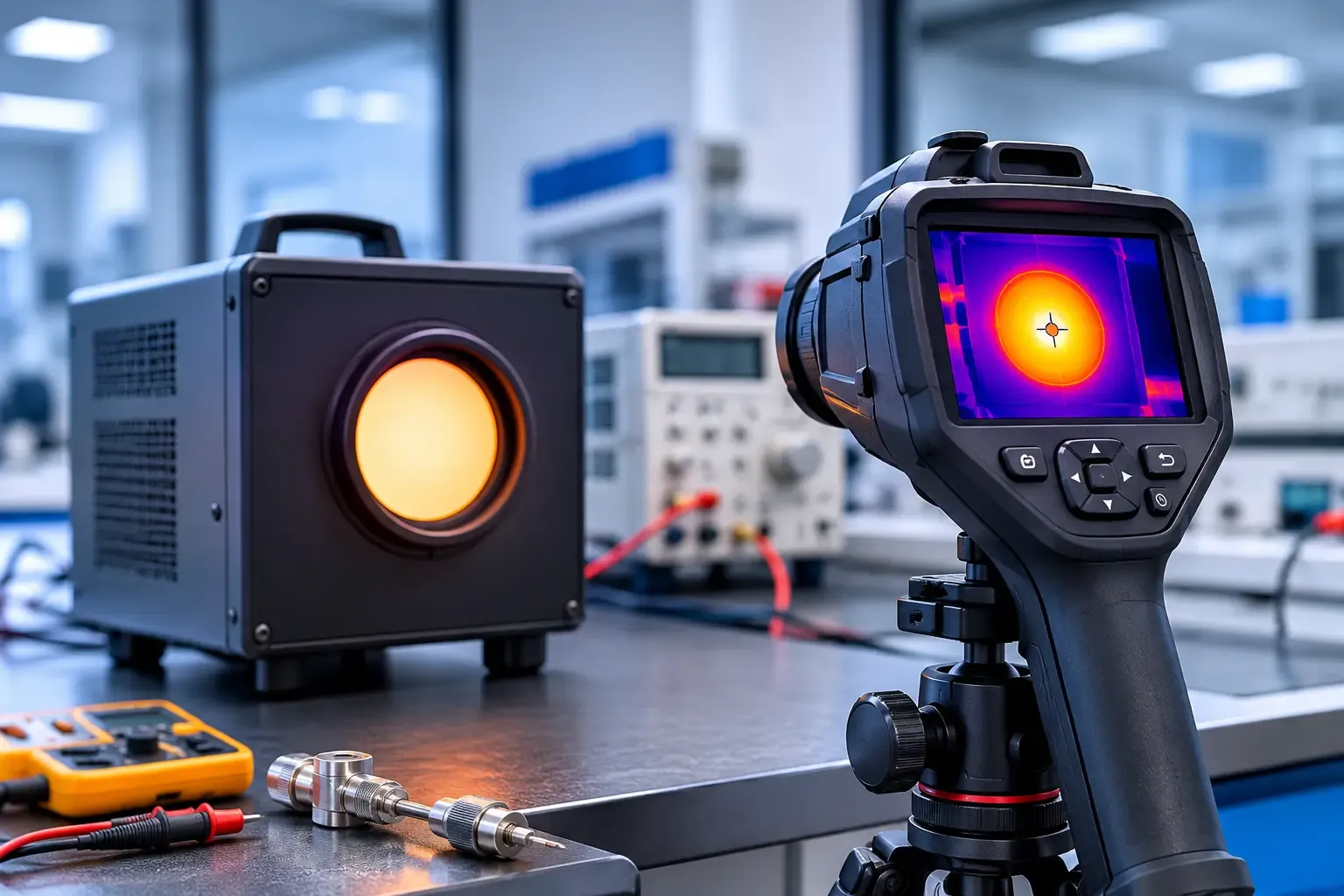
Blackbody calibration service testing is the standard method used to calibrate thermal imaging cameras. A blackbody is a precision reference source that emits infrared radiation at a known, highly stable temperature, functioning as close to a theoretically perfect radiator as practically achievable. The calibration process works by:
- Aiming the thermal camera at the blackbody source, set to a series of known reference temperatures spanning the camera's operating range
- Recording the radiation response, or grayscale signal, the camera detects at each reference temperature
- Correlating those recorded signals against the known blackbody temperatures to build a calibration response curve
- Verifying the camera's temperature readout matches the blackbody's actual output within stated tolerance at each test point
Multiple blackbody sources, often set to different temperature ranges, are typically used to properly characterize a camera's accuracy across its full rated span, since accuracy at low temperatures does not guarantee accuracy at high temperatures.
Non-Uniformity Correction Calibration
Non-uniformity correction calibration, commonly abbreviated NUC, addresses a challenge specific to imaging sensors: the individual detector elements across a thermal camera's array rarely respond identically to the same radiation input, due to manufacturing variation and detector characteristics. Without correction, this shows up as visible pattern noise or inconsistent readings across an otherwise uniform scene. Calibration technicians correct for this by:
- Presenting the detector array with a uniform reference radiation source
- Measuring the response variation across individual pixels
- Calculating correction values applied to each pixel's output going forward
While cameras perform some non-uniformity correction automatically during normal use, periodic full recalibration against a controlled reference source ensures this correction remains accurate as the detector ages and its characteristics shift over time.
Thermography Camera Calibration in Practice: Why It Cannot Be Done in the Field
Unlike many instruments that can be spot-checked on-site, thermography camera calibration generally requires laboratory conditions. This is because the calibration data itself is stored in the camera's internal, non-volatile memory, an area of the camera's electronics that end users and field technicians typically cannot access directly. Proper calibration requires:
- A controlled laboratory environment with multiple certified blackbody reference sources
- Specialized equipment to interface with the camera's internal calibration storage
- Technical expertise specific to thermal imaging systems, distinct from general electrical or dimensional calibration work
This is a meaningful distinction for facilities budgeting calibration schedules, since thermal cameras used for predictive maintenance or electrical thermography typically need to be sent to an appropriately equipped laboratory rather than calibrated in place.
Electrical Thermography UAE Applications That Depend on Camera Accuracy
Electrical thermography UAE facilities rely on for predictive maintenance depends entirely on the camera producing accurate, trustworthy temperature readings. Common applications include:
- Identifying overheating electrical connections, breakers, and switchgear before failure
- Detecting insulation gaps and thermal bridging in building envelopes
- Monitoring mechanical equipment for early signs of bearing or motor overheating
- Verifying process equipment temperature uniformity in manufacturing environments
An uncalibrated or drifting thermal camera used for electrical thermography inspections creates a specific risk: a genuinely hot connection might read within acceptable range, or a normal connection might trigger an unnecessary and costly shutdown for further investigation. Both outcomes undermine the entire purpose of running a thermography program in the first place.
General Tech Services' team of thermography engineers provides electrical thermography services across Dubai, Sharjah, Abu Dhabi, and the wider UAE, supporting the predictive maintenance programs that depend on accurately calibrated imaging equipment.
FLIR Camera Calibration UAE and Other Major Brands
FLIR camera calibration UAE facilities need, along with calibration for other major thermal imaging brands, follows the same underlying blackbody reference principles, though specific procedures, temperature ranges, and internal calibration data formats vary by manufacturer. A calibration provider working across multiple thermal camera brands needs familiarity with each manufacturer's specific requirements to properly access and update internal calibration parameters without disrupting other camera functions.
ISO 17025 Thermal Imaging Calibration and Certification
ISO 17025 thermal imaging calibration means the laboratory performing the work has been independently assessed for technical competence, with blackbody reference sources traceable to national or international temperature standards, and a documented measurement uncertainty reported for the calibration performed. For thermal cameras used in safety-critical electrical inspection work, this traceability is what gives inspection reports defensible weight if a thermography finding is later challenged or reviewed.
What a Thermal Camera Calibration Certificate Should Include
A properly issued thermal camera calibration certificate should clearly document:
- The specific camera make, model, and serial number
- Test results at each reference temperature point used during calibration
- Stated tolerance and pass or fail status at each tested point
- The measurement uncertainty associated with the calibration
- Traceability details for the blackbody reference sources used
- The accreditation body and standard the issuing laboratory operates under
If a certificate only confirms a general "calibrated" status without point-by-point data, it does not provide enough detail to judge how the camera performs across its actual operating temperature range.
How Often Should a Thermal Camera Be Calibrated
General guidance for thermal camera calibration frequency includes:
- Annual calibration as a standard baseline for cameras used in regular predictive maintenance and inspection work
- More frequent calibration for cameras used in safety-critical electrical inspection programs, where inspection findings directly inform maintenance decisions
- Immediate recalibration after any physical shock, drop, or exposure to conditions outside the camera's rated operating environment
- Manufacturer-recommended intervals should always be treated as the minimum baseline, with facility risk tolerance determining whether more frequent calibration is warranted
Choosing an EIAC Accredited Calibration Laboratory for Thermal Imaging Work
Before selecting a provider for thermal camera calibration, confirm:
- Current EIAC accreditation to ISO/IEC 17025 specifically covering thermal or infrared temperature calibration
- Access to multiple certified blackbody reference sources spanning the camera's full operating range
- Documented experience with your specific camera brand and model
- Clear turnaround expectations, since cameras used for active inspection programs need to return to service promptly
- Full measurement uncertainty documentation on every calibration certificate issued
General Tech Services performs thermal and infrared calibration work as part of its EIAC and ENAS accredited ISO 17025 laboratory operations from its Sharjah headquarters, supporting the same thermography engineers who deliver electrical thermography inspection services throughout the UAE. To discuss calibration for a specific thermal camera model or brand, reach out through the contact page.
Frequently Asked Questions
Can a thermal camera be calibrated without sending it to a laboratory? Generally no. Calibration data is stored in the camera's internal, non-volatile memory, which end users and field technicians typically cannot access, so proper calibration requires a laboratory setup with certified blackbody reference sources.
How is a thermal camera different from a single-point infrared thermometer for calibration purposes? A thermal camera produces a full image where every pixel represents an independent temperature reading, requiring non-uniformity correction across the entire detector array, while a single-point infrared thermometer only needs accuracy verification at one measurement location.
What is a blackbody reference source and why is it used? A blackbody is a precision device that emits infrared radiation at a known, stable temperature, functioning close to a theoretically ideal radiator. It gives calibration technicians a trustworthy reference to compare the camera's readings against across multiple temperature points.
Why does thermal camera calibration matter for electrical inspection work? Electrical thermography inspections rely entirely on accurate temperature readings to distinguish a genuinely overheating connection from a normal one. A drifting camera can miss real problems or trigger unnecessary shutdowns based on inaccurate temperature data.
How often should a thermal camera used for predictive maintenance be calibrated? Annual calibration is a common baseline, though cameras used in safety-critical electrical inspection programs, or those exposed to physical shock or extreme conditions, often warrant more frequent verification.
Closing Thoughts
Thermal camera calibration UAE predictive maintenance and electrical inspection programs rely on is what separates a genuinely useful thermography finding from an unreliable guess. Given that calibration data lives inside the camera's internal electronics and testing requires certified blackbody reference sources across multiple temperature points, this work belongs with a laboratory equipped and accredited specifically for thermal imaging systems.
To arrange thermal camera calibration or discuss an electrical thermography inspection program for your facility, get in touch through the General Tech Services contact page, or browse the full range of services covering thermography, calibration, and automation solutions across the UAE.